

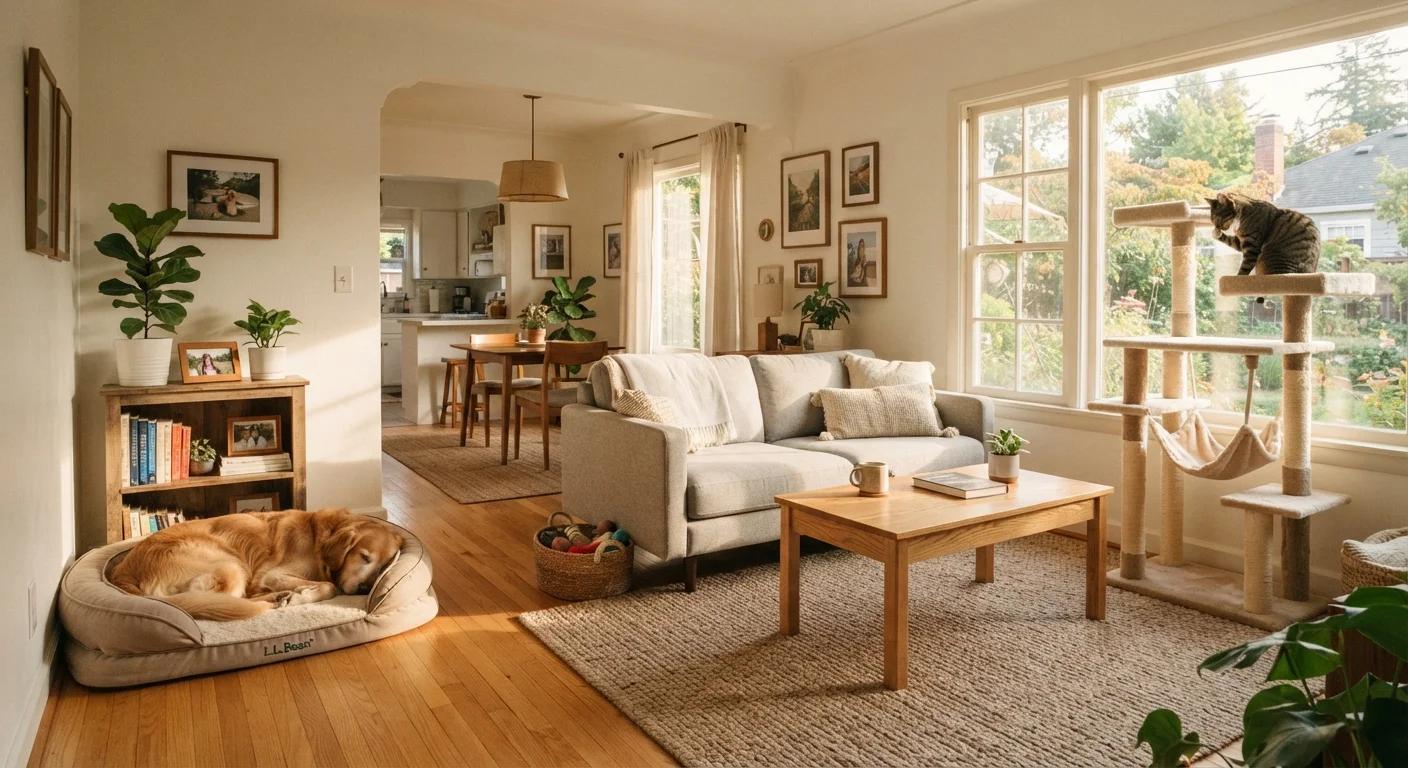
Why Your Home Setup Matters More Than You Think
Most people focus on buying supplies before bringing a pet home — food bowls, a bed, a leash. But the physical arrangement of your living space has a deeper influence on your pet's behavior, stress levels, and long-term wellbeing than any single product. A home that works for your pet is one where they can rest without interruption, eat without competition, explore safely, and retreat when overwhelmed.
This matters just as much for experienced owners as for first-timers. Even small changes — like relocating a litter box or adding a window perch — can meaningfully shift how confident and calm an animal feels day to day. Understanding how pets communicate and respond to their environment is foundational to making good decisions about your home setup.
Before diving into the steps below, consider working through the new pet owner checklist to ensure you've covered the administrative and logistical basics alongside your home preparations.
What you will need
Step-by-Step: Setting Up a Pet-Compatible Home
Follow these steps in order, ideally before your pet arrives — though most can be applied at any stage of ownership.
Walk Every Room From Your Pet's Perspective
Before rearranging anything, get low — literally crouch or kneel to see your home at your pet's eye level. Identify what's reachable, what's chewable, and where escape routes or hiding spots exist. Make a written note of concerns in each room. This audit forms the basis of every change that follows.
Remove or Secure Hazardous Items
Common hazards include toxic houseplants (such as lilies, pothos, and sago palm), unsecured electrical cords, cleaning products stored in low cabinets, small objects that can be swallowed, and gaps behind large appliances. Secure cabinets with child-proof latches if necessary, and move chemicals to high, locked storage. Cord organizers and furniture placement can cover exposed wiring.
Designate a Safe, Quiet Retreat Space
Every pet needs a place where they can withdraw from activity and rest undisturbed. For dogs, this is often a crate or a bed in a low-traffic corner. For cats, it may be a high shelf, a covered bed, or a room with a partly closed door. This space should be introduced to the pet early and never used as punishment — it needs to carry exclusively positive associations.
Set Up Dedicated Feeding and Water Stations
Choose a consistent location for food and water that is away from high-foot-traffic zones and, in multi-pet households, separated enough to prevent competition. Raised feeders work well for larger dogs; cats often prefer water sources away from their food bowls. Consistency in placement helps establish routine and can reduce resource-guarding behaviors — a topic explored further in our guide on responding to resource guarding.
Create Enrichment Zones Appropriate to the Species
Dogs benefit from a clear area for play — indoors or with easy outdoor access. Cats need vertical space and surfaces to scratch. Small mammals and birds require enclosures that allow natural behaviors like burrowing or foraging. Think about where enrichment items will live permanently so they become part of the home's structure rather than clutter. Consider enrichment strategies as a long-term investment in your pet's behavior.
Test and Refine Over the First Few Weeks
No home setup is perfect on the first attempt. Watch how your pet uses the space — whether they avoid certain areas, develop preferences, or display stress signals. Adjust sleeping areas, feeding stations, and barriers based on observed behavior. A home that works is one that evolves with your understanding of the animal sharing it.
Species and Breed Differences Matter
A greyhound has very different spatial needs from a Bengal cat, and a rabbit's setup looks nothing like a parrot's. Use species-specific guidance when designing zones and selecting enrichment. Our comparison of cats vs. dogs as household pets is a useful starting point for understanding how fundamentally different these needs can be.
Common Hazards and How to Address Them
Hazard-proofing is not a one-time task. As seasons change, so do the risks — holiday plants, cleaning products, open windows, and outdoor access all shift throughout the year. For a detailed room-by-room breakdown, see our guide on how to create a safe home environment for a new pet.
Don't Overlook Secondary Access Points
Windows, balconies, and gaps beneath fences are common escape or fall hazards that owners overlook after focusing on doors. Screen windows securely, and check that balcony railings have no gaps wide enough for a pet to squeeze through. Falls from height are a leading cause of injury in cats, despite the common misconception that they always land safely.
Pets in smaller living spaces require creative thinking. Vertical space — wall-mounted shelves, tiered furniture — can expand a pet's territory without requiring more floor space. For further ideas, the principles in smarter storage for small spaces translate surprisingly well to pet-friendly home organization.
If you're planning to add a second animal to the household, be aware that your setup will need to support multiple pets with separate feeding areas and safe zones. Our article on bringing a second pet home covers what to prepare and watch for.
Building Routine Into Your Physical Space
A well-set-up home naturally supports routine, and routine is one of the most important things you can offer a pet. Fixed feeding stations, consistent sleeping areas, and reliable enrichment zones all send the message that this environment is safe and predictable. Research consistently shows that animals with stable routines display fewer stress-related behaviors — for a deeper look at why, see why pets need routine.
Enrichment doesn't require elaborate setups. Puzzle feeders on a kitchen counter, a window perch for a cat, or a rotation of toys kept in a specific basket all count. Mental stimulation and enrichment are often overlooked in home planning but have a significant impact on behavior and mood. A thoughtful home layout reduces boredom — and boredom-driven destruction.
This article provides general guidance for informational purposes only. For advice tailored to your specific pet's health or behavioral needs, consult a qualified veterinarian or certified animal behaviorist.
The content on this site is for informational purposes only and is not a substitute for professional advice. Always consult a qualified professional for guidance specific to your situation.