

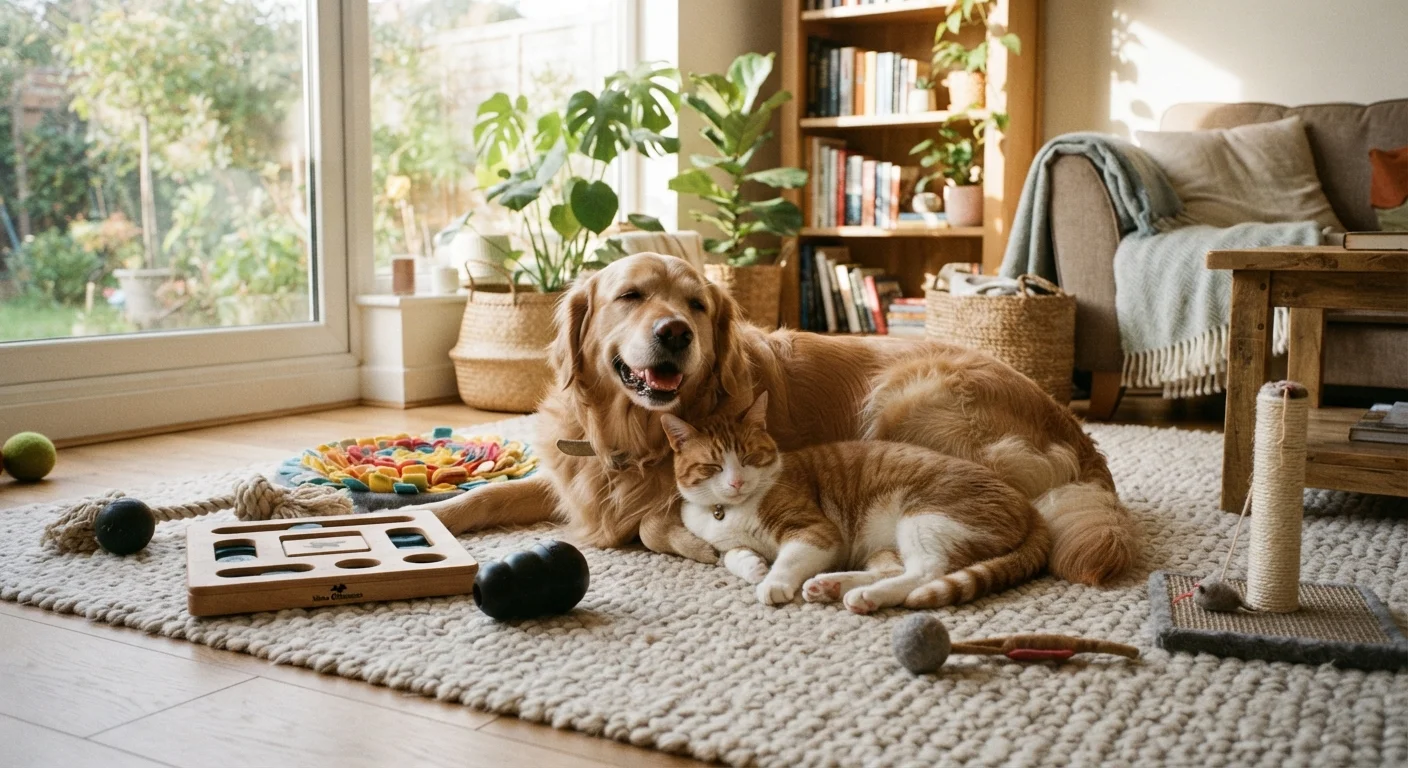
Why Enrichment Is a Basic Need, Not a Bonus
Most pet owners are diligent about food, water, veterinary care, and exercise. Fewer give equal attention to what happens inside their pet's mind. Yet behavioural science is unambiguous: companion animals evolved with cognitive, social, and instinctual drives that do not disappear simply because they live in a home. When those drives go unmet, the consequences are real — anxiety, frustration, and problem behaviours that are often misread as disobedience.
Enrichment is not about elaborate setups or expensive gear. It is about providing an animal with a life that engages their senses, rewards their natural problem-solving instincts, and allows them to express species-appropriate behaviour in a safe setting. For a dog, that might mean sniffing out hidden kibble. For a cat, it might mean a window perch with a bird feeder outside. The medium matters less than the match between the activity and the animal's genuine needs.
Consistent daily habits — including short, regular enrichment sessions — tend to outperform sporadic intensive efforts. Building mental stimulation into an existing routine makes it sustainable for both the owner and the pet.
Start Small and Build Consistency
You do not need to overhaul your pet's environment overnight. Begin with one enrichment activity per day — such as feeding from a puzzle toy or spending five minutes on a scent game — and build from there. Consistency over time has a far greater impact than occasional intensive sessions.
Socialisation: More Than Just Meeting Other Animals
Socialisation is frequently reduced to the idea of letting a puppy play with other dogs, but the concept is considerably broader. True socialisation means controlled, positive exposure to the full range of experiences an animal will encounter across its life — different people, sounds, surfaces, environments, handling, and situations. The goal is not just comfort with other animals; it is the development of a confident, resilient temperament.
The timing of early socialisation has lasting effects on behaviour that extend far into adulthood. Socialisation windows in early development represent a period when the brain is especially receptive to forming neutral or positive associations with new stimuli. Missing this window does not doom an animal, but it does make later adjustment harder and slower.
For adult pets, ongoing social exposure remains valuable. Gradual, positive interactions with trusted humans and familiar animals help maintain social confidence and reduce the kind of isolation-related stress that can quietly accumulate over time.
Socialisation Is Not the Same as Flooding
Exposing a fearful or anxious pet to overwhelming stimuli — often called flooding — is counterproductive and can worsen fear responses. Effective socialisation is always gradual, controlled, and paired with positive outcomes. If your pet shows signs of significant anxiety or reactivity, consult a certified applied animal behaviourist or a veterinary behaviourist for a tailored plan.
Matching Enrichment to Species, Breed, and Individual Temperament
A border collie and a basset hound share the species label but occupy very different cognitive worlds. Breed history shapes the kinds of mental engagement a dog will find most rewarding — herding breeds crave tasks and problem-solving, while scent hounds are most content when their nose is working. Cats, by contrast, are solitary ambush hunters by instinct, meaning independent play that mimics prey movement will nearly always outperform passive entertainment.
Individual temperament adds another layer. An anxious pet needs enrichment that builds confidence gradually, not activities that overwhelm. A bold, exploratory animal may need more novelty and challenge. Observing how your specific pet responds — does the puzzle feeder interest them or frustrate them? — is the most reliable guide to calibrating the right approach.
Environment plays a role too. Whether a pet lives indoors or has outdoor access significantly shapes which enrichment strategies are most needed. Indoor animals typically require more deliberate owner-provided stimulation to compensate for the sensory limitations of a contained environment. Indoor versus outdoor living shapes feline behaviour in documented and meaningful ways.
Up to 85%
Of behaviour problems have an enrichment or socialisation component
Veterinary behaviourists consistently report that the majority of common companion animal behaviour complaints — including destructive chewing, excessive barking, and aggression — are linked to unmet cognitive or social needs.
3–12 weeks
Critical socialisation window for puppies
Animal behaviour research identifies approximately 3 to 12 weeks of age as the primary sensitive period in puppies when positive exposure to stimuli has the greatest lasting impact on adult behaviour and stress responses.
30+ minutes
Daily mental activity recommended for working breed dogs
Veterinary and applied animal behaviour guidelines suggest that herding, sporting, and working breed dogs require at least 30 minutes of dedicated cognitive engagement daily, separate from physical exercise.
Practical Enrichment Strategies Any Owner Can Try
Effective enrichment does not require specialist knowledge or a large budget. Feeding time is one of the most consistently underused enrichment opportunities — replacing a standard bowl with a puzzle feeder, snuffle mat, or scattered kibble across a textured surface turns a passive experience into an active one. Scent work is particularly powerful for dogs, as their olfactory system is their primary way of processing the world.
For cats, vertical space — shelving, cat trees, or clear window hammocks — addresses the instinct to survey territory from above. Rotating toy selections weekly maintains novelty without requiring constant new purchases. Short, interactive play sessions with a wand toy or laser pointer followed by a physical prey object to "catch" satisfy the hunt-stalk-pounce sequence that indoor cats rarely complete naturally.
Routine matters alongside variety. Pets thrive when enrichment is predictable in its timing even when the content changes. Knowing that a play session or foraging opportunity happens each morning reduces background anxiety and makes individual enrichment moments more effective. Arranging your home environment thoughtfully is itself a form of passive enrichment that works around the clock.
Frequently Asked Questions
Most dogs benefit from at least 15–30 minutes of dedicated mental stimulation daily, in addition to physical exercise. High-energy or working breeds typically need more. Activities like puzzle feeders, scent games, and training sessions count toward this total.
Yes. Indoor cats without adequate enrichment can develop chronic stress, anxiety, and destructive habits such as overgrooming or inappropriate scratching. Vertical space, window access, and interactive play are among the most effective interventions for indoor felines.
Early socialisation during developmental windows is most impactful, but it never fully stops mattering. Adult and senior pets still benefit from positive, controlled exposure to new people, animals, and environments — it just requires more patience and gradual introduction.
Common signs include excessive chewing or scratching, repetitive pacing, attention-seeking behaviour, lethargy, aggression, or anxiety when left alone. These are not misbehaviour — they are communication that an animal's needs are not being met.
Absolutely. Rabbits, guinea pigs, birds, and other small animals have complex cognitive and social needs that are frequently underestimated. Foraging opportunities, tunnels, social companionship of their own species, and varied textures and environments are all meaningful for these animals.
Yes. Over-stimulation — particularly in anxious or reactive animals — can increase stress rather than relieve it. The goal is appropriate enrichment matched to the individual pet's threshold, not maximum stimulation. Watch for signs of fatigue or overstimulation and adjust accordingly.
The content on this site is for informational purposes only and is not a substitute for professional advice. Always consult a qualified professional for guidance specific to your situation.