

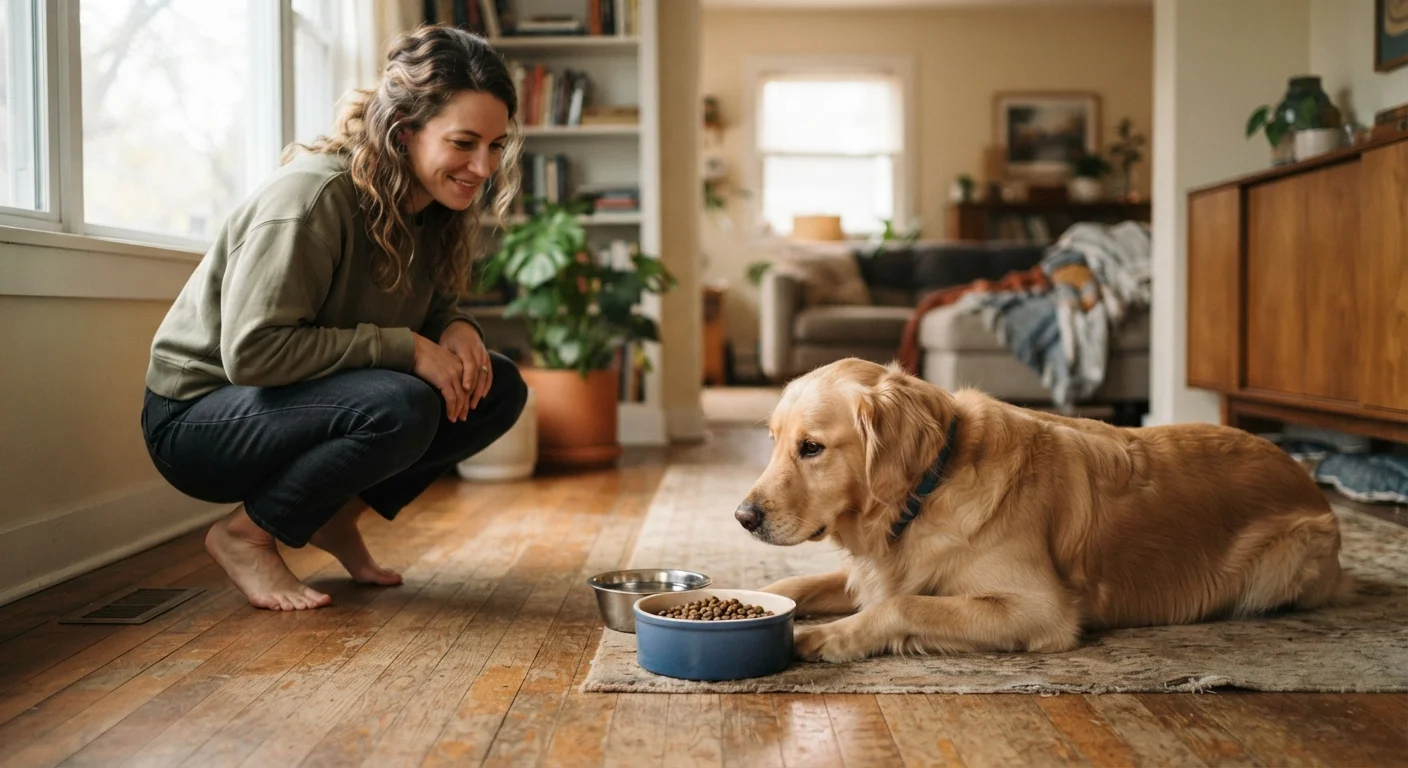
What Resource Guarding Actually Is
Resource guarding refers to behaviors an animal uses to retain access to something it values — food, toys, resting spots, or even a favored person. These behaviors exist on a spectrum: a dog may simply freeze and eat faster at one end, or growl, snap, and bite at the other. Both represent the same underlying motivation.
This behavior is biologically normal. In the wild, animals that could defend a meal survived better than those that could not. Domestication has not erased this instinct — it has simply placed it in contexts where it conflicts with human expectations. Understanding this removes the idea that a guarding dog is "bad" or "dominant" and replaces it with something more useful: this animal is anxious about losing something it values.
Reading the early body language signals — stiffening, hard eye contact, a low warning growl — gives you time to respond before a situation escalates. Recognizing those cues early is one of the most protective things an owner can do.
What Not to Do When Guarding Occurs
The instinctive human response to guarding — reaching in, staring the animal down, raising a hand, or scolding — consistently makes the problem worse. These actions confirm the animal's fear that its resource is under threat, which strengthens the motivation to guard more intensely next time.
Equally important: do not test your dog repeatedly by approaching it during meals or removing items to "prove you're in charge." Each confrontation is a practice run for the dog's guarding response, making it more rehearsed and more automatic. The goal is to give the animal fewer reasons to guard, not more opportunities to practice it.
Forced submission techniques have no support in modern behavioral science and carry a documented risk of triggering defensive biting. A calm, strategic exit from the situation is always safer and more productive.
Proven Approaches That Reduce Guarding Over Time
Effective management of resource guarding works by changing the emotional association — the dog learns that a human approaching its resource predicts something good rather than a loss. This is called counter-conditioning.
The trading game is one of the most practical tools available. Offer a high-value treat in exchange for the guarded item, then return the item after the dog takes the treat. This teaches that giving something up does not mean losing it permanently. Over many repetitions, the approach of a person near a valued object becomes a positive predictor rather than a threat.
Management matters as much as training. Arranging your living space so a dog can eat undisturbed, or so high-value items are only available in low-traffic areas, reduces the frequency of triggering situations. Fewer rehearsals of guarding behavior means slower entrenchment of the habit. When bringing a new pet home, planning the environment proactively can prevent guarding from taking hold in the first place.
“A growl is communication. When we punish it, we don't fix the problem — we just take away the dog's ability to warn us that a problem exists.”
— Jean Donaldson, Author and founder of the Academy for Dog Trainers
When to Escalate to Professional Support
Some cases of resource guarding are mild and manageable with consistent, patient counter-conditioning by the owner. Others are not. Guarding that involves snapping, lunging, or contact biting — particularly toward children or unfamiliar adults — requires professional assessment from a certified applied animal behaviorist or board-certified veterinary behaviorist.
When to Involve a Professional
If your dog's resource guarding includes snapping, lunging, or biting — especially toward children — consult a certified applied animal behaviorist (CAAB) or a board-certified veterinary behaviorist before attempting any behavior modification at home. Guarding that escalates to contact aggression requires professional assessment, not DIY protocols. This article offers general educational guidance and is not a substitute for individualized professional advice.
A veterinary behaviorist may also evaluate whether anxiety is driving the behavior at a level that warrants medical support alongside behavior modification. This is not a failure — it is the appropriate level of care for a complex behavior that carries safety implications.
Document the triggers, frequency, and intensity of your dog's guarding before any professional consultation. That information helps a clinician quickly identify the scope of the problem and tailor an appropriate plan. Guarding addressed early and consistently rarely becomes a crisis. Left unchecked or mishandled, it often does.
The content on this site is for informational purposes only and is not a substitute for professional advice. Always consult a qualified professional for guidance specific to your situation.