

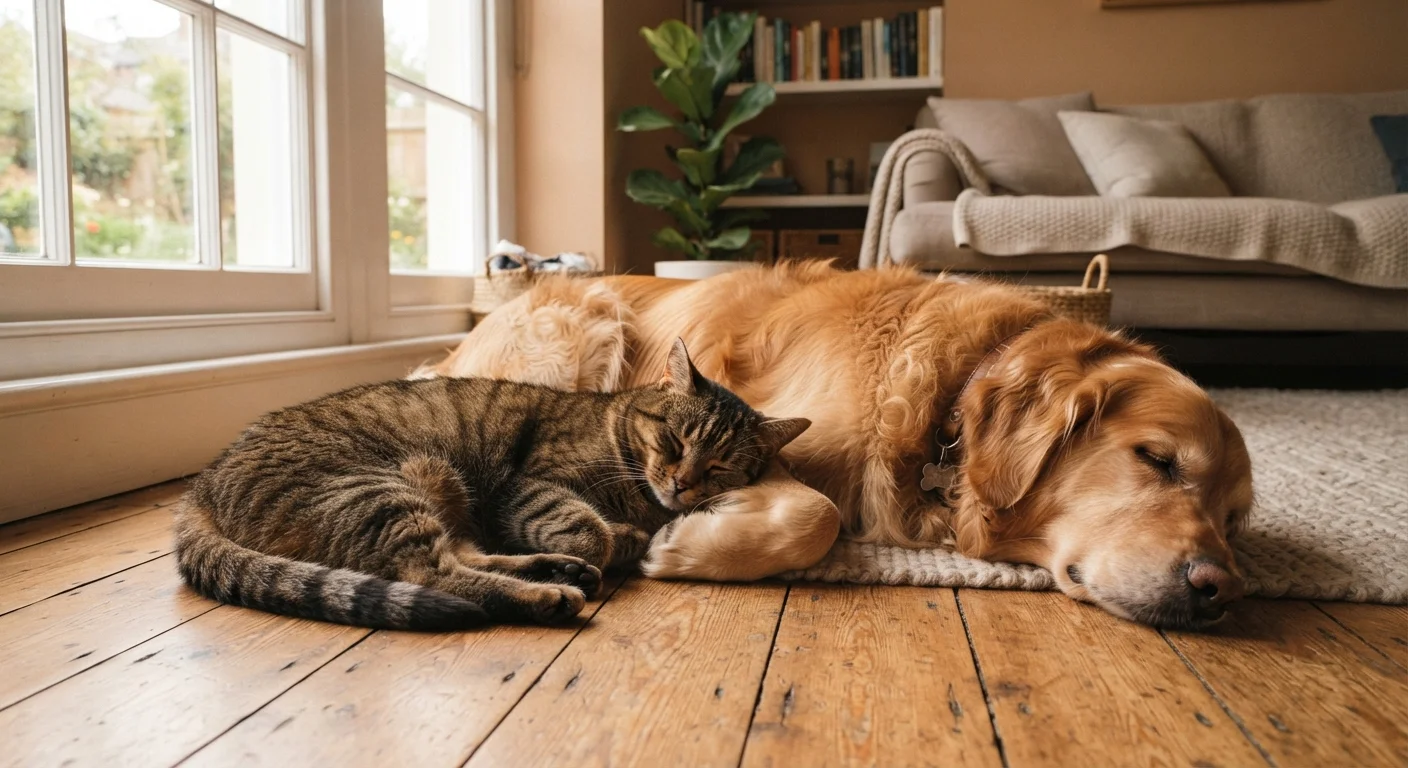
Option A
Cats
The self-contained, lower-demand companion.
Best for: Households with limited space, busier schedules, or owners who appreciate a pet that communicates affection on its own terms.
Option B
Dogs
The socially engaged, structure-dependent partner.
Best for: Owners who can commit consistent time daily to exercise, training, and direct social interaction across many years.
What the Stereotypes Get Wrong
"Dogs are loyal, cats are aloof" — this framing is one of the most persistent oversimplifications in pet culture. In reality, both species show wide individual variation shaped by genetics, early socialization, and environment. Some cats form intensely bonded relationships with their owners; some dogs are notably independent. Reducing either animal to a single personality type sets new owners up for mismatched expectations.
What the cat-dog comparison genuinely hinges on is not personality temperament but structural care requirements. These are the factors that shape daily life over a pet's full lifespan — often 10 to 20 years. Before committing, it is worth working through a clear-eyed checklist. Our guide on evaluating your lifestyle before adopting offers a practical framework for that process.
Time, Space, and Social Demands Compared
Dogs require structured daily time: walks, play, training reinforcement, and direct social contact. Most veterinary behaviorists recommend a minimum of 30 to 60 minutes of physical activity per day for average-energy breeds — significantly more for working or herding types. They also tolerate isolation poorly; prolonged alone time can produce destructive behavior, excessive vocalization, or anxiety.
Cats are facultatively social, meaning they can engage deeply or retreat without distress. They do require daily interaction and mental stimulation — dismissing them as fully self-sufficient is inaccurate — but their needs are more flexibly scheduled. Puzzle feeders, climbing structures, and window access can sustain a cat's wellbeing during work hours. For guidance on structuring a home environment for either species, see our article on setting up a pet-compatible living space.
| Criterion | Cats | Dogs |
|---|---|---|
| Daily time needed | 30–45 min active interaction | 1–3 hours (exercise + training) |
| Tolerance for solitude | Generally high | Low to moderate |
| Space requirements | Flexible; vertical space valued | Scales with breed energy level |
| Grooming demands | Mostly self-grooming; brushing helps | Varies widely by coat type |
| Training needs | Litter training; enrichment-focused | Ongoing obedience and socialization |
| Average lifespan | 12–18 years (indoor) | 10–13 years (breed-dependent) |
| Typical baseline cost | Moderate | Moderate to high |
Living space is also less decisive than many assume. A high-energy dog in a large house may be under-exercised; a cat in a well-enriched studio apartment may thrive. Match energy levels and activity profiles to your actual lifestyle, not your square footage.
Health Considerations and Lifespan
Both cats and dogs require routine veterinary care: annual wellness exams, vaccinations, parasite prevention, and dental attention. Cats are notably skilled at masking illness — behavioral changes are often the earliest signal that something is wrong. Dogs tend to show distress more visibly, which can support earlier intervention but also generates more frequent vet visits.
12–18 years
Typical indoor cat lifespan
Indoor cats tend to live significantly longer than outdoor cats, according to general veterinary consensus across feline health literature.
~74 million
Pet cats in U.S. households
The American Pet Products Association estimates tens of millions of pet cats are kept in U.S. homes, reflecting cats' status as one of the most common companion animals.
30–60 min
Minimum daily exercise for average-energy dogs
Veterinary behaviorists commonly recommend at least 30 to 60 minutes of physical activity per day for most adult dogs, with high-energy breeds needing considerably more.
Cats are prone to conditions including kidney disease, hyperthyroidism, dental disease, and urinary tract issues — many of which are manageable with early detection. Dogs face breed-specific risks ranging from hip dysplasia in larger breeds to respiratory issues in flat-faced (brachycephalic) dogs. Prospective owners should research the specific health profile of any breed they are considering, not just the species category.
Cats kept exclusively indoors typically live longer on average than those with outdoor access. For a detailed look at how environment affects feline health and behavior, see our comparison of indoor vs. outdoor cat living.
Long-Term Costs and Practical Realities
The financial commitment for either species is substantial and often underestimated. Initial adoption or purchase costs vary widely, but ongoing expenses — food, routine vet care, preventive medications, grooming, and supplies — accumulate significantly over a pet's lifetime. Emergency veterinary care can run into thousands of dollars without warning.
Dogs generally incur higher routine costs than cats: more food, professional grooming for certain breeds, training classes, and boarding or dog-walking fees if the owner works outside the home. Cats have lower baseline costs but are not inexpensive; dental cleanings under anesthesia, for instance, are often required as cats age.
Both species also change household dynamics when a second animal is introduced. Social hierarchy, resource competition, and territory can shift substantially — our guide on managing a multi-pet household covers what to expect. Understanding animal behavior fundamentals can help owners interpret and manage these transitions more effectively.
This article provides general educational information about cat and dog ownership. It is not a substitute for advice from a licensed veterinarian or qualified animal behaviorist regarding your specific pet's needs.
The content on this site is for informational purposes only and is not a substitute for professional advice. Always consult a qualified professional for guidance specific to your situation.