

Why a Second Pet Changes Everything
Adding another animal to your home isn't simply doubling your pet count — it restructures the social environment your existing pet has grown accustomed to. Territory, routine, attention, and access to resources all shift. Understanding this from the outset helps you manage expectations and set both animals up for a stable coexistence.
Whether you're introducing a second dog, a cat to a resident dog, or a small mammal to a home with existing animals, the underlying principle is the same: animals need time and controlled exposure to feel safe. See our guide to multi-pet dynamics for a broader look at what shifts in your household long-term.
Before the new arrival even walks through your door, preparation matters. Consult our new pet owner checklist to confirm you've covered the basics: separate feeding stations, individual resting areas, and a vet appointment already booked.
What you will need
Step-by-Step: A Safe, Low-Stress Introduction
Follow these steps in order. Skipping ahead — even when animals seem relaxed — is the most common reason introductions break down. Patience at each stage protects both animals and shortens the overall adjustment period.
Set up a separate 'safe room' for the new arrival
Before bringing the new animal home, designate a room where it will live exclusively for the first several days. Equip it with food, water, a litter box or appropriate bathroom setup, bedding, and enrichment items. This space lets the newcomer decompress and adjust to ambient household sounds and smells without direct contact pressure.
Exchange scents before any visual contact
After 24–48 hours, begin scent swapping. Place a worn blanket or small towel from the new animal's space near your resident pet's resting area, and vice versa. This allows each animal to process the other's scent at its own pace, without the arousal of a physical presence. Repeat daily until both animals show minimal reaction to the scent item.
Allow scent investigation under the door
Once both animals seem calm around the scent items, let them sniff and investigate the gap under the safe room door. This is a low-stakes form of contact. Watch for relaxed body language — loose posture, ears in neutral position, tail neutral or low. Tense freezing, sustained growling, or swatting means more time at the scent-swap stage is needed.
Introduce a shared space with a visual barrier
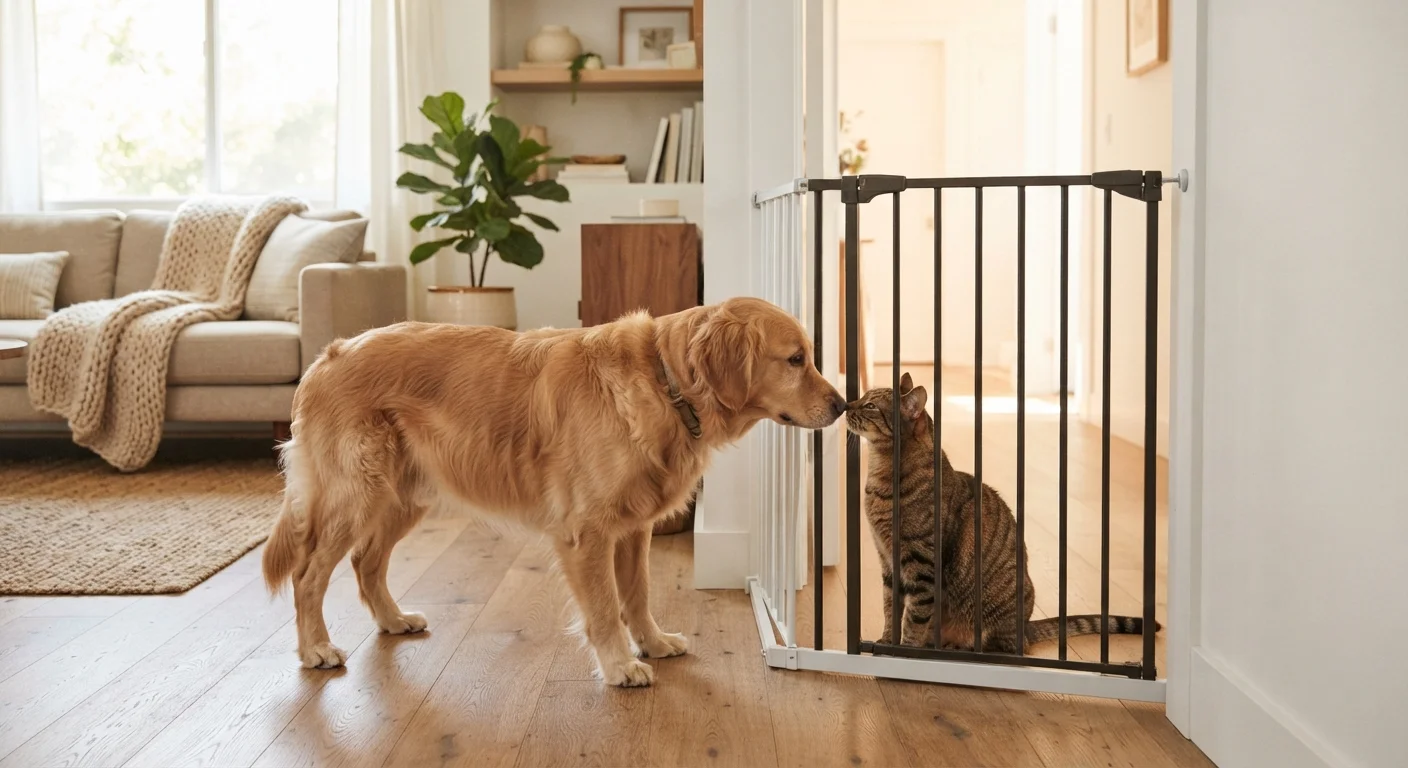
When both animals handle door interactions calmly, use a baby gate or cracked door to allow visual contact while keeping them physically separated. Keep these sessions short — five to ten minutes — and end them before either animal shows stress. Offer both animals something positive during this phase, such as a food puzzle or treat, to build neutral-to-positive associations.
Supervise the first shared space interaction
Only when visual contact sessions are consistently calm should you allow both animals into the same room together — fully supervised, with an easy escape route available to each. Keep the session short. Don't intervene in normal investigative behavior like sniffing, circling, or even mild posturing, but be ready to calmly separate the animals if tension escalates. Never leave them unsupervised at this stage.
Gradually expand shared time and access
Over the following days and weeks, progressively extend supervised time together and slowly give both animals access to more of the home. Continue providing each pet with its own resting and feeding areas. Unsupervised time together should only begin once you've witnessed multiple calm, conflict-free sessions — and even then, err on the side of caution.
Never Force a Face-to-Face Meeting
Placing two unfamiliar animals directly together — even with the best intentions — can result in a fight or lasting fear response that takes months to undo. If either animal displays sustained aggression or extreme fear at any stage, pause the process and consult a veterinarian or certified animal behaviorist before continuing. Progress should always follow the animals' behavior, not a fixed timeline.
What to Watch During the Adjustment Period
Once both animals share the same space, daily observation becomes your most important tool. Normal adjustment behavior includes occasional avoidance, some vocalization, and initial wariness. These typically ease within one to three weeks, though timelines vary by species, age, and individual temperament.
Concerning signs requiring a slower pace or professional input include: sustained growling or hissing that doesn't diminish, one animal consistently preventing the other from accessing food or water, elimination outside the litter box or accidents in unusual spots, sudden loss of appetite, or any physical altercation. These are stress indicators, not personality flaws — the solution is almost always to return to an earlier introduction step rather than push through.
Understanding why animals react this way is rooted in animal behavior — knowing how pets communicate discomfort helps you read the room accurately. For guidance on organizing your home so each animal has clear, safe zones, see setting up a home that works for both you and your pet.
Keep Your Resident Pet's Routine Intact
One of the most effective ways to reduce your existing pet's anxiety during this transition is to maintain its regular schedule for walks, meals, and play without interruption. Predictability signals safety. If your resident animal associates the new arrival with disruption to its routine, it will take longer to accept the newcomer as a neutral presence.
The content on this site is for informational purposes only and is not a substitute for professional advice. Always consult a qualified professional for guidance specific to your situation.