

Start With the Right Plants for Your Conditions
The most effective low-maintenance garden starts before you dig a single hole — it starts with plant selection. When plants are well-matched to your local climate, soil type, and sun exposure, they establish faster, resist disease more readily, and require far less intervention once they're settled in.
Native plants are among the strongest candidates here. Because they evolved alongside local insects, rainfall patterns, and soil chemistry, they typically need less supplemental water and fewer soil amendments than exotic species. Our guide to native plants covers both the advantages and the honest trade-offs worth knowing before you commit.
Beyond natives, look for plants labeled as drought-tolerant or low-maintenance on their tags — and learn to read those labels accurately. Decoding plant labels helps you match hardiness zones and sun requirements with confidence rather than guesswork.
Use Ground Covers and Mulch to Eliminate Busywork
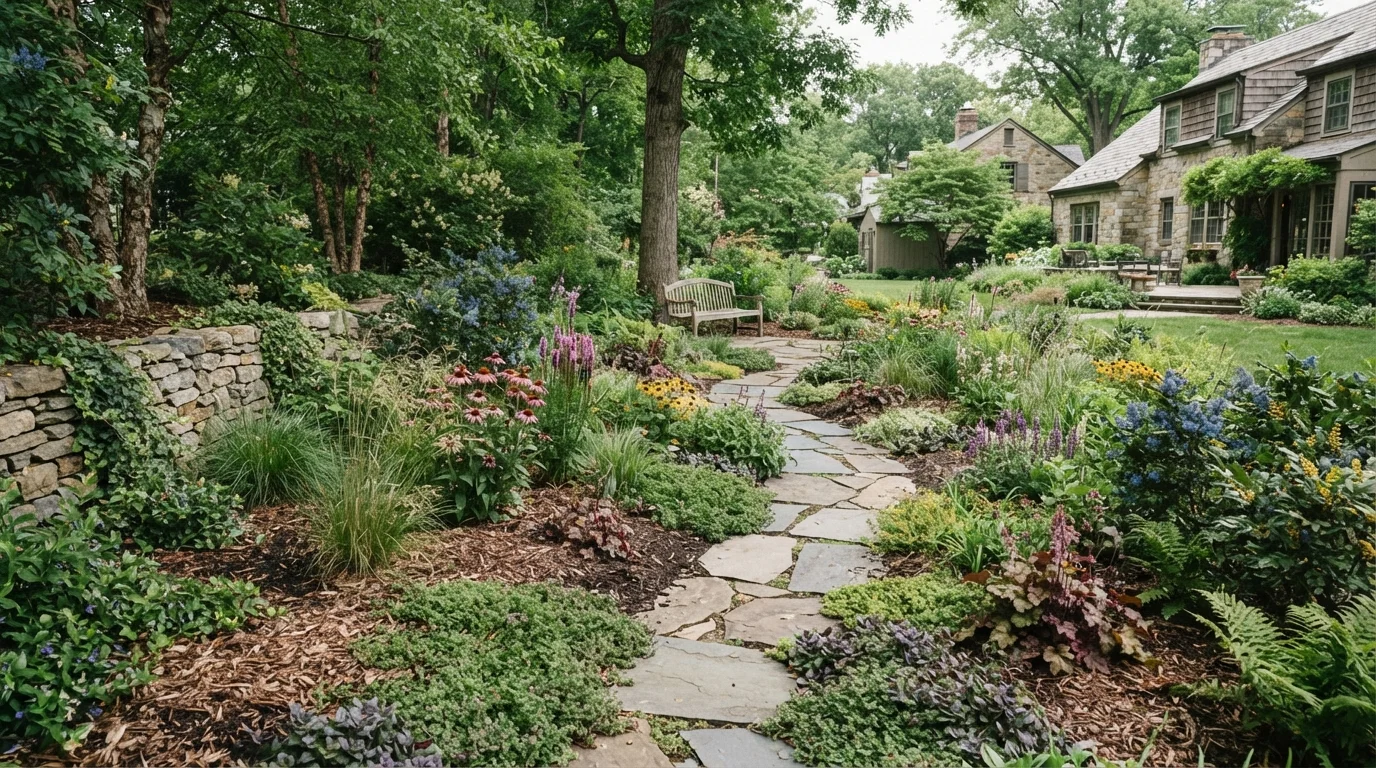
Bare soil is an open invitation for weeds. One of the most reliable strategies for reducing garden labor is making sure as little bare soil as possible is ever exposed. Ground covers — low-growing plants like creeping thyme, sedum, or ajuga — spread to fill gaps, crowd out weeds, and reduce the need for edging or mowing in awkward spots.
Mulch works alongside ground covers as a first line of defense. A 2–3 inch layer of organic mulch suppresses weeds, retains soil moisture, and moderates soil temperature. Over time, organic options like bark chips or shredded leaves also improve soil structure as they break down. For a thorough comparison of your options, see our look at organic vs. inorganic mulch.
Layer Your Mulch in Early Spring
Apply fresh mulch before the soil fully warms and annual weed seeds germinate. This timing gives you the best suppression effect for the entire growing season. Avoid piling mulch directly against plant stems or tree trunks, as this can promote rot and pest problems.
Design for Water Efficiency From the Start
Watering is one of the most time-intensive garden tasks — and one of the most commonly done wrong. Grouping plants by water needs (a practice sometimes called hydrozoning) means you're not overwatering drought-tolerant plants or underwatering thirsty ones just because they share a bed. It also makes drip irrigation and soaker hoses far more practical to install.
Drought-tolerant gardening techniques go hand in hand with this approach. Even if your region isn't drought-prone, building water efficiency into your design reduces both effort and waste. It's also worth revisiting assumptions about watering frequency — common habits like daily shallow watering can actually weaken plants over time. Our article on garden watering myths separates fact from habit.
50%
Potential reduction in outdoor water use
The EPA's WaterSense program estimates that landscape water use can often be reduced by around 50% through efficient irrigation and plant selection without sacrificing appearance.
3 inches
Optimal mulch depth for weed suppression
Research from cooperative extension programs consistently finds that 2–3 inches of organic mulch substantially reduces weed germination compared to unmulched beds.
Lean on Perennials and Smart Plant Combinations
Annuals can be beautiful, but replanting every season is labor-intensive and costly over time. Building your garden's backbone around perennials — plants that return year after year — dramatically reduces how much work each new season demands. Once established, many perennials also spread to fill space naturally, further limiting the room weeds have to take hold.
That doesn't mean abandoning annuals entirely. A thoughtful mix gives you reliable structure from perennials and seasonal color from a small number of annuals used strategically. Our perennials vs. annuals planning guide walks through how to balance both for a garden that rewards you across multiple seasons without constant replanting.
Incorporate Hardscaping to Reduce Planting Area
Not every square foot of your yard needs to be planted. Thoughtfully placed hardscaping — gravel, flagstone paths, pavers, raised beds, or a simple seating area — reduces the total planted area that needs watering, weeding, and seasonal care. It also creates visual structure that holds interest even when plants are dormant.
Raised beds are worth considering here too: they concentrate your planting in well-defined, easy-to-manage areas, often with improved drainage and soil control. The key is designing hardscape as a deliberate part of your garden plan from the start, rather than an afterthought. Once installed, it pays dividends in reduced upkeep for years. When the growing season winds down, a winter prep checklist ensures your garden — both planted and hardscaped areas — is ready to bounce back strongly in spring.
Hardscaping May Require Permits
Depending on your municipality, certain hardscaping projects — including retaining walls over a set height or significant changes to drainage — may require a permit or inspection. Always check with your local planning or building department before starting larger projects to avoid code violations or required removal later.
The content on this site is for informational purposes only and is not a substitute for professional advice. Always consult a qualified professional for guidance specific to your situation.