

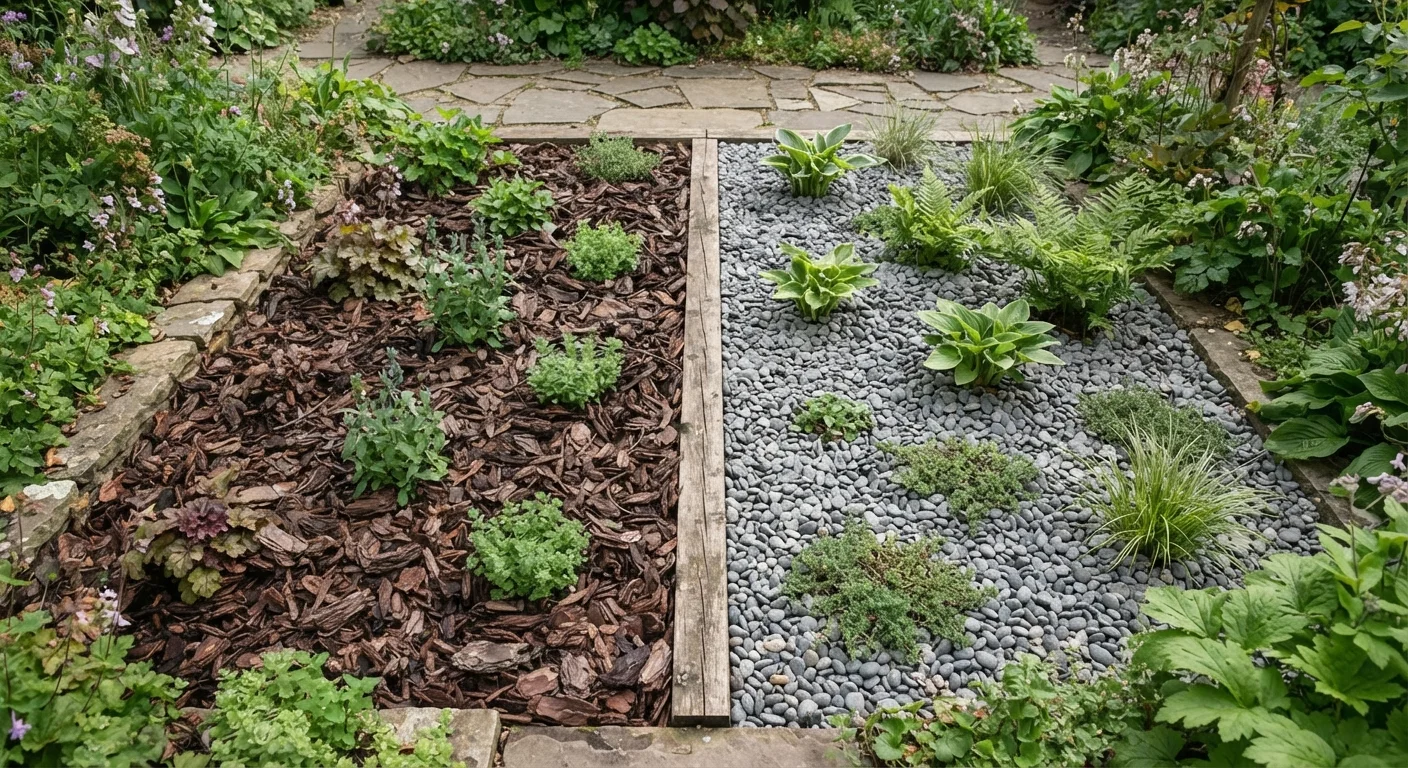
Option A
Organic Mulch
The living, soil-building choice that improves over time.
Best for: Gardeners who prioritize long-term soil health, moisture retention, and feeding established plants.
Option B
Inorganic Mulch
The durable, low-replenishment option for stable, tidy beds.
Best for: Gardeners seeking a long-lasting weed barrier with minimal seasonal upkeep.
What Separates Organic from Inorganic Mulch?
Mulch is anything spread over the soil surface to regulate temperature, retain moisture, and suppress weeds — but not all mulch behaves the same way. The first dividing line is simple: organic mulches were once living; inorganic mulches were not.
Organic mulches include bark chips, shredded wood, straw, leaf litter, pine needles, and compost. They decompose over time, which is both their greatest strength and their key limitation. As they break down, they feed soil microbes, improve soil structure, and add organic matter — all of which support the kind of thriving, responsive soil described in our guide to soil health.
Inorganic mulches include gravel, crushed stone, pea gravel, lava rock, rubber mulch, and landscape fabric. They don't decompose, which means they won't enrich your soil — but they also won't need replacing year after year. They excel in situations where permanence and minimal intervention are priorities.
| Criterion | Organic Mulch | Inorganic Mulch |
|---|---|---|
| Soil improvement | Yes — adds organic matter over time | No — does not enrich soil |
| Longevity | 1–2 years before replenishment needed | Many years; does not decompose |
| Weed suppression | Good when applied at correct depth | Good; fabric layers add extra barrier |
| Moisture retention | Excellent | Moderate; stone can shed water |
| Upfront cost | Generally low; some options free | Higher for stone and rock |
| Best plant contexts | Perennials, vegetables, shrubs | Xeriscaping, pathways, formal beds |
| Maintenance frequency | Annual or biennial top-up | Minimal once installed |
Where Organic Mulch Has the Edge
Organic mulches do something inorganic options simply cannot: they improve the ground beneath them. A 2–3 inch layer of bark chips or shredded leaves moderates soil temperature, reduces evaporation, and — as it slowly decomposes — feeds the microbial communities that make nutrients available to plant roots.
This makes organic mulch especially valuable in planted beds where you're growing perennials, shrubs, or food crops. Straw mulch on a vegetable bed, for example, keeps soil cooler during heat spells and suppresses annual weeds without leaving anything behind that harms next season's planting. It also integrates naturally into bed turnover — a key benefit if you're following a practice like home composting or rotating crops.
The trade-off is maintenance. Organic mulch decomposes — typically needing replenishment every one to two years depending on material and climate. It can also harbor moisture-loving pests if applied too thickly, and certain wood-based mulches may temporarily tie up nitrogen as they break down. Apply no more than 3 inches deep, and keep mulch a few inches away from plant stems to avoid rot.
25–50%
Potential reduction in soil water loss
Research from university extension programs consistently shows that a 2–3 inch organic mulch layer can reduce surface evaporation significantly compared to bare soil.
2–3 inches
Recommended organic mulch depth
Most cooperative extension guidelines cite this as the optimal depth range for weed suppression and moisture retention without impeding root oxygen exchange.
10°F+
Soil temperature moderation benefit
Studies on mulched versus unmulched beds suggest organic mulches can buffer soil temperatures by 10°F or more during both summer heat and early frost events.
Where Inorganic Mulch Makes Sense
Inorganic mulches trade soil-building ability for longevity and stability. Gravel, river rock, and lava stone won't blow away in wind, won't decompose, and don't need annual topping-up. In formal beds, pathways, or xeriscaped areas — where the goal is structure rather than fertility — they're a practical fit.
Landscape fabric, often used under gravel, suppresses weeds effectively in the short term. However, it's worth noting that fabric can degrade over several years, allowing weed seeds to establish in the layer of debris that accumulates on top. It also restricts the movement of water and beneficial organisms into the soil, which can work against long-term plant health in planted beds.
For a low-maintenance garden design, inorganic mulch around drought-tolerant plants or in pathways between beds can significantly cut routine upkeep. The upfront cost of stone tends to be higher than organic options, but the absence of ongoing replenishment can even out over time.
A Note on Rubber Mulch
Rubber mulch — often made from recycled tires — is marketed as a long-lasting inorganic option. While it does resist decomposition, concerns have been raised in horticultural literature about potential leaching of compounds into the soil over time, particularly in food-growing areas. Most extension specialists recommend avoiding rubber mulch in vegetable gardens and near edible plants until more long-term data is available.
Seasonal Timing and Layering Depth
When you apply mulch matters nearly as much as what you apply. Spreading organic mulch in spring — after the soil has warmed slightly but before summer heat peaks — captures the most benefit for moisture retention. Autumn application helps insulate plant roots against freeze-thaw cycles and is a key step in preparing your garden for winter.
Depth is a frequent point of confusion. A common guideline is 2–3 inches for most organic mulches and 1.5–2 inches for gravel or stone. Thinner layers underperform on weed suppression; thicker layers can block oxygen and water from reaching roots — a condition sometimes called "mulch volcano" when piled against tree trunks. Regardless of mulch type, always leave a clear gap around plant bases.
For gardeners weighing mulch alongside broader decisions about bed structure, the same principles apply whether you're working with raised beds or in-ground plots: match the material to the context rather than applying one rule everywhere.
The content on this site is for informational purposes only and is not a substitute for professional advice. Always consult a qualified professional for guidance specific to your situation.