

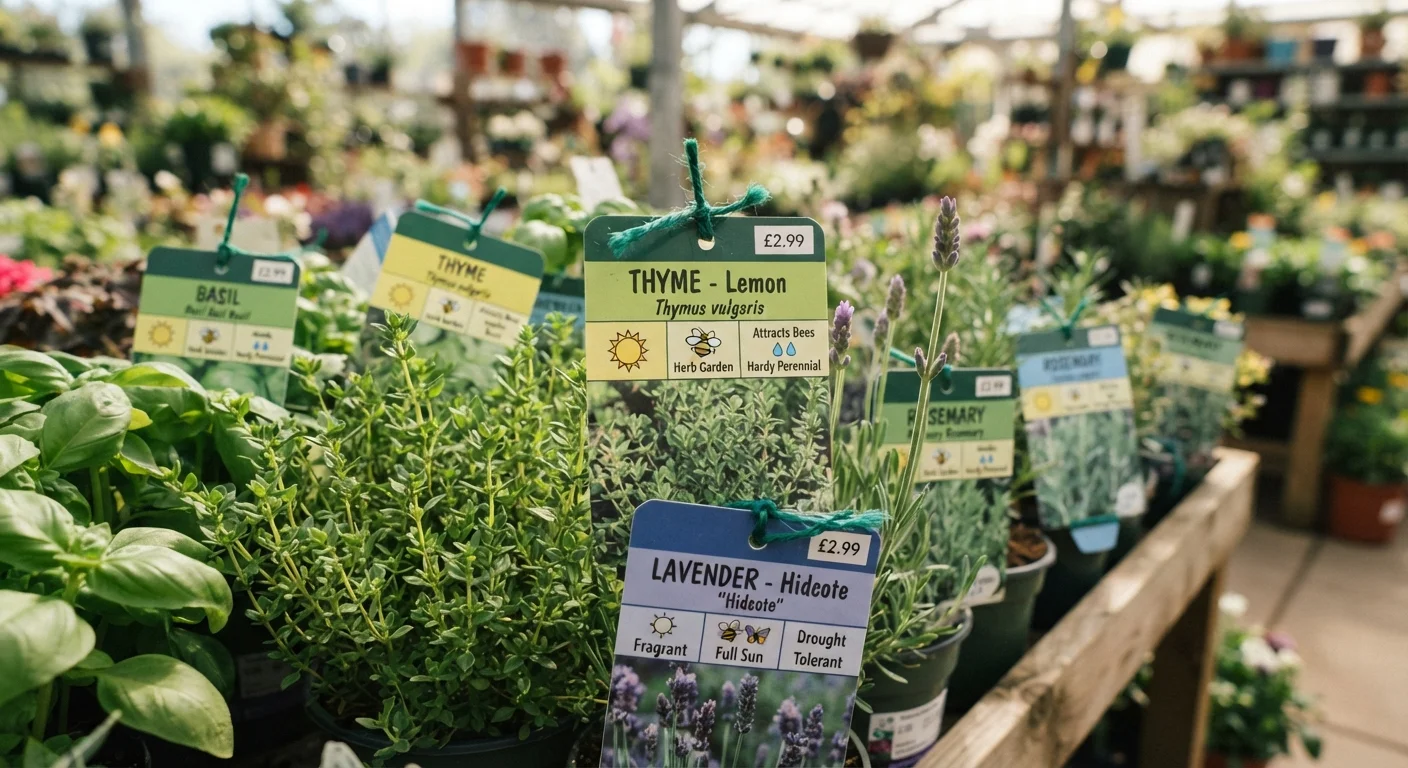
Why Plant Labels Are Worth a Closer Look
Most gardeners glance at a plant label for the name and price, then tuck it into the pot and forget it. That's a missed opportunity. A well-printed plant label carries specific, actionable data — hardiness zones, light needs, spacing requirements, water habits — that directly affects whether a plant thrives or struggles in your yard.
The challenge is that labels use a mix of shorthand symbols, zone codes, and botanical terms that can feel opaque if no one's ever walked you through them. This guide does exactly that. Whether you're standing in a nursery or sorting through plants you've already brought home, here's how to decode what you're reading.
| USDA Hardiness Zones | Zones 1–13 (1 = coldest, 13 = warmest) (USDA Agricultural Research Service) |
| Full Sun Definition | 6+ hours of direct sunlight per day |
| Part Shade Definition | 3–6 hours of direct sunlight per day |
| Annual Life Cycle | One growing season, then dies |
| Perennial Life Cycle | Returns each year from same root system |
| Typical Spacing Guidance | Listed in inches or feet between plants |
Hardiness Zones: The First Number to Find
Look for a range like Zones 4–8 or USDA Zone 5. This refers to the USDA Plant Hardiness Zone Map, which divides the country into zones based on average annual minimum winter temperatures. The lower the zone number, the colder the winters it can endure.
If your garden falls within the listed zone range, the plant is likely to survive your winters. If your zone is colder than the minimum listed, the plant may die back in winter or require protection. If you're warmer than the maximum, some plants — particularly those that need a cold dormancy period — may underperform.
You can look up your specific USDA zone using your zip code on the USDA's official map tool. Once you know your zone, it becomes one of the fastest filters for plant selection.
Hardiness Zone
A geographic designation based on average annual minimum winter temperatures, used to indicate which plants are likely to survive winter in a given area. The USDA divides the US into zones numbered 1 through 13.
Tender Perennial
A plant that behaves as a perennial in warm climates but cannot survive frost, so it is grown as an annual in colder regions.
Spread
The expected horizontal width of a plant at maturity. Used alongside height to determine how much space a plant will occupy in the garden.
Biennial
A plant that takes two growing seasons to complete its life cycle — producing foliage in year one and flowers or seeds in year two before dying.
pH Range
A measure of soil acidity or alkalinity on a scale from 0 to 14, where 7 is neutral. Most garden plants prefer a slightly acidic to neutral range of roughly 6.0–7.0.
Sun and Water Symbols Explained
Most labels use simple icons to communicate light and moisture needs. Here's what the standard symbols typically mean:
- Full sun (solid sun icon): The plant needs at least 6 hours of direct sunlight per day. Place it in your sunniest spot.
- Part sun / Part shade (half sun icon): 3–6 hours of direct sun daily, ideally with some afternoon shade in hotter climates.
- Full shade (no sun or cloud icon): Fewer than 3 hours of direct sun. These plants do best under tree canopies or on north-facing beds.
Water symbols are less standardized, but labels often use droplet icons — one droplet for low water needs, two for moderate, three for high. Terms like drought tolerant or moisture loving will sometimes appear in text instead. For plants described as drought tolerant, see our drought-tolerant gardening guide for compatible growing strategies.
Spacing, Spread, and Mature Size
Labels typically list two size figures: height and spread (sometimes called width). These reflect the plant's mature dimensions, not its size at purchase. A shrub labeled 3–4 ft. H × 4–5 ft. W will eventually need that much room — planting it too close to a path or fence creates problems down the road.
The spacing number (sometimes listed separately as plant 18 in. apart) tells you the distance to leave between individual plants when planting multiples. For groundcovers and perennials, following this guideline allows plants to fill in naturally without overcrowding, which also reduces disease pressure from poor air circulation.
Choosing plants whose mature size suits your space is one of the core principles in designing a low-maintenance outdoor space. Oversized plants create ongoing pruning work; undersized ones leave visual gaps for years.
Annual, Perennial, Biennial — What It Means for Your Garden
These terms describe a plant's life cycle, which affects how you plan and budget for your garden:
- Annual: Completes its entire life cycle — germination, flowering, seed-set, and death — in one growing season. You'll replant each year, but annuals often bloom prolifically all season.
- Perennial: Returns year after year from the same root system. Most go dormant in winter. Initial cost is higher, but they multiply over time.
- Biennial: Takes two growing seasons to complete its cycle — foliage in year one, flowers and seed in year two, then dies. Less common in home gardens but worth recognizing (foxglove and hollyhock are familiar examples).
Labels may also note tender perennial, meaning the plant is perennial in warm climates but treated as an annual in colder zones. Healthy soil supports all these plant types — visit our soil health guide to understand how soil quality affects plant establishment and long-term vigor.
13
USDA Plant Hardiness Zones in the US
The USDA divides the continental US, Alaska, Hawaii, and territories into 13 zones based on minimum winter temperatures.
6 hrs
Minimum daily sun for 'full sun' classification
Horticultural standards consistently define full sun as a minimum of six hours of direct sunlight per day.
Other Terms You May See
A few additional label terms come up regularly and are worth knowing:
- Deer resistant
- The plant is less palatable to deer, though no plant is deer-proof under pressure or in areas with very high deer populations.
- Native
- The plant is indigenous to a particular region of North America. Native plants are generally well adapted to local conditions and support local pollinators.
- Attracts pollinators
- The plant's flowers, foliage, or seeds are known to draw bees, butterflies, or other beneficial insects.
- pH range
- The soil acidity level where the plant performs best, expressed as a number (e.g., 6.0–7.0). A soil test can tell you where your garden falls.
When you head into a nursery armed with your USDA zone, your light conditions, and an understanding of these label terms, plant selection stops being guesswork. The label becomes a reliable tool — one that helps you match plants to your actual garden rather than hope for the best. For end-of-season planning, our winter garden preparation checklist can help you care for your new plants before cold weather arrives.
The content on this site is for informational purposes only and is not a substitute for professional advice. Always consult a qualified professional for guidance specific to your situation.