

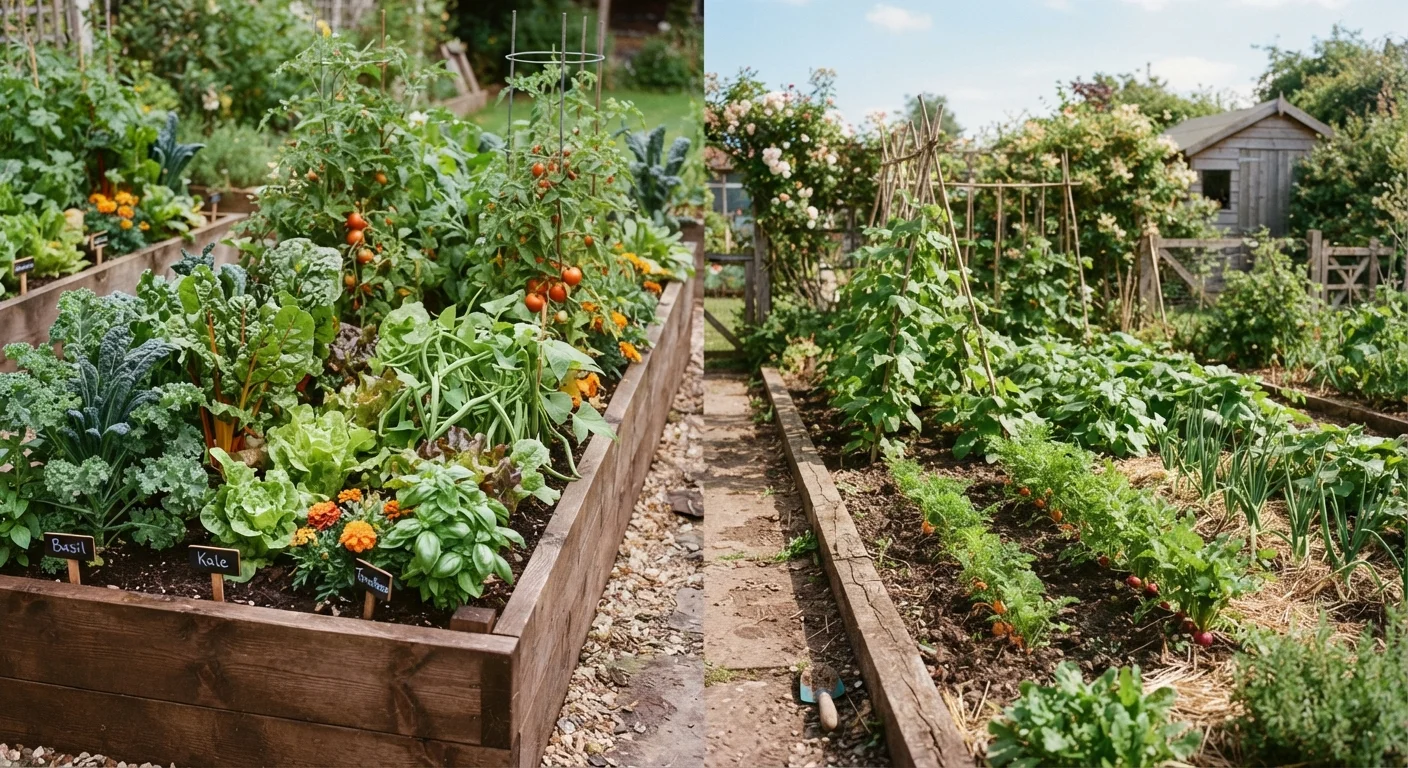
Option A
Raised Beds
The controlled, elevated growing environment.
Best for: Gardeners dealing with poor native soil, drainage problems, limited mobility, or compact yards who want precise control over growing conditions.
Option B
In-Ground Planting
The traditional, expansive growing method.
Best for: Gardeners with decent existing soil, larger planting areas, or deep-rooted crops that need unrestricted space to thrive.
How Soil Quality Shapes the Decision
The condition of your existing yard soil is usually the clearest indicator of which approach will serve you better. In-ground gardening works well when native soil is naturally loamy, drains reasonably, and holds nutrients — conditions many gardeners in agricultural regions already enjoy. Where soil is good, improving it with compost and mulch over time is both practical and affordable.
When native soil is heavy clay, sandy and fast-draining, compacted from foot traffic or construction, or potentially contaminated (common in older urban lots), raised beds offer a practical reset. You fill them with a custom blend — typically a mix of topsoil, compost, and aged organic matter — that plants can immediately thrive in. This is especially useful if you're starting your first garden and don't yet know your soil's baseline quality.
A simple soil test, available through most university extension programs and garden centers, can reveal pH, drainage tendency, and nutrient levels. That data alone will tell you whether in-ground improvement is realistic or whether raised beds are the smarter path forward.
| Criterion | Raised Beds | In-Ground Planting |
|---|---|---|
| Upfront cost | Moderate to high (materials + fill soil) | Low (use existing soil) |
| Soil control | Complete — you build from scratch | Limited — amend existing soil |
| Drainage | Excellent — drains freely | Variable — depends on native soil |
| Weed pressure | Lower — fewer dormant weed seeds | Higher — tilling stirs weed seeds |
| Scalability | Limited by material cost | Easy to expand over large areas |
| Root depth for large crops | Restricted by bed depth | Unlimited — ideal for deep roots |
| Accessibility | High — adjustable working height | Low — requires bending and kneeling |
| Season extension | Yes — soil warms faster in spring | Minimal — slower to warm |
Cost, Setup, and Long-Term Maintenance
In-ground planting wins decisively on upfront cost. You're working with soil that's already there — startup expenses may include little more than compost, seeds, and a few basic tools. For gardeners covering large areas, this scalability is hard to beat.
Raised beds carry real initial costs: lumber or composite frame materials, hardware, and enough quality fill mix to reach adequate depth (at least 12 inches for most vegetables). Depending on bed size and materials, a single 4×8-foot bed can run anywhere from $50 to several hundred dollars. That said, well-built cedar or composite beds can last a decade or more, spreading cost over many growing seasons.
12–18 inches
Recommended raised bed depth for most vegetables
Horticultural guidelines generally suggest this minimum depth to allow adequate root development for common vegetable crops.
2–4 weeks
Earlier planting possible in raised beds
Raised bed soil warms faster than surrounding ground in spring, potentially extending the growing season by several weeks in cooler climates.
30–50%
Potential reduction in weeding time
Gardening educators commonly report that raised beds, when filled with weed-free mix, can significantly reduce weeding compared to tilled in-ground plots.
Ongoing maintenance also differs. Raised beds suppress weeds more effectively because you're not disturbing dormant weed seeds the way tilling in-ground plots can. However, they dry out faster and may need more frequent watering. In-ground beds often retain moisture longer but can become compacted or weed-heavy without consistent attention. Pairing either method with the right mulch strategy — whether organic or inorganic — matters significantly for moisture retention and weed control. See our guide on organic vs. inorganic mulch for a deeper look at the trade-offs.
Drainage, Seasons, and Plant Suitability
Raised beds drain more freely than most in-ground plots, which benefits vegetables like tomatoes, peppers, and root crops that are sensitive to waterlogged roots. This same drainage also means the soil warms more quickly in early spring, allowing planting a few weeks earlier in cooler climates — a meaningful advantage in short-season areas.
In-ground plots retain moisture longer, which suits drought-tolerant plants and crops with deep root systems. Native plants, in particular, often establish far better in-ground because their roots can reach into native soil layers that contain the microbial diversity and mineral profile they evolved with. If you're considering native species for your garden, our article on the case for native plants explores the ecological and practical benefits in detail.
For mixed gardens combining perennials and annuals, the choice can get nuanced. Compact annuals and herbs suit raised beds well; spreading perennials may perform better in-ground where roots can establish widely over years. Understanding how your plant mix behaves over time is part of the planning equation — something covered thoroughly in our perennials vs. annuals guide.
Not an Either-Or Decision
Many gardeners use both methods in the same yard — raised beds for herbs, salad greens, and compact vegetables near the house, and in-ground space for sprawling crops or native plantings further out. Mixing approaches lets you match the growing method to the plant's needs rather than forcing every crop into one system. If space is very limited, container gardening can complement both methods on patios or balconies.
The content on this site is for informational purposes only and is not a substitute for professional advice. Always consult a qualified professional for guidance specific to your situation.