

Our Verdict
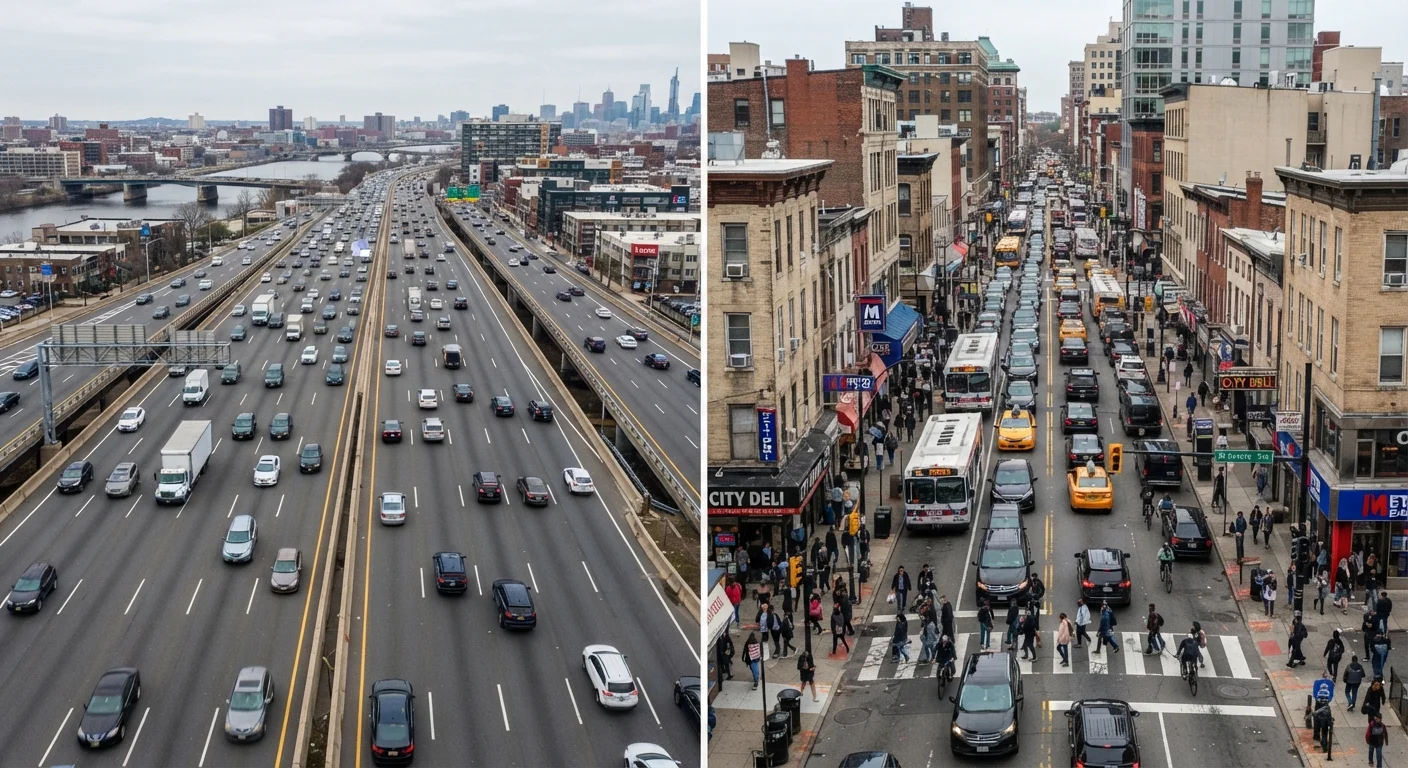
Neither motorway nor urban driving is inherently more dangerous — each presents a distinct risk profile that demands a specific approach. Motorways reward sustained attention and precise speed management; city driving demands constant situational awareness and split-second hazard response. Recognising which environment you're in — and shifting your mindset accordingly — is the foundation of genuinely safe driving.
| Best for | Recommended |
|---|---|
| Drivers covering long highway distances | Motorway risk strategies: manage fatigue, maintain following distance, monitor speed |
| Drivers navigating city commutes and dense traffic | Urban risk strategies: anticipate pedestrians, reduce speed at junctions, limit distractions |
Two Roads, Two Risk Profiles
Most drivers move fluidly between motorways and urban streets without consciously shifting their approach. But road safety research consistently shows that these environments pose different types of threats — and responding to one with the mindset suited to the other can increase your exposure to harm.
Motorways in the US account for a disproportionate share of fatal crashes relative to the miles driven on them, primarily because high speeds amplify the consequences of any error. Urban roads, by contrast, produce a higher frequency of collisions, most of which occur at lower speeds but involve a much wider range of unpredictable actors: pedestrians, cyclists, delivery vehicles, and drivers navigating unfamiliar streets.
Understanding the mechanics behind each risk profile lets you apply the right cognitive tools before an incident can develop. See also our guide on defensive versus reactive driving for the broader framework underpinning proactive road behaviour.
| Motorway Driving | Urban Driving | |
|---|---|---|
| Primary hazard type | High-speed impacts, rear-end crashes | Intersection collisions, pedestrian conflicts |
| Crash frequency | Lower frequency | Higher frequency |
| Crash severity | Higher (speed amplifies impact) | Lower on average (slower speeds) |
| Key cognitive demand | Sustained attention, fatigue resistance | Rapid, repeated hazard scanning |
| Main driver risk factor | Complacency, drowsiness, tailgating | Distraction, aggression, gap misjudgement |
| Speed management priority | Maintain safe following distance at speed | Buffer below posted limit for reaction time |
Motorway Hazards: Speed, Fatigue, and Complacency
The primary risk factors on motorways are closely tied to sustained high speed and reduced stimulation. When traffic flows smoothly at 65–80 mph, drivers often enter a state of reduced alertness sometimes called highway hypnosis — a gradual narrowing of attention caused by the monotony of the environment.
At motorway speeds, reaction time translates into far greater stopping distances. A vehicle travelling at 70 mph covers roughly 103 feet per second. Even a brief distraction of two seconds means more than 200 feet traveled without the driver fully processing the road ahead.
Use the 3-Second Rule — and Extend It
On motorways, the standard 3-second following distance is a minimum, not a target. In heavy traffic, rain, or at speeds above 65 mph, extend your gap to 4–5 seconds. Pick a fixed point on the road and count from when the vehicle ahead passes it to when you do — if you reach the marker before finishing your count, you're too close.
Lane-change collisions and rear-end crashes dominate motorway incident reports, often involving drivers who underestimated closing speeds or misjudged following distances. Fatigue compounds all of these risks. Long stretches without a break degrade decision-making and reaction time in ways that closely mirror the effects of alcohol impairment. Combining night driving with motorway travel is particularly hazardous — our article on night driving risks covers why darkness changes the equation significantly.
Urban Hazards: Density, Distraction, and Conflict Points
City driving is cognitively demanding in an entirely different way. Where motorways ask you to sustain focus over distance, urban environments require rapid, repeated hazard assessments in a compressed space. Intersections, crosswalks, bus stops, parking manoeuvres, and cyclists each introduce new conflict points — moments where the paths of different road users could intersect.
Research from the NHTSA consistently identifies intersection-related crashes as a leading cause of urban fatalities. Right-of-way ambiguity, misjudged gaps, and distracted driving at traffic signals all contribute. Our practical reference on roundabouts, junctions, and right of way breaks down the rules across different junction types.
Aggressive driving behaviour also rises markedly in stop-and-go urban traffic. Frustration builds quickly in congested conditions, and minor provocations can escalate faster than drivers anticipate. Understanding road rage escalation patterns is particularly relevant for regular city commuters.
~50%
Urban crash share from intersections
NHTSA data indicates approximately half of all urban traffic crashes involve intersection-related conflicts.
103 ft/sec
Distance covered at 70 mph
At highway speeds, a two-second distraction means over 200 feet of road traveled without full driver awareness.
2 hrs
Recommended motorway rest interval
Driver fatigue research broadly supports taking a rest break at least every two hours on long highway journeys.
Adjusting Your Mindset for Each Environment
Safe driving isn't a single fixed mode — it's an adaptive skill. On motorways, the priority adjustments are:
- Following distance: Maintain at least a 3–4 second gap in normal conditions, more in wet weather. See our guide on driving in adverse weather for weather-specific adjustments.
- Fatigue management: Plan rest stops every two hours on long journeys; do not rely on caffeine alone to counter drowsiness.
- Speed calibration: Posted speed limits set a legal ceiling, not a safe target. Speed limit signs aren't the whole story — conditions should always shape your actual speed.
In urban environments, the priority adjustments shift:
- Scanning ahead: Look 10–15 seconds ahead to identify pedestrians, cyclists, and vehicles about to enter your path.
- Distraction discipline: The density of hazards makes any distraction — including navigation systems — disproportionately risky at city speeds.
- Speed buffers: Travelling at or just below posted urban limits, rather than right at the maximum, gives measurably more time to respond to sudden hazards.
Matching your approach to the road you're on — not defaulting to a single driving mode — is what separates experienced, safe drivers from those who are merely competent in familiar conditions.
The content on this site is for informational purposes only and is not a substitute for professional advice. Always consult a qualified professional for guidance specific to your situation.