

The Case for Skipping the Crowded Icons
America's most famous national parks — Yellowstone, Yosemite, Grand Canyon — collectively host tens of millions of visitors annually. The parking lots fill by dawn during peak season, popular trails feel like busy sidewalks, and the solitude that draws people to wild places can be surprisingly hard to find. Yet the National Park System encompasses more than 60 designated parks spread across 30-plus states and territories, and a significant number of them see fewer than 500,000 visitors per year.
The parks highlighted below aren't obscure because they lack quality. They're overlooked largely because they sit outside the major travel corridors or require a bit more logistical effort to reach. That extra effort is frequently the whole point. For context on how designation types affect what to expect from any park visit, understanding the difference between national parks and monuments is a useful starting point.
Visitor Numbers Shift Over Time
A park described as 'undervisited' today can gain popularity quickly following media coverage or social media attention. Visitation data and crowd patterns are tracked annually by the National Park Service and are worth reviewing before finalizing plans. What was uncrowded three years ago may now require timed-entry reservations during peak weeks.
Parks Worth Seeking Out
Isle Royale National Park, Michigan
Accessible only by ferry or floatplane from the Michigan or Minnesota shoreline, Isle Royale sits as an island archipelago in northwestern Lake Superior. It consistently ranks among the least-visited national parks in the contiguous US, which is remarkable given its ecological richness. The park is car-free, meaning every mile of its roughly 165-mile trail network is experienced on foot or by kayak.
The island hosts one of the longest-running predator-prey studies in the world, tracking wolves and moose across decades. Hikers have a realistic chance of spotting moose, loons, foxes, and bald eagles. The park is only accessible during warmer months — it closes in winter — so planning a summer or early-fall trip is essential.
Isle Royale is car-free and only reachable by ferry or floatplane, guaranteeing genuine remoteness.
Great Basin National Park, Nevada
Tucked near the Nevada-Utah border in a region most travelers drive through without stopping, Great Basin National Park contains extraordinary geological and biological diversity within a compact area. The park rises from sagebrush desert to 13,063-foot Wheeler Peak, where ancient bristlecone pines — among the oldest living organisms on Earth — grow near a small glacier remnant.
Below ground, Lehman Caves offers guided tours through marble caverns decorated with rare shield formations. The park's remote location away from major cities produces some of the darkest night skies in the lower 48 states, making it an exceptional destination for stargazing.
Great Basin's remote location creates some of the darkest, most star-filled skies in the continental US.
Congaree National Park, South Carolina
South Carolina's only national park protects the largest intact expanse of old-growth bottomland hardwood forest remaining in the southeastern United States. Congaree's floodplain ecosystem is visually dramatic: massive loblolly pines and bald cypresses rise from tangled root systems above seasonal floodwaters, creating a cathedral-like canopy overhead.
Boardwalk loops make portions of the park accessible without specialized gear, while canoe trails through Cedar Creek provide a more immersive view of the wilderness. Firefly synchronization events in late May and early June draw a modest but growing audience — those interested should check the NPS website well in advance, as access during the event requires a timed entry permit.
Congaree protects the largest old-growth bottomland hardwood forest left in the American Southeast.
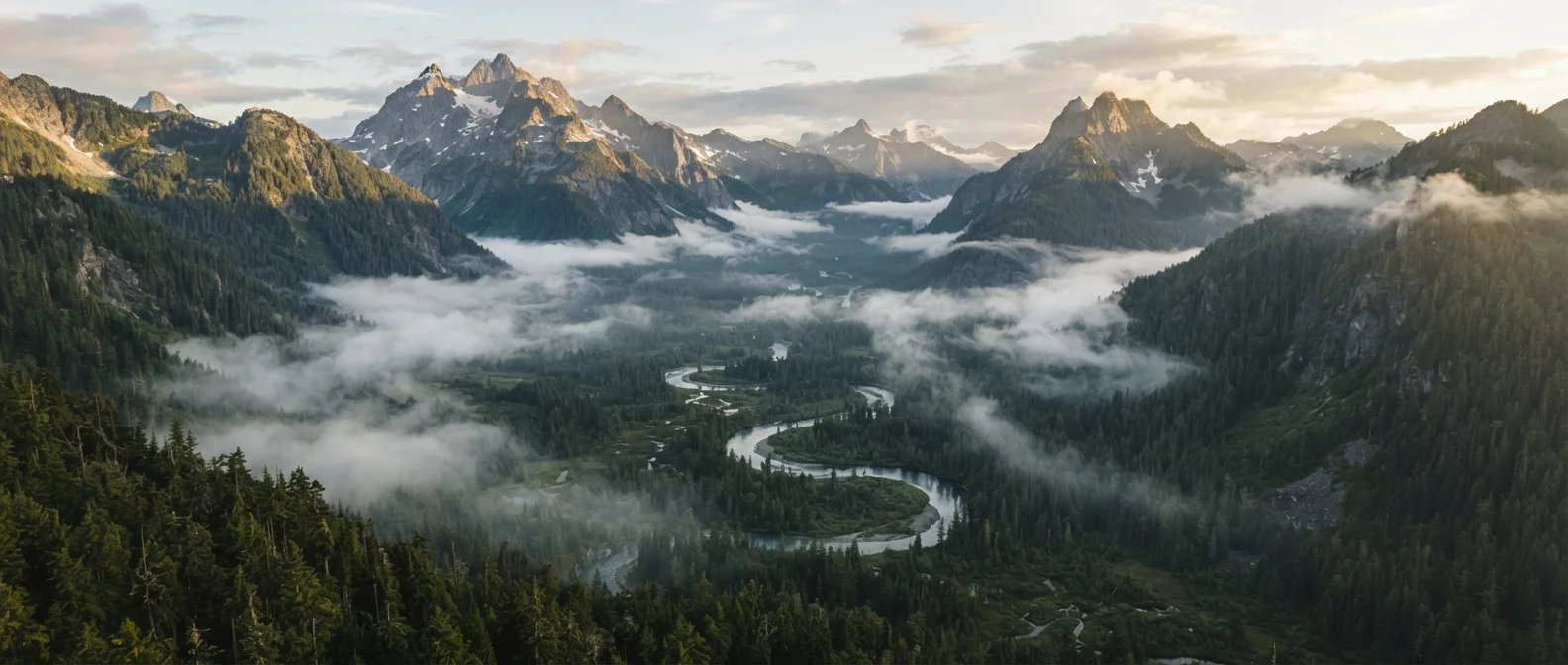
North Cascades National Park, Washington
Sharing a state with Mount Rainier — one of the most-visited parks in the Pacific Northwest — North Cascades receives a fraction of the attention despite containing more glaciers than any other park in the contiguous United States. The terrain is rugged and uncompromising: jagged peaks, turquoise glacial lakes, and dense old-growth forest characterize much of the park's interior.
The primary highway corridor (SR-20) provides access to stunning viewpoints and trailheads, but venturing deeper into the backcountry requires permits and solid wilderness skills. Wildlife including black bears, mountain goats, and gray wolves inhabits the park. The highway itself closes in winter due to snowfall, limiting visitation to roughly May through November.
North Cascades contains more glaciers than any other national park in the contiguous United States.
Guadalupe Mountains National Park, Texas
Adjacent to Carlsbad Caverns across the New Mexico border and often treated as an afterthought on a caverns itinerary, Guadalupe Mountains National Park deserves its own dedicated visit. The park protects the world's most extensive Permian-era fossil reef — now exposed as dramatic limestone ridgelines — along with the highest peak in Texas, Guadalupe Peak at 8,751 feet.
Autumn brings a striking display of color to the McKittrick Canyon trail, one of the most celebrated fall foliage hikes in Texas and a sharp contrast to the surrounding Chihuahuan Desert. Facilities are minimal, with no food services and limited water — visitors should plan to be self-sufficient. The broader Southwest desert context provides useful background for understanding the region's geology and climate.
Guadalupe Mountains protects the world's most extensive exposed Permian-era fossil reef formation.
Voyageurs National Park, Minnesota
Voyageurs is one of the few US national parks where a boat — not a car or hiking boots — is the primary mode of transport. Straddling the Minnesota-Canada border, the park encompasses four large interconnected lakes along with forested islands and a shoreline shaped by glaciation over millennia. Houseboats and motorboats can be rented from gateway towns; canoes and kayaks suit those who prefer quieter travel.
Winter transforms the park entirely: frozen lake surfaces become snowmobile corridors and cross-country ski trails, and the northern location provides occasional views of the aurora borealis. Summer brings loons, osprey, bald eagles, and — for patient observers — occasional wolf sightings along shorelines at dusk.
In Voyageurs, a boat replaces the car as the essential vehicle for exploring the park's vast water landscape.
Check Permit and Reservation Requirements Early
Even less-visited parks can have capacity limits for specific campgrounds, backcountry zones, or seasonal events. The National Park Service's Recreation.gov platform is the central booking system for most permit-required activities. Checking requirements several months ahead — particularly for summer travel — can prevent arriving to find access restricted.
Planning Your Visit Thoughtfully
Visiting lower-traffic parks comes with real advantages, but also genuine responsibilities. Infrastructure — paved roads, staffed visitor centers, cell service, medical facilities — is often limited or absent. Carrying detailed paper maps, sufficient water, and informing someone of your itinerary are baseline precautions, not optional extras.
Because foot traffic in these parks is lighter, ecological impact per visitor is proportionally higher. Staying on marked trails, following Leave No Trace principles, and being particularly careful around fragile desert or tundra ecosystems matters enormously. Several of these parks also sit within or adjacent to Indigenous cultural landscapes — travelling respectfully at Indigenous cultural sites outlines the informed approach that makes a real difference.
Permit systems, entrance fees, and seasonal access can shift — always verify current conditions directly with the National Park Service before departure. If you're weighing when to travel, off-season travel strategies explored for cities apply equally well to gateway towns near these parks. And if crowd frustration at popular parks motivated this search, understanding where national park visits go wrong offers useful perspective on what to avoid regardless of destination.
The content on this site is for informational purposes only and is not a substitute for professional advice. Always consult a qualified professional for guidance specific to your situation.