

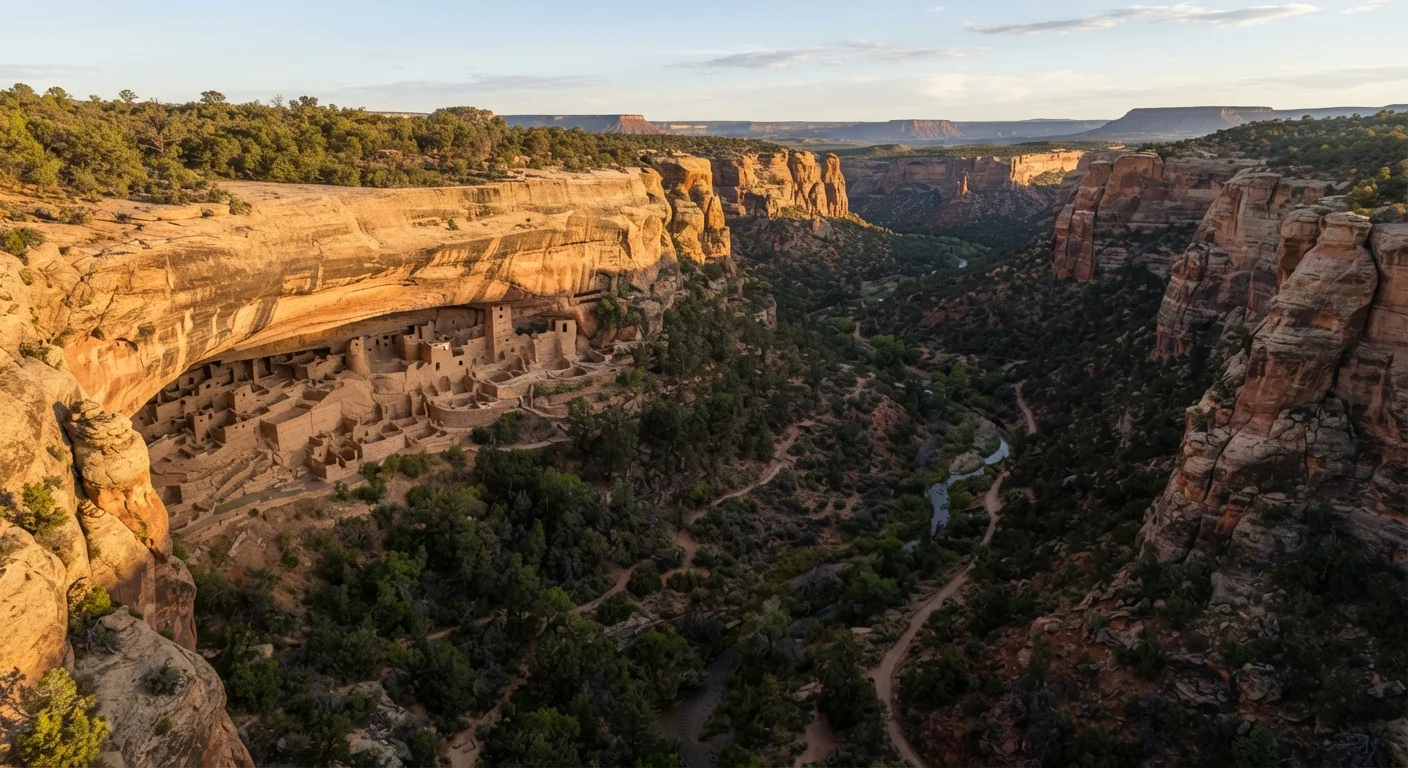
Understanding What Makes These Sites Different
Visiting a place like Mesa Verde, Chaco Culture National Historical Park, or a tribally managed site in the Southwest is fundamentally different from visiting a conventional national park. These are not simply scenic landscapes or historical curiosities — they are living cultural landscapes tied to the identities, spiritual practices, and legal sovereignty of tribal nations that continue to exist today.
The American Southwest alone holds an extraordinary concentration of such places. As our guide to the American Southwest notes, Indigenous heritage is inseparable from the region's identity — from canyon geology to dwelling sites that predate European contact by centuries. Approaching these sites as a responsible visitor begins with recognising this depth of meaning before you arrive.
Sovereignty Shapes Every Rule
Tribal nations in the United States are recognised as sovereign governments with the authority to set their own laws, including those governing visitor access to their lands. This means the rules on one nation's territory may differ substantially from those on an adjacent federal parcel. Federal land management agencies such as the National Park Service do not have jurisdiction over tribal land, and vice versa. Always treat the two as distinct, and seek guidance from each authority separately.
Core Practices for Responsible Visits
Responsible visitation is not simply a matter of good manners — it reflects an informed understanding of sovereignty, law, and cultural dignity. The practices below apply broadly across tribally managed sites and federal lands with Indigenous cultural significance.
Verify access rules directly with the relevant tribal nation before visiting.
Tribal nations have sovereign authority over their lands. Entry rules, permitted areas, photography policies, and ceremonial closures vary significantly and change over time. Federal agency websites may not reflect current tribal requirements.
Follow all photography restrictions without exception or negotiation.
Photography of sacred spaces, ceremonies, and individuals without consent is a serious violation of cultural privacy and dignity. Many sites post clear restrictions; others rely on visitors to ask before raising a camera.
Stay on designated paths and do not enter closed or unmarked areas.
Areas that appear accessible may be spiritually significant, archaeologically sensitive, or simply not intended for outside visitors. Wandering off trail can cause physical damage and constitutes trespass on sovereign land.
Never remove objects, materials, or natural items from cultural sites.
Removing artifacts — even small pottery fragments or stones — is a federal crime under ARPA and NAGPRA. Beyond legality, it irreversibly strips communities of physical connections to their heritage.
Prioritise Indigenous-led guides and businesses for your visit.
Tribal and community-operated services keep economic benefit within the community, ensure culturally accurate interpretation, and often provide access to areas or knowledge unavailable through outside operators.
Approach ceremonies and gatherings as a respectful observer, not a participant, unless explicitly invited.
Public ceremonies at some pueblos are open to outside observers under specific conditions — but that openness does not mean casual participation, commentary, or behaviour that disrupts the event.
Planning Ahead the Right Way
Responsible visits to Indigenous cultural sites require more deliberate pre-trip preparation than a typical park outing. Our pre-trip planning checklist covers many of the foundational steps — permits, entry requirements, and accessibility checks — that apply here with added urgency.
Beyond logistics, preparation means doing genuine research. Read materials published or approved by the relevant tribal nation. Look for cultural interpretation centres or welcome programmes operated by the community itself. Many nations — including the Navajo Nation, the Hopi Tribe, and the Pueblo of Acoma — maintain visitor services offices that publish clear guidance on what is and is not permitted on their lands.
The Role of Indigenous-Led Tourism
One of the most meaningful choices a visitor can make is to book experiences directly through Indigenous-owned and -operated tourism services. Tribally operated tour operators, cultural centres, and guided walks not only provide access that independent visitors may not have — they ensure that the revenue, the narrative, and the authority over how a site is presented remain with the community itself.
This approach also tends to produce richer, more accurate experiences. Guides who belong to the community bring historical and spiritual context that no outside interpretation can replicate. If you are exploring the broader question of lower-impact travel, our overview of sustainable travel principles provides a useful framework for thinking about community benefit alongside environmental considerations.
“Tourism on Indigenous lands should begin with the question: what does this community want visitors to understand, and how have they chosen to share it? That framing shifts the entire experience.”
— Travel & Places Editorial Team, Editorial perspective on culturally responsible travel
Common Mistakes — and How to Avoid Them
Even well-intentioned visitors make errors that cause real harm. The most common involve photography, artifact collection, and assumptions about access. Understanding where these mistakes typically occur can help you avoid them.
Photography is one of the most contested areas. Many tribes prohibit photography entirely within ceremonial spaces or during specific events. Others require a fee-based permit. Photographing people — particularly elders or children — without explicit, individual consent is widely considered disrespectful regardless of location. When in doubt, ask; when told no, accept that without negotiation.
Artifact collection — including picking up pottery shards, stones, or any material from the ground at archaeological sites — is illegal under the Archaeological Resources Protection Act (ARPA) and the Native American Graves Protection and Repatriation Act (NAGPRA). These laws carry significant penalties. The same applies to removing natural materials from many tribal lands. If you are unfamiliar with how permit systems and regulations at high-demand sites can affect your visit, our piece on common national park visit mistakes addresses related planning gaps worth understanding.
Finally, do not assume that federal land designation means open access. Tribal lands adjacent to or within national monuments, parks, and recreation areas may have entirely separate entry rules governed by the relevant nation — not the National Park Service.
The content on this site is for informational purposes only and is not a substitute for professional advice. Always consult a qualified professional for guidance specific to your situation.