

Why National Park Trips So Often Disappoint
US national parks represent some of the most extraordinary landscapes on the planet, yet a surprising number of visits end in frustration — full parking lots, turned-away hikers, and itineraries that collapse under the weight of poor assumptions. The problem is rarely the parks themselves. It's the gap between what visitors expect and what the experience actually requires.
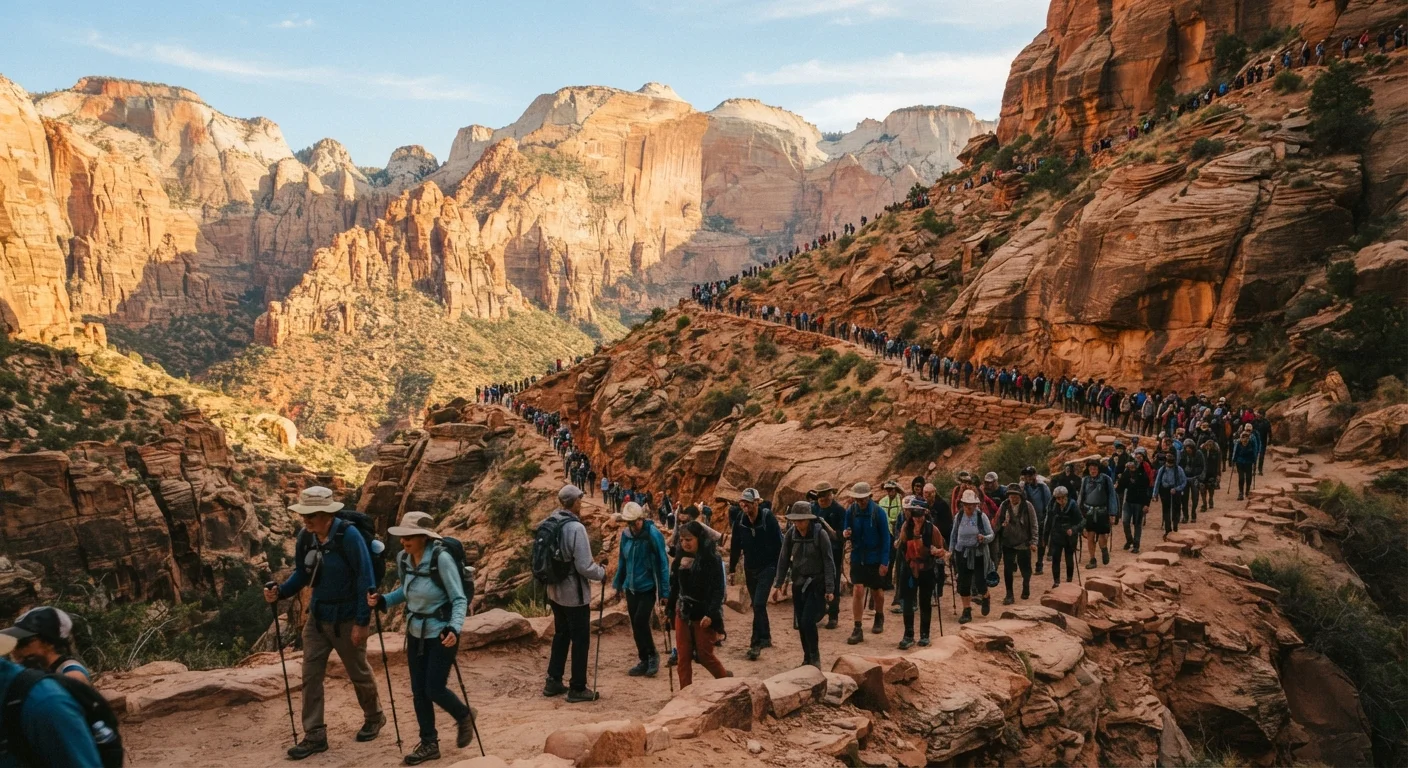
Crowd mismanagement — both by planners and by visitors — has reshaped what it means to visit a popular American park. Timed-entry systems, limited parking, shuttle dependencies, and oversubscribed permits are now standard features at many premier destinations. Understanding these systems before you arrive is no longer optional; it's the difference between a memorable trip and a wasted one.
325M+
Annual US national park recreation visits
The National Park Service recorded over 325 million recreation visits across the national park system in recent reporting years, with visitation concentrated in a small number of marquee destinations.
~12%
Share of parks receiving majority of visits
A relatively small portion of NPS-managed sites — including parks like Great Smoky Mountains, Grand Canyon, and Zion — consistently account for a disproportionate share of total annual visitation.
The mistakes that derail park visits tend to follow predictable patterns. Recognizing them in advance — and planning specifically to avoid them — goes a long way toward preserving what makes these places worth the trip.
The Most Common Mistakes Visitors Make
Assuming no reservation is needed just because entry fees have been paid.
Why it happens: Many visitors conflate the America the Beautiful pass or gate fees with full park access, not realizing that timed-entry permits are a separate, additional requirement now used at dozens of popular parks.
Planning around a single trail or landmark with no contingency.
Why it happens: Travel content — social media in particular — tends to spotlight one iconic view or route, leading visitors to build an entire trip around it without researching alternatives.
Arriving at peak hours and expecting manageable parking or trail access.
Why it happens: Most visitors default to a morning departure from their lodging and arrive mid-morning, exactly when parking areas overflow and trailheads are most congested.
Relying on cell service for maps and real-time navigation inside park boundaries.
Why it happens: Visitors accustomed to urban navigation apps assume connectivity is ubiquitous, but canyon walls, dense forest, and remote terrain routinely eliminate signal entirely.
Scheduling only one day for a park that warrants multiple days of exploration.
Why it happens: Parks look compact on maps, and visitors unfamiliar with actual driving distances, shuttle wait times, and trail durations routinely underestimate how long logistics alone consume.
Permit Systems Change Frequently
The National Park Service adjusts permit and reservation requirements regularly — sometimes seasonally, sometimes with little public notice. Always verify current entry requirements directly on the official NPS website (nps.gov) for the specific park you plan to visit. Information from travel blogs or forums may be outdated by months or even years.
Cultural and behavioral considerations also shape the park experience in ways visitors sometimes overlook. Many park landscapes carry significance beyond recreation for Indigenous communities. Visiting Indigenous cultural sites responsibly — including those within or adjacent to national parks — matters and is worth researching before you go.
Timing, Alternatives, and Getting the Most From Any Visit
Overestimating Your Trail Readiness
Elevation gain, loose terrain, and desert heat affect visitors far more than advertised trail lengths suggest. A 6-mile round trip at altitude bears little resemblance to the same distance at sea level. Check posted difficulty ratings and recent trail condition reports — typically available through ranger stations and the park's official page — before committing to a route.
Timing is the single most adjustable variable available to any park visitor. Choosing shoulder seasons — typically May, early June, September, and October at most western parks — can meaningfully reduce crowd density without sacrificing scenic quality. Off-peak travel logic that applies to cities applies equally to parks: the trade-offs are real but often worth it.
Where flexibility allows, explore parks beyond the marquee destinations. Remarkable wilderness and genuine solitude are available at dozens of less-visited sites across the country. See our guide to lesser-known national parks worth the extra miles for destinations that reward the effort without the permit lottery stress. For a full pre-trip framework covering reservations, safety checks, and entry logistics, work through this pre-trip planning checklist before you book anything.
The parks are extraordinary. With realistic expectations and informed preparation, they can deliver on every bit of that promise.
The content on this site is for informational purposes only and is not a substitute for professional advice. Always consult a qualified professional for guidance specific to your situation.