

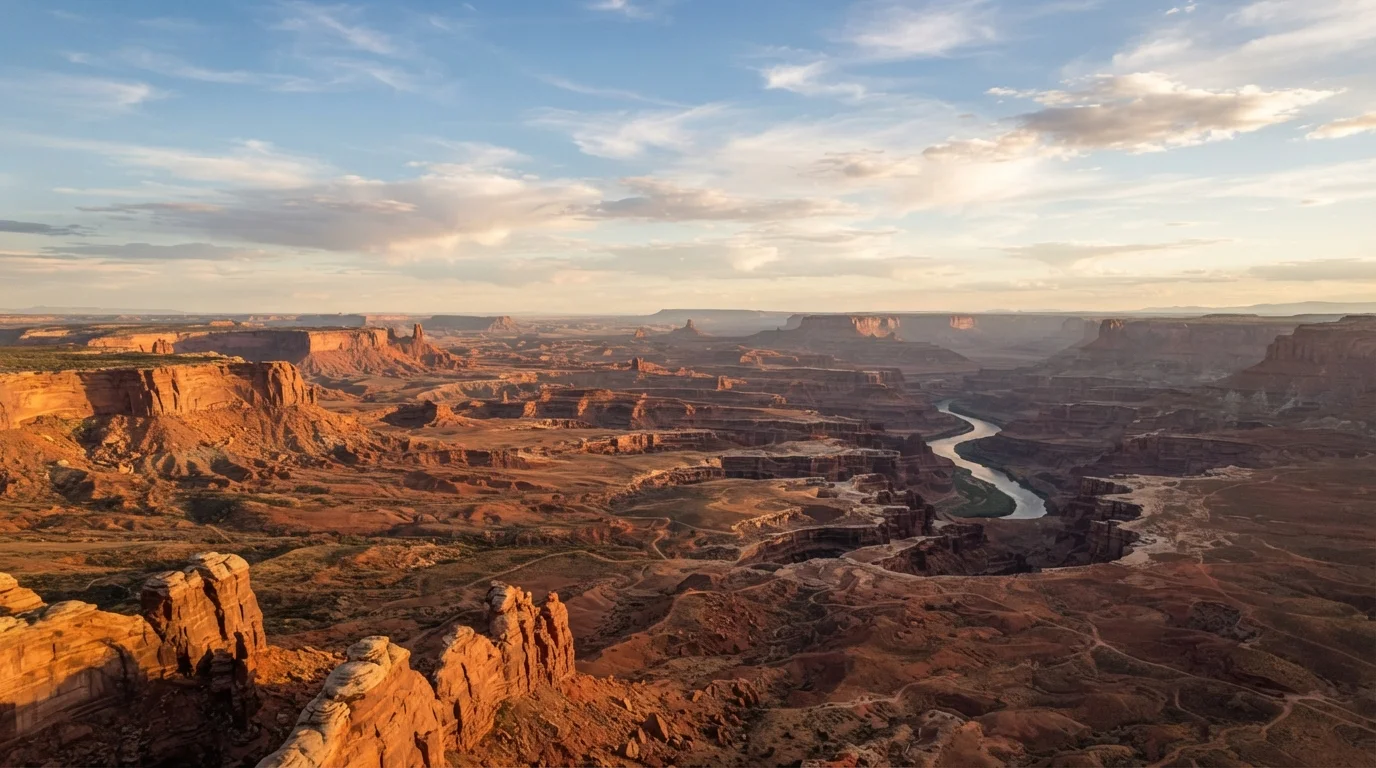
Option A
National Parks
The established, congressionally protected standard.
Best for: Travelers seeking developed infrastructure, visitor services, and iconic, preserved natural or cultural landscapes.
Option B
National Monuments
The flexible, executive-designated alternative.
Best for: Explorers willing to travel lighter on amenities in exchange for fewer crowds and often extraordinary geological or historical significance.
How Each Designation Is Created
The most fundamental difference between national parks and national monuments lies in how they come to exist. National parks are established by an act of Congress, a process that requires broad political consensus and typically involves extensive public review, scientific assessment, and legislative debate. This makes park designations durable and difficult to reverse.
National monuments, by contrast, can be created by a sitting president through the Antiquities Act of 1906 — a law originally passed to protect archaeological sites from looting. A presidential proclamation can establish a monument quickly, without Congressional approval, though this also means monument boundaries and permitted uses have historically been more vulnerable to revision by subsequent administrations. Travelers planning visits to recently designated or contested monuments should verify current status and access rules with the relevant managing agency before their trip.
| Criterion | National Parks | National Monuments |
|---|---|---|
| How established | Act of Congress | Presidential proclamation (Antiquities Act) or Congress |
| Managing agency | Always National Park Service | NPS, BLM, USFS, or multiple agencies |
| Visitor infrastructure | Generally well-developed | Highly variable — minimal to moderate |
| Entry fees | Standard NPS fee structure | Varies by managing agency; often free |
| Recreational restrictions | Stricter; extraction prohibited | Varies; some allow hunting or grazing |
| Crowd levels | Often high at marquee sites | Generally lower; more solitude |
| Designation stability | Highly stable; requires Congress to change | Boundaries/protections can shift by executive action |
Who Manages Them — and Why It Matters
Every national park is managed by the National Park Service (NPS), which applies a consistent framework of visitor services, interpretive programming, and conservation standards. That consistency is part of why iconic parks feel familiar even when you visit one for the first time.
National monuments are different. While many are managed by the NPS, others fall under the Bureau of Land Management (BLM), the U.S. Forest Service, or the U.S. Fish and Wildlife Service — and sometimes multiple agencies share jurisdiction over a single monument. The managing agency shapes everything: staffing levels, visitor center hours, campground availability, road conditions, and permitted recreational activities. A BLM-managed monument, for instance, may allow off-highway vehicle use that would be prohibited inside a national park.
America the Beautiful Pass: What It Covers
The Interagency Annual Pass (commonly called the America the Beautiful Pass) covers entrance fees at most NPS-managed sites, including many national monuments. However, monuments managed solely by the BLM or U.S. Forest Service may have different fee structures or no fees at all. Verify pass acceptance on the specific site's official page before assuming coverage.
This variation is worth researching ahead of time. The experience at a well-staffed NPS monument like Bears Ears or Grand Staircase-Escalante differs meaningfully from a remote BLM parcel with minimal signage or services.
Amenities, Access, and the Visitor Experience
For most travelers, the practical difference between a national park and a national monument comes down to what you find when you arrive. National parks — particularly the most visited ones — typically offer paved entrance roads, staffed visitor centers, interpretive exhibits, maintained restrooms, and a range of lodging options from campgrounds to historic lodges. That infrastructure comes at a cost: popular parks can face significant overcrowding, and many now require advance reservations for entry or camping. For guidance on navigating those challenges, see our article on common national park visit mistakes.
National monuments span a wide spectrum. Some — like Muir Woods or Devils Tower — feel close to a national park experience, with fees, ranger presence, and basic amenities. Others are vast, remote tracts where visitors should expect minimal signage, unpaved roads, and no services. Always check the monument's official managing agency website for current conditions before traveling.
430+
Total NPS-managed sites in the US
The National Park Service manages more than 430 units, including national parks, monuments, seashores, historic sites, and recreation areas.
~129
National monuments under NPS management
The NPS manages roughly 129 national monuments, though additional monuments are managed by BLM, the Forest Service, and other agencies.
63
Designated national parks in the US
As of the most recent Congressional designations, the United States has 63 sites carrying the formal national park designation.
What's Allowed — Recreation and Use Rules
National parks operate under a preservation-first mandate. Commercial extraction — mining, oil drilling, logging — is generally prohibited. Recreational use is permitted but regulated to minimize ecological impact. Some activities common elsewhere, such as mountain biking on backcountry trails or hunting, are often restricted or banned within park boundaries.
National monuments offer more variation. Monuments managed by the BLM may permit grazing, hunting, and some extractive uses, depending on the proclamation language and management plan. This makes certain monuments more accessible to hunters or off-road enthusiasts, while others maintain near-park-level protections. Understanding what's allowed at a specific monument requires reading the individual management plan or contacting the managing agency directly.
If you're drawn to landscapes that haven't made the marquee lists, lesser-known national parks offer another avenue worth exploring — genuine wilderness with considerably thinner crowds.
The content on this site is for informational purposes only and is not a substitute for professional advice. Always consult a qualified professional for guidance specific to your situation.