

Why Composting Is Worth the Effort
Finished compost does far more than reduce the volume of your household waste. When worked into garden beds, it improves soil structure, enhances drainage in heavy clay soils, and helps sandy soils retain moisture. Its slow-release nutrients support sustained plant growth without the risk of chemical burn that concentrated fertilizers can cause.
Understanding what makes soil healthy is a natural companion to composting. If you want to go deeper on that topic, see our guide to soil health for a thorough look at pH, microbial life, and organic matter. For those just getting started outdoors, our beginner's garden guide walks through planning and soil preparation from scratch.
Composting also fits naturally into seasonal garden routines. Come autumn, the leaves and spent plant material you collect make ideal brown layers — a point worth keeping in mind as you work through our winter garden preparation checklist.
Compost bin or tumbler
Contains the composting materials, retains moisture and heat, and keeps pests out.
Garden fork or compost aerator
Used to turn and aerate the pile, which speeds up decomposition.
Kitchen compost collector
A small countertop container for collecting scraps before transferring them to the outdoor bin.
Thermometer (compost or soil type)
Measures internal pile temperature to confirm active decomposition is occurring.
Watering can or garden hose
Adds moisture to the pile when it becomes too dry.
What to Compost — and What to Leave Out
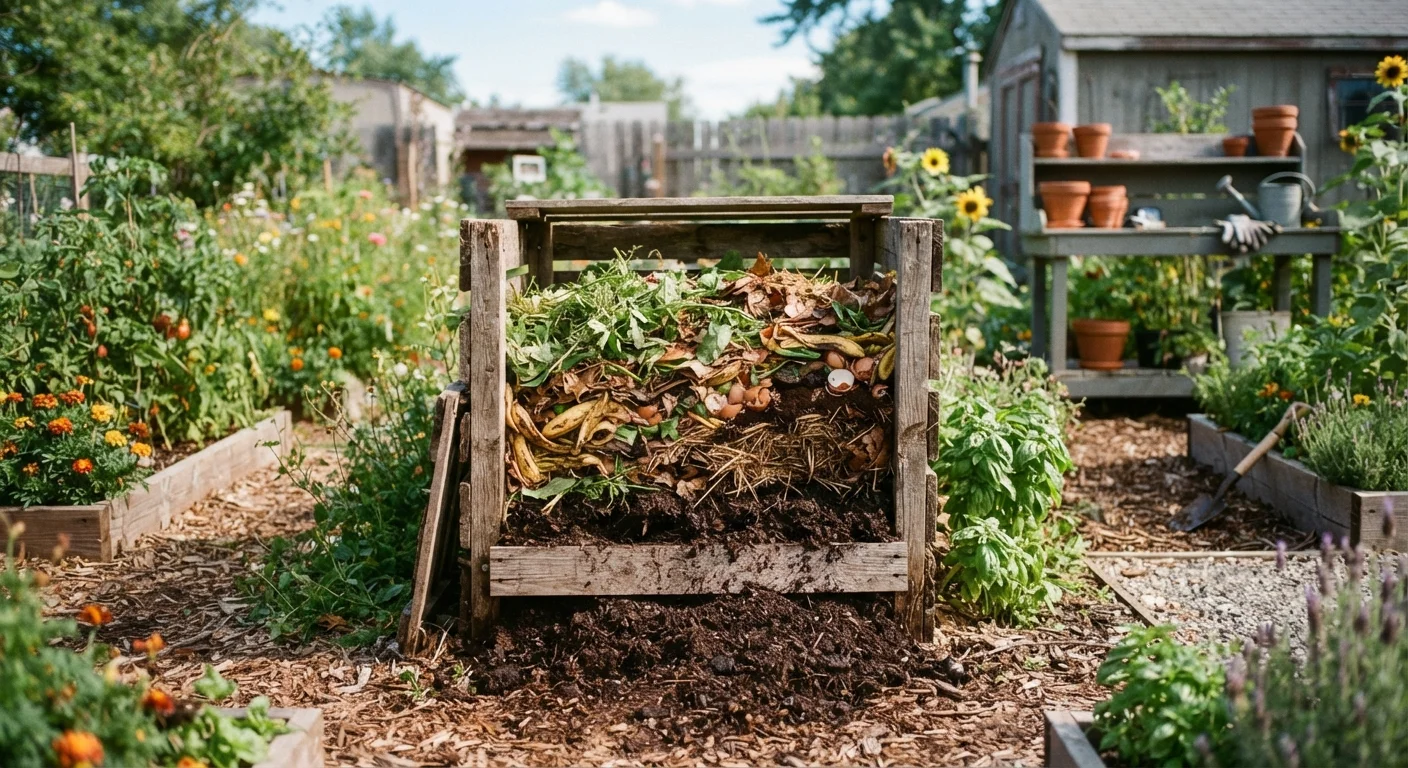
Most plant-based kitchen and garden waste is compostable. Browns include dry leaves, cardboard, newspaper, paper bags, straw, and woody prunings. Greens include raw fruit and vegetable scraps, fresh grass clippings, coffee grounds, plant trimmings, and eggshells (which add calcium and help neutralize acidity).
Materials That Should Never Enter Your Pile
Meat, fish, dairy, and cooked foods with oils attract rodents and other pests and can introduce harmful bacteria. Diseased plants, invasive weeds with seed heads, and pet waste (from cats, dogs, or other carnivores) should also be excluded. These materials can either survive the composting process or create conditions that undermine the health of your finished product.
Avoid adding any material that has been treated with persistent herbicides — clippings from lawns recently treated with certain weed killers can survive composting and damage plants later. When in doubt, leave those materials out.
If your space is limited to a balcony or patio, note that composting is still achievable using a sealed tumbler or a vermicomposting (worm bin) system indoors. This pairs well with container gardening, where high-quality soil amendment is especially valuable in limited planting volumes.
Troubleshooting Common Composting Problems
Even well-managed piles occasionally run into issues. Here are the most common problems and their straightforward fixes:
- Pile smells like ammonia: Too many greens. Add more brown materials and turn the pile to improve airflow.
- Pile smells rotten or like sulfur: Too wet and not enough oxygen. Turn it thoroughly and add dry browns to absorb excess moisture.
- No heat and slow breakdown: Too dry, too many browns, or pile is too small. Water it, add fresh greens, and turn to aerate.
- Pests visiting the pile: Food scraps may be exposed. Bury new kitchen additions in the center of the pile and consider a bin with a locking lid.
Speed Up Decomposition With One Simple Habit
Chop or shred materials before adding them to the pile. Smaller particle sizes expose more surface area to microbial activity and can cut composting time significantly. A quick chop with pruning shears or a pass with a lawnmower over a pile of leaves makes a noticeable difference.
Compost is just one tool in the soil-improvement toolkit. Organic mulches — including finished compost applied as a surface layer — serve overlapping but distinct roles, which our mulch comparison guide covers in detail.
The content on this site is for informational purposes only and is not a substitute for professional advice. Always consult a qualified professional for guidance specific to your situation.