

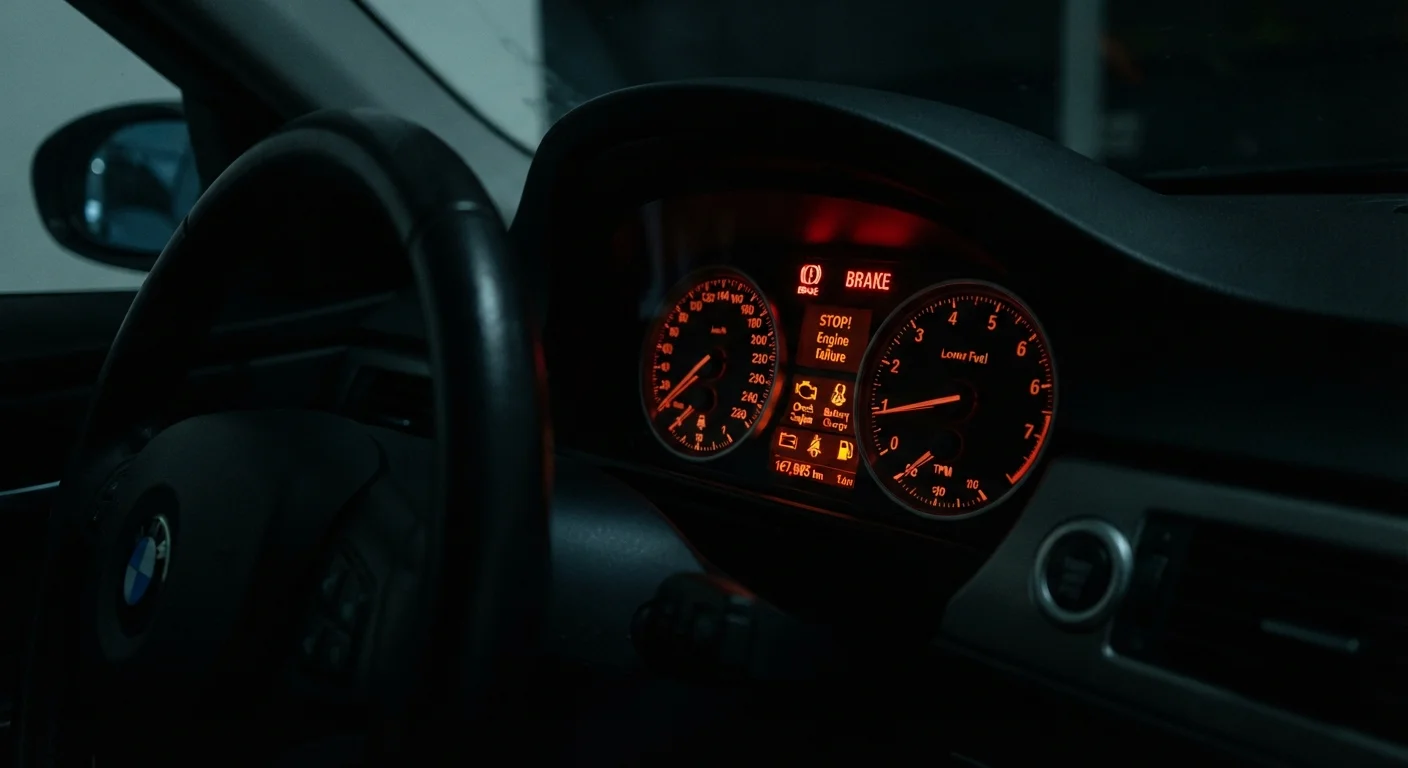
How the Warning System Works
Every modern vehicle sold in the US since 1996 includes an OBD-II system — a network of sensors constantly monitoring engine performance, emissions, safety systems, and more. When a sensor detects a reading outside normal parameters, it triggers a dashboard warning light and stores a diagnostic fault code.
Color is the fastest signal to read. Red lights demand immediate attention and often mean continuing to drive could damage the vehicle or create a safety hazard. Yellow or amber lights indicate a problem developing that should be diagnosed within a day or two. Green and blue lights are informational, confirming that a system like your high beams or cruise control is active.
Understanding this hierarchy is the first step to responding appropriately — and avoiding unnecessary panic or, equally dangerous, unnecessary complacency. For a broader look at pre-trip vehicle awareness, see the vehicle safety walkthrough for practical habits every driver can build.
1 in 3
US drivers ignoring a warning light
CarMD's Vehicle Health Index has consistently found that a significant proportion of US drivers are operating vehicles with an active Check Engine or other warning light illuminated.
$300–$400
Average Check Engine repair cost
CarMD research indicates the average cost to diagnose and repair a Check Engine light fault in the US, though costs vary widely based on the underlying issue and vehicle type.
40+
Individual systems monitored by OBD-II
The OBD-II standard requires vehicles to monitor a broad range of powertrain and emissions-related systems, meaning dozens of potential fault sources can trigger a single warning light.
The Warning Lights That Demand Immediate Action
Certain red warning lights should prompt you to find a safe place to stop as quickly as traffic allows. Do not assume these are minor or intermittent issues.
- Oil Pressure Warning (red oil can): Low oil pressure means your engine components may be running without adequate lubrication. Engine damage can occur within minutes. Pull over, shut off the engine, and call for assistance.
- Engine Temperature Warning (thermometer in liquid): An overheating engine can warp cylinder heads and cause catastrophic failure. Turn off the AC, and if temperature doesn't drop quickly, pull over and let the engine cool. Never open a hot radiator cap.
- Battery or Charging System Warning: Your alternator may have failed. The vehicle is running on battery reserve alone — electrical systems can shut down unexpectedly. Drive directly to a service facility with minimal electrical use.
- Brake System Warning: If this light appears alongside a soft brake pedal, brake fluid may be critically low or there is a hydraulic failure. Do not drive. For more on brake health, see our guide on brake maintenance signals and lifespan.
Keep Your Owner's Manual Accessible
Your vehicle's owner's manual contains the definitive guide to every warning symbol specific to your make and model. Many warning light symbols are not fully standardized across manufacturers, so a symbol that means one thing in one vehicle may indicate something slightly different in another. Store your manual in the glove compartment and consult it before assuming what a light means.
Yellow Lights: Act Soon, But Don't Panic
Amber or yellow warning lights are serious, but they typically allow you time to schedule service within a day or two rather than requiring you to stop immediately.
- Check Engine Light (engine outline): One of the most misunderstood lights on any dashboard. It can signal anything from a loose gas cap to a failing oxygen sensor. A steady light means schedule diagnostics soon. A flashing Check Engine light is a different story — that signals an active engine misfire and warrants pulling over promptly to prevent catalytic converter damage.
- Tire Pressure Monitoring System (TPMS): Indicates one or more tires are low on pressure. Check all four tires with a gauge and inflate to the pressure listed in your door jamb sticker. Underinflated tires affect handling and fuel efficiency significantly. For more detail, visit our overview of tyre condition and road safety.
- Transmission Temperature Warning: Your transmission fluid may be overheating. Ease off the accelerator, avoid towing if applicable, and have the fluid and cooling system inspected.
- Low Fuel Warning: Straightforward, but repeatedly running on empty can damage the fuel pump, which sits inside the tank and relies on fuel for cooling.
What to Do When a Light Comes On
Your response to any warning light should follow a simple priority framework:
- Identify the color and symbol. Red means pull over when safe. Yellow means plan to get it checked promptly.
- Check your owner's manual. Every vehicle includes a section defining each warning symbol specific to that make and model. Some lights vary in meaning between manufacturers.
- Don't ignore it and hope it resolves. Fault codes remain stored even after a light turns off. A mechanic can retrieve them. Ignoring the underlying fault frequently leads to more expensive repairs.
- Get a diagnostic scan. Most independent auto repair shops and many auto parts retailers can read fault codes. This identifies the specific system and component triggering the alert.
Your vehicle's diagnostic system is genuinely trying to help you. Responding to warning lights promptly is one of the most cost-effective forms of vehicle ownership — a small repair caught early rarely becomes a major one. Explore more about vehicle ownership responsibilities to stay ahead of common issues.
For context on engine health between service visits, our article on why engine oil goes dark explains what oil condition can and can't tell you.
Warning Lights vs. Service Reminders
Not all dashboard indicators signal a fault. Some vehicles display oil life percentage indicators or service interval reminders that illuminate on a schedule rather than in response to a detected problem. These are useful maintenance prompts, but they are distinct from fault-based warning lights triggered by the OBD-II system. Your owner's manual will clarify which category each indicator falls into.
Frequently Asked Questions
It depends on whether the light is steady or flashing. A steady Check Engine light usually means a non-emergency fault worth diagnosing soon. A flashing Check Engine light signals an active misfire that can damage your catalytic converter — reduce speed and get the car inspected immediately.
A red oil pressure light means your engine may not be receiving adequate lubrication — one of the fastest ways to cause permanent engine damage. Pull over safely, shut off the engine, and do not restart until the issue is diagnosed by a professional.
Intermittent lights often indicate a fault that is present under certain conditions but not others. Even if the light disappears, the fault code is usually stored in your vehicle's computer. Have a mechanic read the codes to prevent the underlying issue from worsening.
The Tire Pressure Monitoring System (TPMS) light looks like a cross-section of a tire with an exclamation point. It activates when one or more tires drop significantly below the recommended pressure. Check tire pressures promptly, as underinflated tires affect handling and fuel economy.
Clearing a warning light without fixing the underlying problem is not recommended. Many lights reset automatically once the fault is corrected. Persistent lights require a scan tool to clear the stored fault code after the repair is completed.
Yes — treat it as urgent. A battery or charging system warning means your alternator may not be charging the battery. Your vehicle could lose power to essential systems within minutes to an hour. Minimize electrical loads, avoid turning the engine off, and head directly to a service center.
The content on this site is for informational purposes only and is not a substitute for professional advice. Always consult a qualified professional for guidance specific to your situation.