

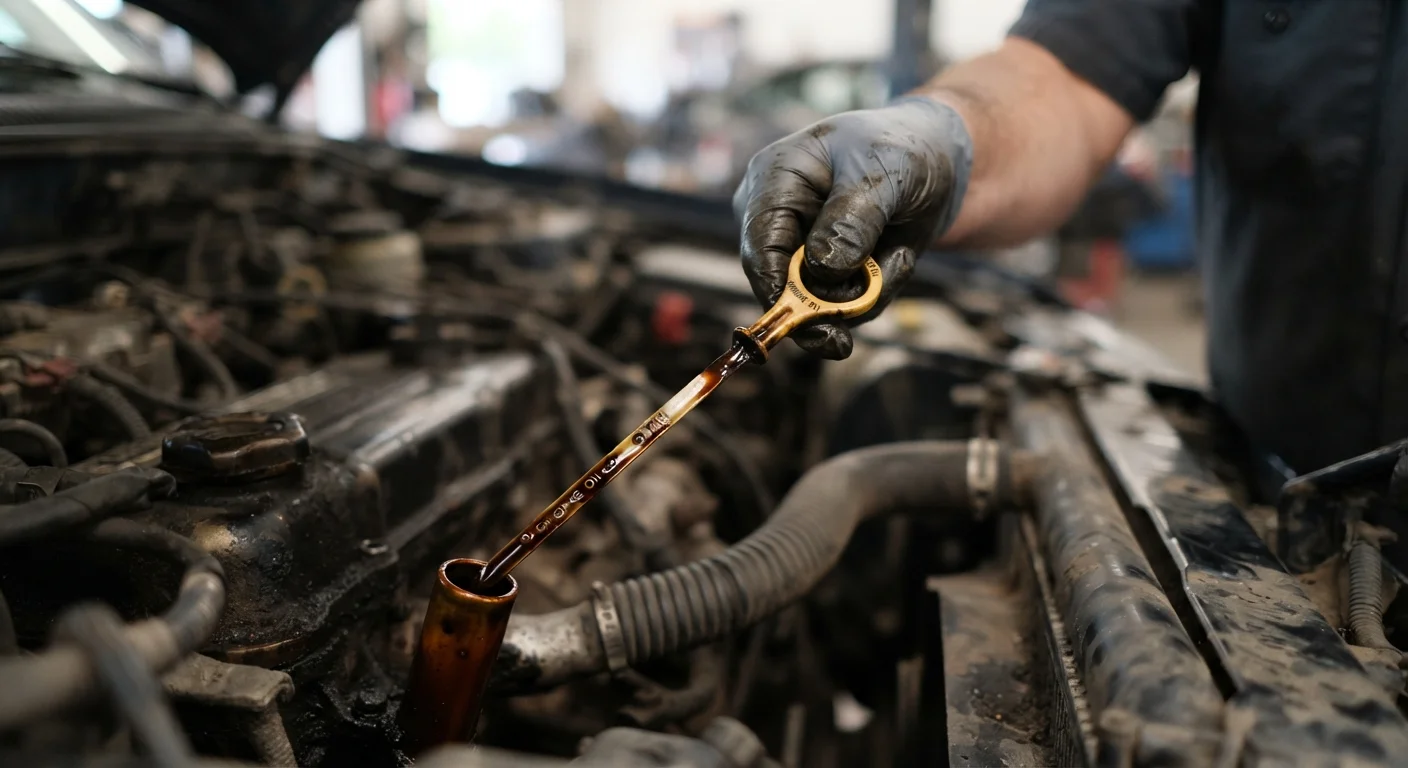
The Science Behind Oil Discolouration
Fresh motor oil ranges from amber to light golden-brown depending on its formulation. Within just a few hundred miles of normal driving, that colour shifts noticeably darker. This isn't a defect — it's chemistry at work.
Engine oil performs several jobs simultaneously: lubricating metal surfaces, carrying heat away from the engine, and suspending harmful particles like soot, carbon deposits, and combustion byproducts so they can be trapped by the oil filter. As oil does this work, those suspended contaminants accumulate, and the oil's colour reflects that load. Detergent additives in modern oils are specifically engineered to lift deposits off engine components — so an oil that looks darker than expected may actually be doing its job well.
Heat also accelerates oxidation, chemically altering the oil's base molecules over time. Both processes — contamination and oxidation — contribute to discolouration. For a broader look at what your fluids can tell you, see our practical guide to checking fluid levels at home.
Common Myths — and the Facts That Correct Them
Few maintenance topics generate more misunderstanding than oil colour. The myths below are widespread and, if acted on blindly, can lead to either unnecessary expense or — worse — genuine engine neglect.
Myth
If my oil has turned dark, it needs to be changed immediately.
Fact
Dark oil is a normal result of the oil doing its job — suspending soot and combustion byproducts. Colour alone does not determine whether oil is still effective.
Oil darkens within the first few hundred miles of use because detergent additives are actively cleaning the engine. This darkening means the oil is working as intended. Oil analysis — not visual inspection — is the only way to know definitively whether oil has degraded beyond its useful life. For everyday drivers, the manufacturer's specified interval is the appropriate guide.
Myth
Synthetic oil stays cleaner and lighter in colour than conventional oil.
Fact
Synthetic oils often darken faster than conventional oils precisely because they are better at suspending contaminants in suspension.
Synthetic base stocks offer superior thermal stability and lubricating properties, but their enhanced detergency means they tend to pick up and hold more combustion byproducts. This can make synthetic oil look darker sooner — a sign of effectiveness, not failure. Judging synthetic oil by the same visual standards used for conventional oil leads to unnecessary early changes.
Myth
You can always tell when oil needs changing just by looking at it.
Fact
Visual inspection is an unreliable substitute for mileage-based or oil-life-monitor-guided change intervals.
Human eyes cannot detect degraded viscosity, depleted additives, elevated acidity, or microscopic metal particles — all factors that affect oil's protective ability. Some used oil that has lost much of its protective capacity can still appear relatively light in colour. Conversely, oil that looks very dark may still be well within its service life. Rely on your vehicle's recommended interval or an oil-life monitoring system.
Myth
Black oil means the engine is burning oil or something is seriously wrong.
Fact
Very dark or nearly black oil is common in diesel engines and in petrol engines after normal use — it reflects soot load, not engine failure.
Diesel combustion inherently produces more soot than petrol combustion, so diesel oil turns black rapidly and predictably. In petrol engines, oil that has gone several thousand miles will typically turn dark brown to near-black as it accumulates normal combustion byproducts. This is expected behaviour. Alarm is warranted only when the texture, consistency, or smell of the oil changes abnormally — not the shade of brown or black.
Myth
Changing oil more frequently than recommended is always better for the engine.
Fact
Changing oil before its useful life is exhausted wastes money and resources without providing additional engine protection.
Modern engine oils — particularly full-synthetic formulations — are engineered to last the distances manufacturers specify. Changing oil significantly earlier than recommended does not harm the engine, but it provides no meaningful benefit either. It does, however, add unnecessary cost and environmental burden from disposing of still-serviceable oil. Follow the interval in your owner's manual unless your driving conditions are consistently severe, in which case consult that manual's guidance on shortened intervals.
When Oil Colour Actually Is a Warning Sign
While darkening alone is unremarkable, certain colour changes do warrant concern and professional inspection.
Milky or Frothy Oil Requires Immediate Action
A creamy, light-coloured, or frothy appearance on your dipstick or oil filler cap is not a routine maintenance signal — it suggests coolant has entered the oil system, commonly due to a failed head gasket. Continuing to drive with contaminated oil can cause rapid and severe engine damage. Have your vehicle inspected by a qualified mechanic before driving it further.
- Milky or creamy appearance: A light-tan, frothy texture on the dipstick or oil cap typically indicates coolant contamination — often a blown head gasket or a cracked engine block. This is a serious mechanical fault, not a cosmetic one.
- Bright metallic sheen or gritty texture: Particles of metal suspended in oil suggest significant internal wear or debris. The oil filter is designed to catch fine particles, but heavy contamination visible to the naked eye points to a deeper problem.
- Unusually thin or watery consistency: Oil that feels thin may have been diluted by fuel, which dramatically reduces its ability to lubricate and protect.
If you notice any of these warning signs, stop driving and consult a qualified mechanic. These are not situations where a standard oil change is the fix.
What Should Drive Your Oil Change Decision
The most reliable guide to oil-change timing is your vehicle's owner's manual, which specifies intervals in miles or months based on the engine's design and the oil type it requires. Many modern vehicles also include an oil life monitoring system that calculates change intervals based on actual driving conditions — short trips, towing, and stop-and-go traffic all put more stress on oil than steady highway driving.
Don't Skip Checks Between Oil Changes
Oil level can drop between scheduled changes through normal consumption or a developing leak. Checking the dipstick every few weeks — especially before long trips — takes under a minute and can prevent serious damage. Low oil level is a more immediate risk than oil colour. If you're consistently losing oil between changes, that warrants a professional inspection.
Oil colour can serve as one informal data point, but it should never override manufacturer guidance. Understanding the differences in oil formulation — particularly between synthetic and conventional options — is also relevant here. Our article on synthetic vs. conventional motor oil explains how composition affects performance and change intervals.
If your oil pressure warning light illuminates, that is an urgent signal — not a colour check. Low oil pressure requires immediate attention regardless of what colour the oil appears on the dipstick.
The content on this site is for informational purposes only and is not a substitute for professional advice. Always consult a qualified professional for guidance specific to your situation.