

Summary
18 items · 3–8 minutes
Why a Pre-Drive Check Is Worth Your Time
Most roadside emergencies don't appear without warning — they develop gradually and go unnoticed because drivers skip the quick checks that would catch them. A flat tire, a burned-out headlight, or low brake fluid rarely announce themselves at a convenient moment. Taking two to five minutes before pulling out of the driveway is one of the simplest ways to reduce that risk.
This isn't about mechanical expertise. The checks below require no tools and no technical background. They're about developing the observational habit that experienced, safety-conscious drivers maintain as a matter of routine. Whether you're heading across town or across the state, the walkthrough is the same.
For a deeper look at what happens after you start the car, our guide on what dashboard warning lights are actually telling you explains what each symbol means and how urgently to act. If you're newer to driving, the car maintenance fundamentals for new drivers is a solid companion resource.
Exterior Walkaround
Under the Hood
Interior and Controls
Load and Visibility
What You'll Need for This Walkthrough
No specialized equipment is required for this routine. The items below help you complete a thorough check and address minor issues on the spot — but most of the inspection is purely visual and takes only moments.
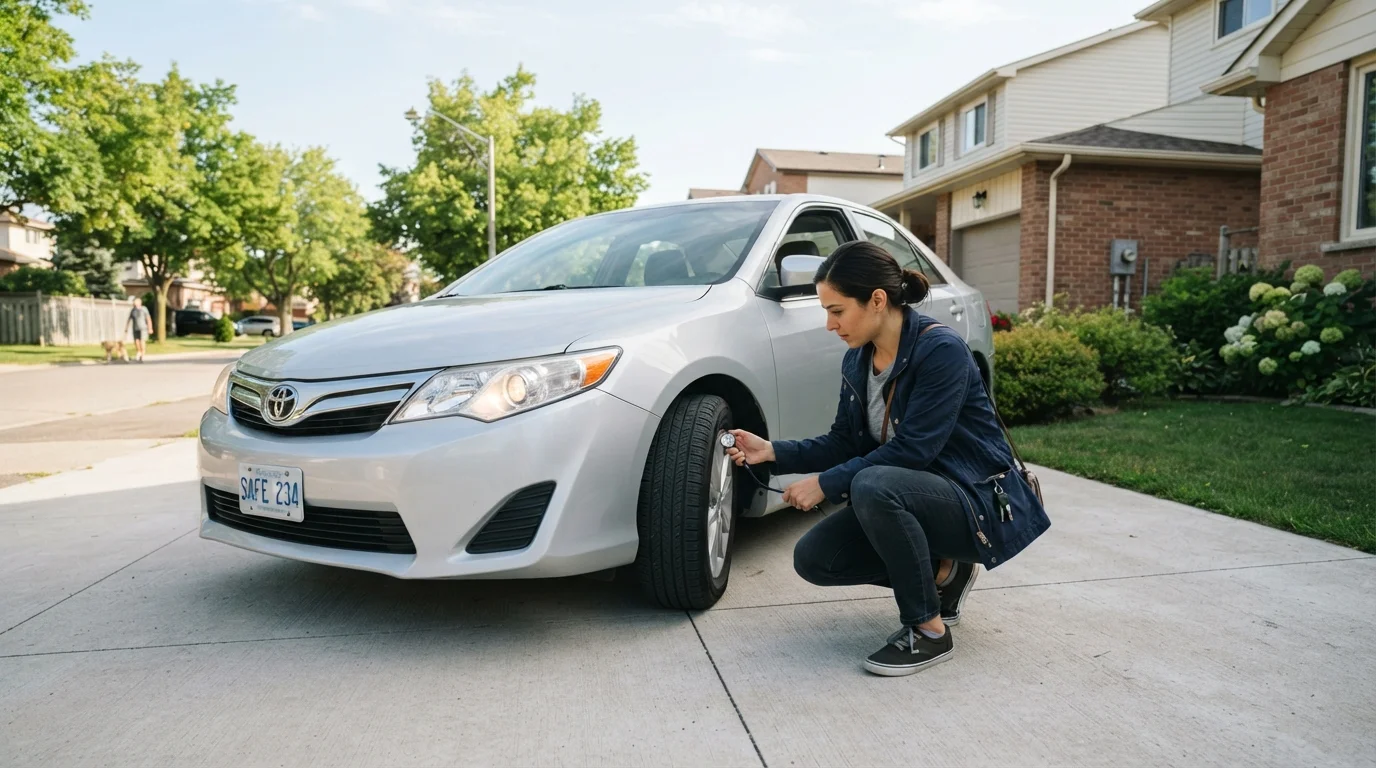
Tire Pressure Gauge
Allows you to accurately verify tire pressure against the manufacturer's specified range.
Microfiber Cloth or Squeegee
Used to quickly clear smearing or condensation from windows and mirrors for full visibility.
Small Flashlight
Helps inspect tires, undercarriage, and fluid levels in low-light or early-morning conditions.
Owner's Manual
Contains the manufacturer's recommended tire pressure, fluid specs, and warning light explanations specific to your vehicle.
Building This Into Your Driving Routine
The goal is habit formation, not perfection. Start by focusing on the must items — tires, lights, mirrors, and seatbelts — until they feel automatic. Then layer in the should items over time.
Don't Dismiss Dashboard Warning Lights
A warning light that appears when you start the engine is not always a reason to delay your trip — but it should never be simply ignored. Some lights, such as low oil pressure or brake system warnings, can indicate conditions that are unsafe to drive with. Check your owner's manual or consult a mechanic if you're unsure what any active light means before proceeding.
Tire Pressure Changes With Temperature
Tire pressure drops approximately 1 PSI for every 10°F decrease in ambient temperature. In cold-weather months, tires that looked fine the day before may be underinflated by morning. Make pressure checks a more frequent habit during seasonal transitions, and always use the vehicle manufacturer's recommended pressure — not the maximum figure printed on the tire sidewall.
If you travel with children, the pre-drive routine is also the right moment to verify car seat installations. Our resource on child car seat safety and common fitting errors covers the most frequently missed installation details.
For a more comprehensive annual assessment of your vehicle's condition, consider pairing this daily habit with the annual vehicle health check routine. Keeping your registration, insurance, and documentation current is equally important — the annual vehicle ownership checklist can help you stay on top of those obligations throughout the year.
This article provides general vehicle safety information for educational purposes. For concerns about your specific vehicle's mechanical condition, consult a qualified mechanic.
The content on this site is for informational purposes only and is not a substitute for professional advice. Always consult a qualified professional for guidance specific to your situation.