

What the Great Lakes Actually Are
Most Americans know the Great Lakes exist. Far fewer have spent meaningful time along their shores. The five lakes — Superior, Michigan, Huron, Erie, and Ontario — form the world's largest system of freshwater lakes by surface area, stretching roughly 750 miles east to west across the northern United States and southern Canada.
What makes this region genuinely unusual as a travel destination is its scale and internal variety. A trip along Lake Superior's Minnesota shoreline feels nothing like a weekend in Chicago or a visit to Erie, Pennsylvania's Presque Isle. The lakes themselves have distinct personalities — Superior is cold, deep, and dramatically wild; Erie is the shallowest and warmest, with the most active recreational beaches; Michigan is the only one located entirely within US borders.
21%
Share of world's surface fresh water
The Great Lakes collectively hold approximately 21% of the world's surface fresh water, according to the US Environmental Protection Agency.
10,900+
Miles of US Great Lakes shoreline
NOAA estimates the US portion of the Great Lakes coastline at over 10,900 miles, exceeding the combined US Atlantic and Gulf coasts.
8
US states in the Great Lakes basin
Minnesota, Wisconsin, Michigan, Illinois, Indiana, Ohio, Pennsylvania, and New York all border or fall within the Great Lakes watershed.
Natural Landscapes That Rival Coastal Destinations
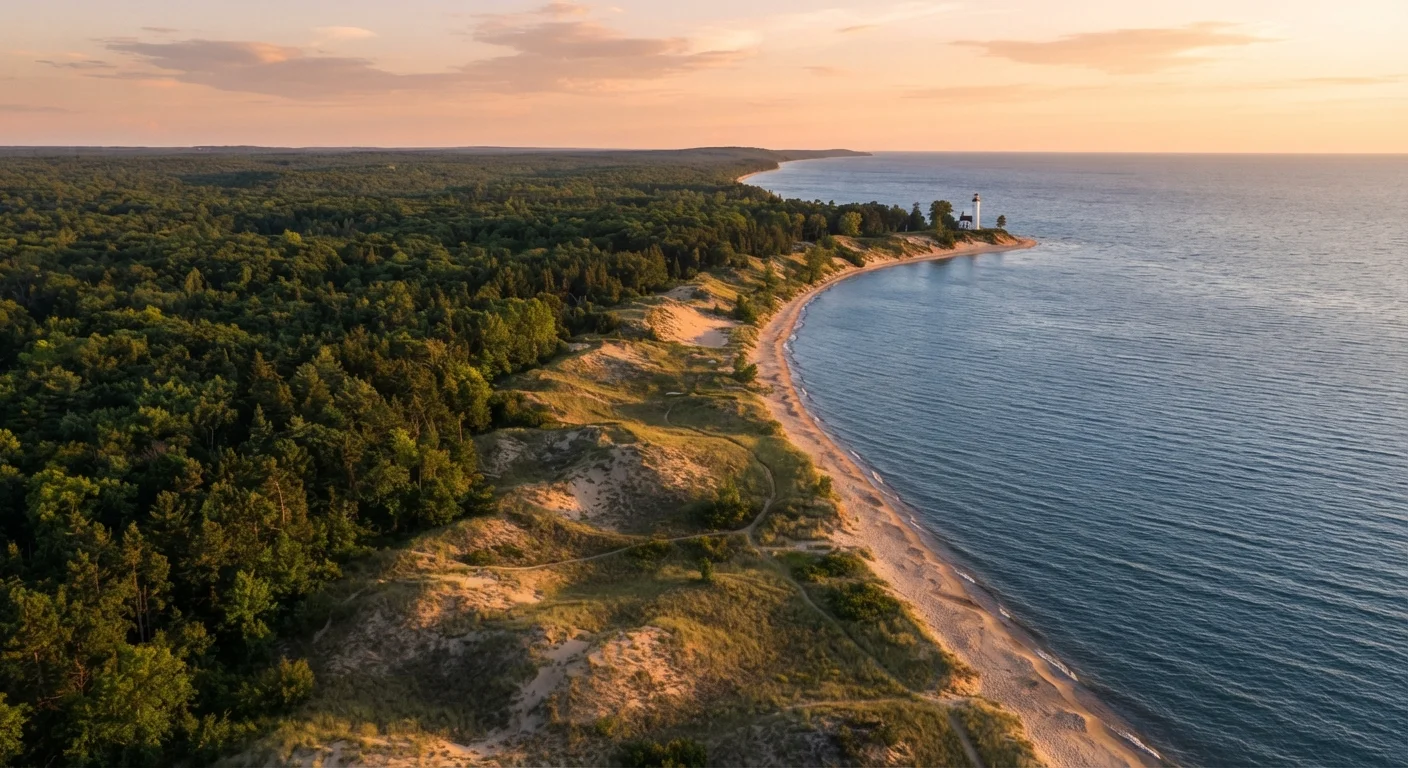
The Great Lakes produce a coastal experience that surprises many first-time visitors. Sleeping Bear Dunes National Lakeshore in Michigan features towering sand dunes that drop directly into Lake Michigan's clear blue water — a scene that photographs more like the Mediterranean than the Midwest. Pictured Rocks National Lakeshore along Lake Superior's Upper Peninsula combines 200-foot sandstone cliffs, sea caves, and waterfalls in a stretch that rewards multi-day hiking.
For travelers drawn to less-trafficked wilderness, the region connects logically with other undervisited natural destinations. Lesser-known US national parks share that same quality of significant natural features without the overwhelming crowds found at marquee sites.
Time Your Visit Around Shoulder Season
Late May through early June and September offer notably fewer crowds at popular spots like Sleeping Bear Dunes and Pictured Rocks, while weather remains generally cooperative for hiking and beach activities. Many visitors find the September light and lake colors particularly striking. Confirm that specific facilities or ferry routes you plan to use are still operational — some seasonal services close after Labor Day.
Industrial Cities Reimagined as Cultural Destinations
The Great Lakes built American industry — steel, automobiles, shipping, and manufacturing ran through these port cities for over a century. That history left behind grand architecture, distinctive neighborhoods, and a working-class cultural identity that continues to shape the region's character. What's changed in recent decades is the addition of arts districts, reinvented waterfronts, and food scenes that have drawn renewed attention.
Detroit's comeback narrative is well-documented, but the city's Midtown and Eastern Market neighborhoods now offer genuine depth for culturally curious travelers. Cleveland's Ohio City district and the West Side Market anchor a food and drink scene that regularly earns national recognition. Milwaukee's Third Ward and lakefront areas give the city a walkable core that contrasts with its industrial surroundings.
Planning Considerations for a Great Lakes Trip
The region's geography rewards road trippers. Driving the perimeter of a single lake can take multiple days — Lake Superior's US shoreline alone runs nearly 1,000 miles. Most travelers focus on a single lake or a cluster of cities rather than attempting the full circuit.
Seasonality matters more here than in many US destinations. Peak summer is genuinely warm and busy along popular Michigan and Wisconsin shores. Visiting off-season can mean emptier beaches and better access to urban attractions, but some seasonal facilities — ferry routes, lighthouse tours, state park amenities — operate only between May and October. Travelers should verify current schedules with relevant state and federal park sources before finalizing plans.
The region is also comparable in scale and cultural variety to other multi-state coastal destinations. The Gulf Coast, for example, similarly spans multiple states and rewards slow, exploratory travel rather than a single destination approach.
Cross-Border Considerations
Several Great Lakes destinations sit just across the Canadian border, including cities like Thunder Bay (Ontario) and Sault Ste. Marie (Ontario). Crossing requires a valid US passport or passport card. Entry requirements and travel advisories can change; always verify current rules through official US and Canadian government sources before traveling.
Frequently Asked Questions
Lake Superior is the largest by surface area, covering approximately 31,700 square miles. It is also the deepest of the five lakes and the coldest, with water temperatures that remain frigid even in summer.
Winter travel here is decidedly niche — lake-effect snow can be intense, and many seasonal attractions close. That said, ice fishing, snowshoeing, and quieter urban experiences are available. <a href="/travel-places/global-travel/the-case-for-and-against-travelling-off-season">Off-season travel</a> involves real trade-offs worth weighing before committing.
Swimming is common at designated beaches throughout the region during summer months. Water quality and temperature vary significantly by location and season. Always check local beach advisories before swimming, as algal blooms and pollution events do occur in some areas.
That depends heavily on your interests. Chicago sits on Lake Michigan with world-class architecture and food. Cleveland offers a revitalized arts district and Rock Hall. Milwaukee is known for its brewing heritage and lakefront festivals. Each city offers a genuinely distinct character.
Yes. Crossing into Canada — including Ontario cities like Toronto and Thunder Bay that sit on the lakes — requires a valid US passport or passport card. Verify current entry requirements with official US and Canadian government sources before traveling.
Late June through early September is peak season for beaches and outdoor activities. Late May and September offer fewer crowds and moderate weather. <a href="/travel-places/us-destinations/why-visiting-a-us-city-off-season-often-makes-more-sense">Visiting US cities off-season</a> can stretch budgets and reduce congestion at popular spots.
The content on this site is for informational purposes only and is not a substitute for professional advice. Always consult a qualified professional for guidance specific to your situation.