

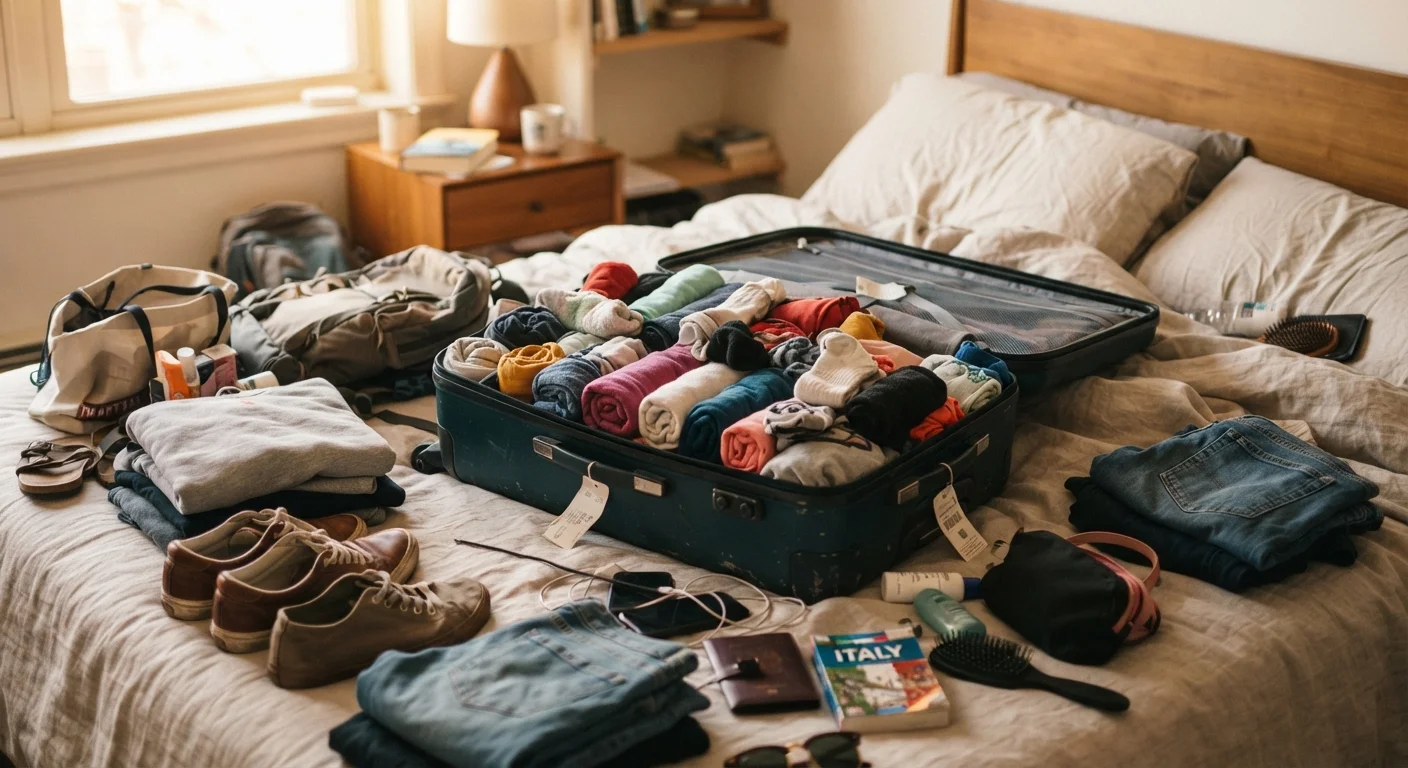
The Psychology Behind Packing Too Much
Overpacking isn't a character flaw — it's a predictable response to uncertainty. When travellers imagine a trip, they tend to think in terms of possibilities rather than probabilities. What if there's a formal dinner? What if the weather turns cold? What if I want to work out every morning? Each hypothetical gets its own item in the bag, and before long the suitcase is full before the essentials are even in.
This anxiety-driven logic is compounded by how rarely people audit their bags after returning home. Most travellers never take stock of what they actually wore versus what they brought. That feedback loop never closes, so the same patterns repeat trip after trip.
Understanding why overpacking happens is the fastest route to fixing it. The mistakes below reflect the most common failure points — each with a clear, practical correction.
Packing for hypothetical scenarios rather than the actual itinerary.
Why it happens: Travellers imagine worst-case situations and pack to cover every possibility, even ones with a very low chance of occurring on that specific trip.
Bringing full-size toiletries and duplicating items already available at the destination.
Why it happens: Packing the same products used at home feels natural, and travellers often forget that hotels, rentals, and local shops stock most personal care basics.
Packing every 'just in case' clothing item without a defined use.
Why it happens: A vague sense that something might be useful is enough to justify adding it, especially when the bag still seems to have room.
Failing to account for laundry as a travel option.
Why it happens: Many travellers default to bringing enough clothes for every day of a trip, as though doing laundry while traveling isn't possible or practical.
Repacking the same bag from a previous trip without reassessing for the new destination.
Why it happens: Reusing a prior packing list feels efficient, but different trip types, climates, and durations have genuinely different requirements.
Building a Packing System That Actually Holds
Once you understand the patterns driving overpacking, the solution becomes straightforward: replace assumption-based packing with itinerary-based packing. Before touching your bag, write out what you will actually be doing each day. A hiking trail, a business meeting, and a beach afternoon each require specific items — and very few of those items overlap as much as travellers assume.
Checked Bag Fees Add Up Quickly
Most major US carriers charge between $35 and $40 per checked bag each way, and those fees apply on every flight segment. A round trip with one checked bag can add $70–$80 or more to your travel cost before you've left the airport. Overpacking into a checked bag isn't just a physical inconvenience — it's a recurring, avoidable expense. Verify current fee structures directly with your airline before travel, as policies change.
From there, count days and planned outfit changes rather than packing by feel. Most people rewear basics like jeans, sweaters, and shoes far more on trips than they expect to at home — partly because they're busy, and partly because it simply matters less. Capsule-style packing, where a small set of versatile pieces mix and match, is a practical framework many frequent travellers rely on.
If you're committed to carry-on-only travel, maximising your carry-on requires a specific mindset shift — thinking of the bag as a defined constraint rather than a container to fill. The habits of consistently calm travellers often include packing rituals that start days before departure, not the night before.
Finally, consider that overpacking often signals broader planning gaps. Travellers who have a clearer picture of where they're going and what entry requirements apply — including what to wear or carry at certain destinations — tend to pack more deliberately. Our guide on entry requirement mistakes is worth reading alongside any trip prep checklist.
The content on this site is for informational purposes only and is not a substitute for professional advice. Always consult a qualified professional for guidance specific to your situation.