

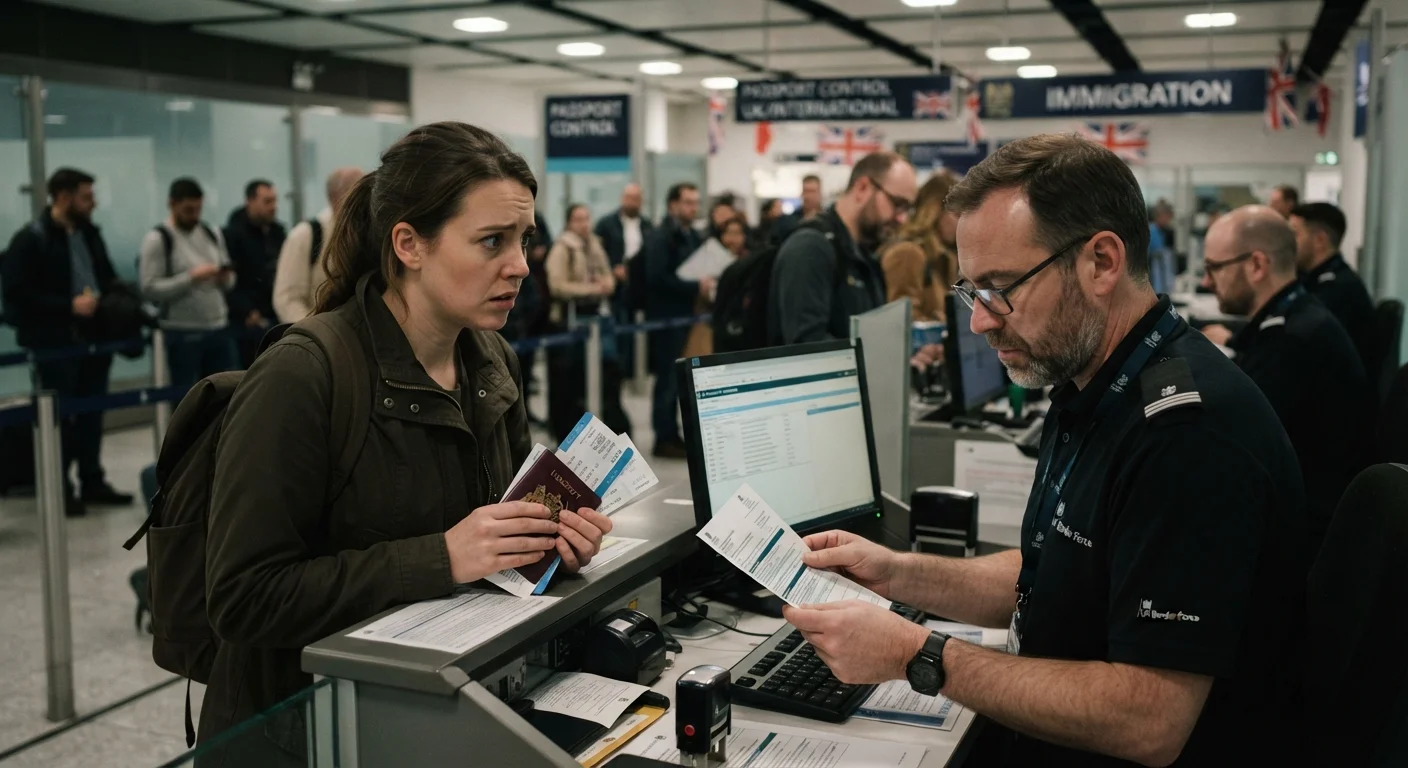
The Gap Between Booking Confidence and Border Reality
Booking an international trip generates a particular kind of confidence — flights secured, accommodation confirmed, itinerary mapped. What many travellers don't realise is that none of that preparation has any bearing on whether they will actually be permitted to enter a destination. Entry decisions rest entirely with border authorities, and they operate according to rules that most leisure travellers have never scrutinised closely.
The consequences of underestimating those rules range from inconvenient to catastrophic: denied boarding at the departure airport, detention at the port of entry, or deportation at the traveller's own expense. Understanding where travellers consistently go wrong is the first step to avoiding these outcomes. For a broader view of pre-departure preparation, see our international traveller's pre-departure checklist.
Always Verify Entry Rules Officially
Entry requirements — including visa conditions, passport validity rules, and health documentation — are set by sovereign governments and can change without advance notice. This article provides general educational context only. Before travelling, confirm current requirements directly through your destination country's official immigration authority and your own government's travel advisory service.
Common Mistakes That Lead to Entry Problems
The errors that cause travellers to be turned away at borders share a common thread: they stem from assumptions rather than verification. Each of the following mistakes is preventable with the right research, done early enough to act on it.
Assuming a valid passport is enough — without checking the destination's validity window.
Why it happens: Travellers focus on whether their passport hasn't expired, not on whether it meets the destination country's minimum remaining validity requirement, which often extends six months beyond the travel dates.
Treating a visa approval as a guaranteed right of entry.
Why it happens: A visa is an authorisation to seek entry, not an irrevocable right. Travellers sometimes treat visa approval as the finish line rather than one step in an ongoing assessment process.
Overlooking the proof of onward travel requirement.
Why it happens: Many travellers book a one-way ticket intending to plan the next leg later, unaware that airline staff or immigration officers may require evidence that you will leave the country before your permitted stay expires.
Not accounting for visa requirements in transit countries.
Why it happens: Travellers focus on the destination's rules and assume a connecting flight through a third country carries no immigration implications — which is often incorrect.
Failing to check documentation requirements for medication being carried.
Why it happens: Travellers assume that a valid prescription at home is universally recognized abroad, when in reality some medications are controlled or banned substances in certain countries.
Relying on outdated entry information from travel blogs or social media.
Why it happens: Search results frequently surface older posts that reflect requirements from before policy changes, and readers have no easy way to verify the publication date's relevance.
Visa-Free Does Not Mean Entry Is Guaranteed
Visa-free or visa-on-arrival agreements allow you to board a plane — but border officers retain the authority to deny entry at their discretion. If you cannot demonstrate sufficient funds, a clear travel purpose, or a return ticket, you may be refused even under a visa-waiver arrangement. Preparation matters at every stage.
For a broader understanding of how governments categorise destinations by risk and entry conditions, our overview of how to read travel advisories explains the framework and how to use it responsibly. Travellers carrying prescription medication should also treat documentation requirements as a separate entry-adjacent check — one that visa approval does not cover.
Building a Verification Habit Before Every Trip
Entry requirements are not static. Health documentation rules, electronic authorisation programmes, biometric requirements, and visa-waiver agreements all shift in response to diplomatic, public health, and security developments. A rule that applied to your last visit may not apply to the next one — and a blog post from two years ago is unlikely to reflect the current situation.
6 months
Minimum passport validity many countries require beyond entry date
A widely applied but not universal requirement; the exact threshold varies by country and should always be verified with official sources.
190+
Countries with distinct entry requirement sets
Every sovereign nation sets its own rules for who may enter and under what conditions, creating significant variation even across neighbouring countries.
The practical solution is a consistent pre-departure verification habit. Work through your complete itinerary — including every transit point — and check entry requirements for each leg using official sources only. Do this no more than a few weeks before departure so the information is current, and revisit it again in the final days if your trip coincides with a period of geopolitical change. The Travel Tips hub gathers practical guidance across topics like these that every international traveller should work through before departure.
This article is for general informational purposes only and does not constitute immigration, legal, or travel advice. Entry requirements, visa rules, and documentation needs are subject to change at any time. Always verify current requirements with your destination country's official immigration authority and your own government's foreign affairs travel advisory service before travelling.
The content on this site is for informational purposes only and is not a substitute for professional advice. Always consult a qualified professional for guidance specific to your situation.