

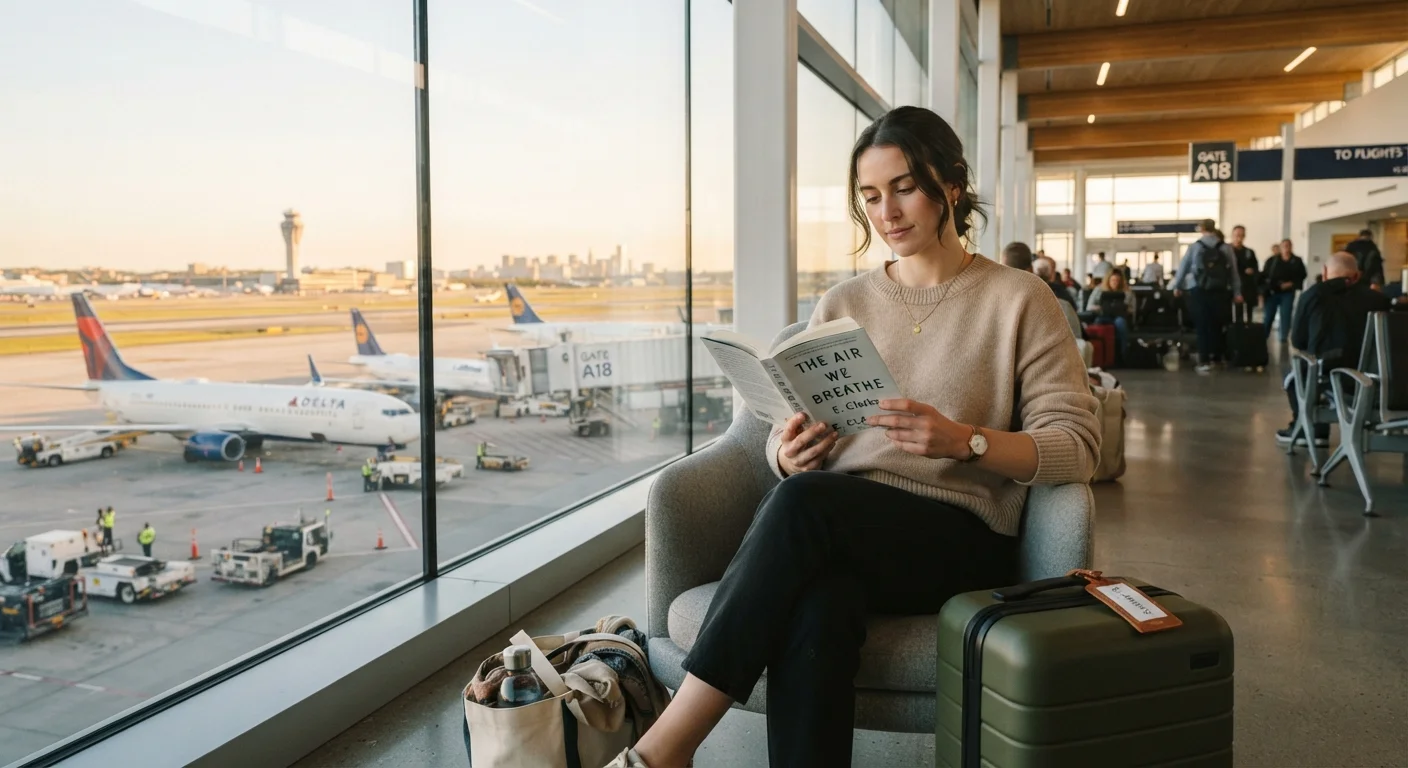
Why Some Travellers Seem Naturally Unflappable
Watch closely at any busy airport and you'll notice a distinct split. Some travellers move through check-in, security, and boarding with quiet efficiency. Others are visibly reactive — stressed at queues, caught off guard by delays, scrambling at the gate. The difference is rarely personality. It's almost always preparation and habit.
Experienced travellers aren't immune to flight cancellations, missed connections, or unexpected closures. What separates them is a set of consistent behaviours that reduce unnecessary friction — and a mindset that treats disruption as part of travel rather than an affront to it. These habits aren't complicated. They're repeatable, learnable, and effective regardless of your destination or travel style.
Whether you're planning a weekend domestic trip or a longer international journey, the patterns below reflect what seasoned travellers actually do differently. See our international pre-departure checklist for a practical companion to these habits.
Pack a defined, repeatable kit
Calm travellers don't reinvent their packing list for every trip. They maintain a core kit — toiletries, chargers, adapters, a travel pouch for documents — that is either always packed or can be assembled from memory in under an hour. This removes the cognitive load of wondering what you've forgotten.
Overpacking is one of the most common sources of travel friction. A heavy, disorganised bag creates problems at security, on public transit, and in small hotel rooms. Why overpacking happens — and how to fix it is worth reviewing before your next trip. The principle is simple: carry less, move more freely.
A repeatable packing kit removes the cognitive load of wondering what you've forgotten.
Build buffer time into every stage
Stressed travellers consistently underestimate how long transitions take. Calm travellers plan for the realistic version of travel: longer security lines, slower baggage claim, unfamiliar train systems, or a taxi that doesn't arrive on time. They build buffer time into every stage — arriving at airports earlier than required, scheduling transit with room for error, and not booking connections with margins too tight to absorb a delay.
Buffer time isn't wasted time. It converts stress into leisure — an unhurried coffee before a flight, or time to orient yourself in a new city without pressure.
Buffer time converts stress into leisure — unhurried coffee before the flight, not a sprint to the gate.
Treat disruptions as expected, not exceptional
Experienced travellers operate with a baseline assumption: something will go differently than planned. Flights are delayed. Hotel rooms aren't ready at check-in. Attractions are closed for maintenance. When these events are framed as normal features of travel rather than injustices, the emotional response shifts from outrage to pragmatic problem-solving.
This doesn't mean accepting poor service without recourse — it means not letting inconveniences escalate into crises. Having a mental habit of asking "what's my next move?" rather than dwelling on what went wrong is one of the most durable skills a traveller can develop.
Asking 'what's my next move?' rather than dwelling on delays is a durable travel skill.
Sort your money and connectivity before departure
Mid-trip anxiety often traces back to two things: not being able to pay easily, and not being able to navigate. Calm travellers resolve both before they leave home. They notify their bank of travel dates, carry a small amount of local currency for arrival, understand which cards avoid foreign transaction fees, and have at least one offline map or navigation tool downloaded on their device.
Connectivity planning matters too — whether that's a local SIM card, an international plan, or a portable Wi-Fi device. Arriving somewhere without a clear plan for internet access and local payment creates entirely avoidable stress. For a structured approach, the pre-departure checklist for international travellers covers these logistics methodically.
Arriving without a payment and connectivity plan creates entirely avoidable mid-trip stress.
Keep essential documents and items consistently accessible
One of the smallest but most effective habits is maintaining a fixed location for your most-needed items: passport, boarding pass, travel card, and phone. Calm travellers don't search for these things — they're always in the same pocket, pouch, or slot. This consistency removes repetitive micro-stresses throughout the day.
The same principle applies to a well-considered carry-on. Your carry-on is more powerful than you think — a smartly packed bag means you have everything you need for a delayed flight or an overnight reroute without checking in.
A fixed location for your passport and boarding pass removes repetitive micro-stresses throughout the day.
Plan loosely, not rigidly
Heavily scripted itineraries with hour-by-hour schedules set travellers up for frustration. Calm travellers plan a framework — a neighbourhood to explore, two or three priorities per day, a restaurant shortlist — while leaving room for things to shift. This approach preserves intentionality without creating a schedule that a single delay can unravel.
Loose planning also allows for the kind of serendipitous discoveries that make travel memorable. The goal isn't to drift without purpose but to hold plans lightly enough that you can adapt without distress when conditions change.
Hold plans lightly enough to adapt without distress — the framework matters more than the hour-by-hour script.
Making the Habits Stick
None of these behaviours requires extraordinary discipline — they work precisely because they become automatic. The goal is to front-load as many decisions as possible before departure, so that travel itself becomes a series of executed plans rather than an improvised scramble.
Start the habit loop before you leave home
The most effective travel habits are established in the days before departure, not at the airport. Run through your packing, documents, and logistics at least 48 hours ahead so you have time to address gaps calmly. A quick mental walkthrough of each stage of your journey — check-in, security, transit, arrival — helps surface overlooked details before they become problems.
Travel stress is largely a product of uncertainty, and uncertainty shrinks when you've already answered the important questions: What's in my bag? Do I have what I need at the gate? What's my plan if this goes wrong? The travellers who seem effortlessly calm have usually just done that thinking in advance — not in the moment.
It's also worth recognising that some anxiety during travel is normal and physiologically grounded. Understanding why stress feels so physical can help you distinguish between manageable discomfort and genuine distress worth addressing. Building good travel habits is one layer of the picture; your broader approach to stress management matters too.
The content on this site is for informational purposes only and is not a substitute for professional advice. Always consult a qualified professional for guidance specific to your situation.