

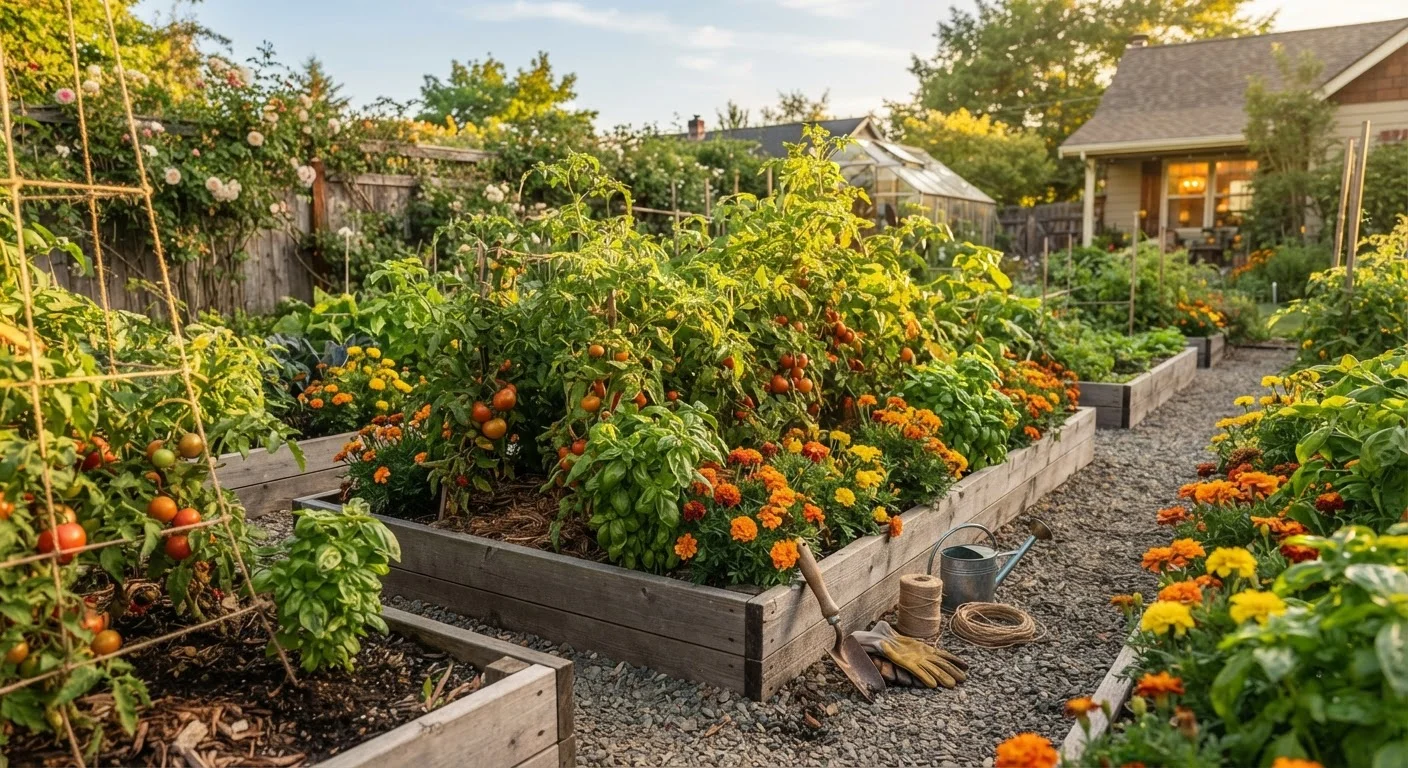
What Companion Planting Is — and Isn't
Companion planting sits at an interesting intersection of traditional farming knowledge and modern horticultural science. For centuries, Indigenous farmers and smallholders observed that certain plants seemed to thrive together, and passed those observations down as planting lore. Today, researchers are working to verify which of those relationships hold up under controlled study — and which are more myth than mechanism.
The honest picture: some pairings are genuinely useful, some are neutral, and a few combinations actively compete. Understanding the difference helps you garden smarter rather than just planting by tradition. Good soil is always the foundation — see our guide to soil health for what to get right before you plant anything.
Research Is Still Catching Up
Many companion planting recommendations circulate as established fact but originate from observation rather than controlled studies. That doesn't make them useless — traditional knowledge often encodes real patterns — but it does mean some pairings will work better in your garden than others. Treat unverified combinations as experiments worth testing, not guarantees.
The Three Sisters: A Well-Documented Example
The most cited — and most validated — example of companion planting is the Three Sisters system, used by many Native American agricultural communities for centuries. It combines corn, climbing beans, and squash in the same planting space.
- Corn provides a vertical structure for bean vines to climb.
- Beans are legumes that fix atmospheric nitrogen into the soil through root-dwelling bacteria, benefiting the nutrient-hungry corn and squash.
- Squash spreads its large leaves across the ground, shading out weeds and retaining soil moisture.
Each plant contributes something the others need. This is the clearest example of what companion planting can achieve — a closed loop of mutual support that reduces the need for external inputs like fertilizers and herbicides.
16%
Yield increase from Three Sisters intercropping
Research published in agricultural journals has found intercropping systems similar to the Three Sisters can improve land equivalent ratios, sometimes exceeding single-crop yields by roughly 16% or more across combined outputs.
~50%
Reduction in nematode populations with marigolds
Studies on French marigolds (Tagetes patula) have documented significant suppression of root-knot nematodes when marigolds are grown as a cover crop or interplanted for a full season.
200+
Traditional plant combinations documented
Ethnobotanical literature has catalogued hundreds of traditional companion planting pairs, though only a fraction have been rigorously tested in controlled horticultural research.
Pest Deterrence: Which Pairings Have Evidence
One of the most popular reasons gardeners try companion planting is pest control. The results are mixed but not without merit.
Marigolds and tomatoes is a pairing with genuine scientific backing. French marigolds (Tagetes patula) produce chemical compounds — particularly alpha-terthienyl — that reduce soil nematode populations. They also emit a scent that can confuse or deter whiteflies and aphids. Plant them throughout the bed, not just on the border.
Basil and tomatoes is beloved in kitchen gardens and has some supporting evidence suggesting basil's volatile oils may deter thrips and aphids, though results in field studies are less conclusive than with marigolds. The two plants also have compatible growing conditions, making them practical neighbors regardless.
Nasturtiums as trap crops work differently — aphids are strongly attracted to nasturtiums, drawing them away from vegetables. You manage the nasturtiums (and the aphids on them) separately. This approach requires active monitoring but can be effective.
“The most sustainable gardens are those that work with ecological relationships rather than against them — companion planting, at its best, is applied ecology at the garden scale.”
— Toby Hemenway, Author of Gaia's Garden, a widely referenced guide to permaculture for home gardeners
Plants That Compete or Suppress
Not all proximity is beneficial. Some plants release allelopathic compounds — natural chemicals that inhibit the germination or growth of nearby plants. Knowing these incompatibilities prevents accidental damage.
- Fennel
- One of the most problematic garden plants when it comes to neighbors. Fennel produces compounds that suppress tomatoes, peppers, beans, and many other vegetables. Grow it in an isolated pot or a dedicated bed away from the main garden.
- Black walnut trees
- Produce juglone, a compound toxic to many plants including tomatoes, peppers, and some berries. Avoid planting within the drip line and root zone of black walnuts.
- Onions and garlic near legumes
- Alliums can inhibit bean and pea growth. Keep these families separated in your layout.
Planning around these relationships is as important as choosing beneficial pairings. A thoughtful layout also helps if you're working in containers — our container gardening guide covers spacing and plant selection in smaller spaces.
Start Simple Before Going All-In
Rather than redesigning your entire garden around companion planting charts, pick two or three well-documented pairings and try them for a full season. Marigolds with tomatoes and beans alongside corn are good starting points. Keep notes on what you observe — your local conditions will teach you more than any general guide can.
How to Apply Companion Planting in Your Garden
The most practical approach is to start with a few well-documented pairings rather than overhauling your entire garden layout at once.
- Interplant legumes widely. Peas and beans improve soil nitrogen for whatever follows them — rotate heavy feeders like brassicas or corn into beds where legumes grew the previous season.
- Use flowers throughout vegetable beds. Marigolds, borage, and sweet alyssum attract beneficial insects including predatory wasps and hoverflies that prey on common pests.
- Separate known antagonists. Map out your garden before you plant, noting which families shouldn't share space.
- Observe your own garden. Keep informal notes on which pairings seem to thrive and which look stressed. Your specific microclimate, soil, and local pest population matters as much as general guidance.
Companion planting pairs well with a broader understanding of your plants' life cycles. Our article on perennials vs. annuals can help you think through which plants will anchor your companions year after year versus which need replanting each season.
Frequently Asked Questions
Some pairings are well-supported by evidence, while others are mainly traditional wisdom without rigorous study. Combinations like legumes with heavy feeders or marigolds near tomatoes have research backing. It's helpful to treat companion planting as one useful tool rather than a guaranteed fix.
Fennel is famously allelopathic — it releases compounds that suppress many garden plants, including tomatoes, peppers, and beans. Onions and garlic can inhibit the growth of legumes. Walnut trees produce juglone, a chemical toxic to many plants including tomatoes and peppers.
Companion planting can reduce pest pressure but is unlikely to eliminate it entirely on its own. It works best as part of an integrated pest management approach that also includes healthy soil, crop rotation, and physical barriers when needed.
French marigolds (Tagetes patula) have been shown in studies to suppress soil nematodes and deter some aphids and whiteflies. Their effectiveness varies by pest type and garden conditions, but they are one of the better-studied companion flowers.
Proximity matters — most benefits require plants to be close enough to share root space or scent, typically within one to three feet. Interplanting within the same bed is more effective than planting companions in a separate row across the garden.
Yes, with some planning. Herbs like basil and parsley pair well with tomatoes or peppers in large containers. Be mindful of root competition and container size — cramped conditions can negate any companion benefit.
The content on this site is for informational purposes only and is not a substitute for professional advice. Always consult a qualified professional for guidance specific to your situation.