

Why Vehicle Record-Keeping Matters More Than Most Owners Realize
For many drivers, vehicle paperwork is an afterthought — stuffed into a glovebox and forgotten until urgently needed. But the administrative side of car ownership has real consequences. Disorganized records can complicate insurance claims, reduce resale value, create friction during title transfers, and leave you scrambling at a roadside stop.
The good news is that staying organized requires no special system — just consistent habits applied from the day you take ownership. Whether you drive a vehicle for two years or twenty, the records you keep shape how smoothly every transaction and interaction goes. This is especially true when you're ready to sell: a documented service history signals to buyers that the vehicle has been properly maintained, which can translate to a stronger asking price.
It's worth noting that the same logic applies beyond vehicles. If you've ever wondered how this compares to home ownership, our guide on home maintenance records and why they matter covers parallel principles for property documentation.
What to Keep: The Core Documents Every Owner Needs
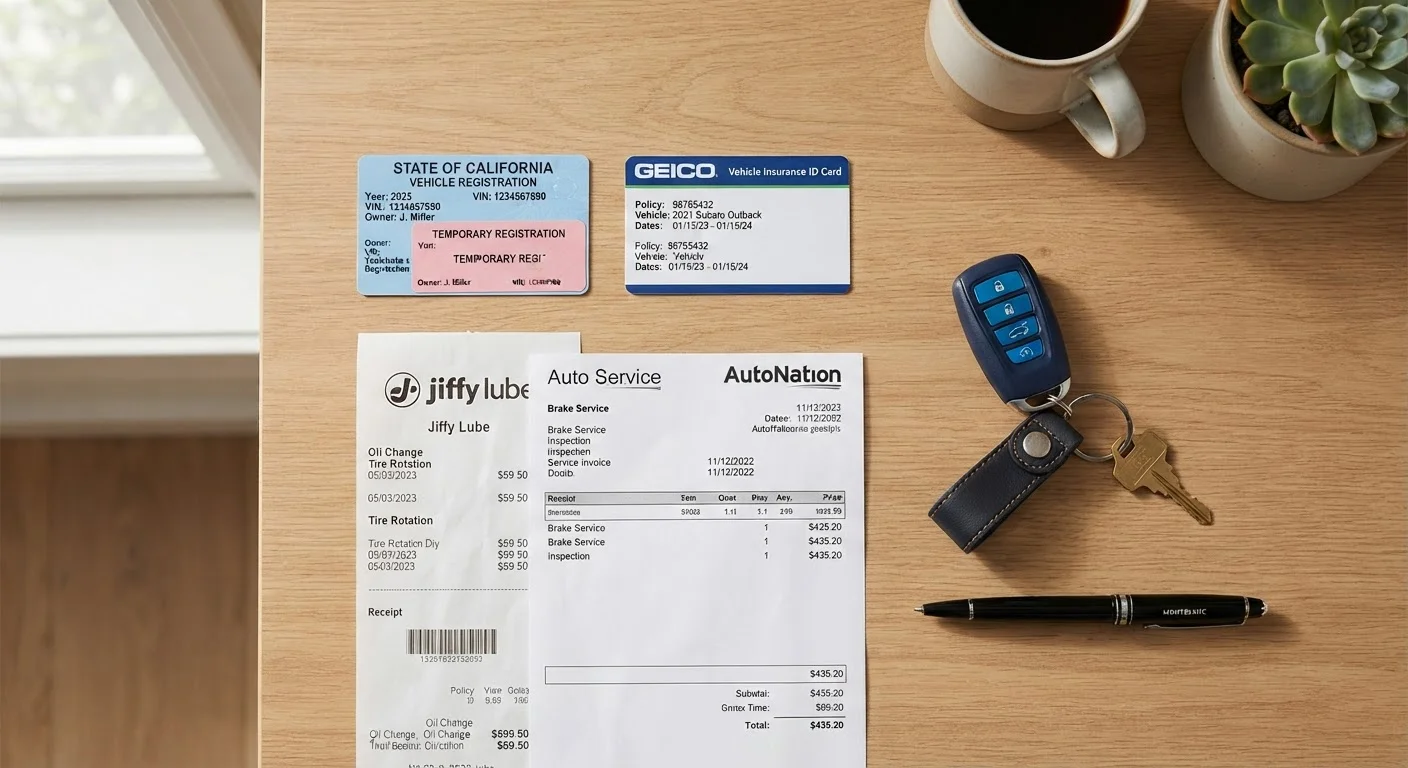
Before building a system, it helps to know exactly what belongs in it. Most vehicle owners should maintain organized access to the following categories:
- Title: Proof of legal ownership. Keep the original somewhere secure; never leave it in the vehicle.
- Registration and renewal notices: Current registration must typically be in the vehicle. Prior years can be kept for reference.
- Insurance cards and declarations pages: The current card goes in the vehicle; the full policy declarations page belongs in your home file.
- Service and repair records: Receipts, invoices, and a running log of all maintenance performed.
- Warranty documentation: Manufacturer and extended warranties, including terms and contact information.
- Emissions and inspection certificates: Required in many states; retain at least the current cycle's certificate.
- Purchase documentation: Bill of sale, financing agreement if applicable, and any disclosure forms received at purchase.
State Rules Vary on Required Documents
Registration requirements, renewal timelines, and what must be carried in the vehicle differ from state to state. Always verify what your specific state requires through your DMV or equivalent agency. The registration process varies considerably by state, so don't assume what applied in a previous state still applies where you live now.
For guidance on what a title transfer actually involves, our dedicated article walks through each step of the process.
Building Habits That Keep Records Current
Create a dedicated physical vehicle file from the day you take ownership.
Knowing exactly where every document lives eliminates the frantic search during roadside stops, insurance claims, or private sales. A single accordion folder or envelope kept in a safe home location — not the glovebox — protects sensitive documents like your title from theft or damage.
Log every service visit, no matter how minor, with date, mileage, and work performed.
A complete service history gives prospective buyers confidence, helps mechanics spot patterns, and can resolve disputes about warranty coverage. Gaps in the record often raise questions that reduce resale value unnecessarily.
Scan or photograph important documents and store digital copies securely.
Paper documents can be lost in a move, damaged in a flood, or stolen. A digital backup stored in a password-protected cloud account or encrypted drive means you're never completely without access to critical information.
Keep your current insurance card and registration accessible in the vehicle at all times.
Most states require drivers to carry proof of insurance and current registration and to produce them on request during a traffic stop or after an accident. Missing these documents can result in fines even if coverage is actually in force.
Schedule an annual document review as part of your regular vehicle ownership routine.
Renewals, policy changes, and expiring warranties can slip by unnoticed. A once-a-year check confirms everything is current, complete, and correctly stored before any deadline passes.
Preserve title documents with particular care and understand what they represent.
The certificate of title is the legal proof of ownership of your vehicle. Losing it creates a paperwork burden to replace, and errors on a title can complicate sales or transfers significantly. Understanding its status — clean, salvage, or rebuilt — matters both for ownership and resale.
Pair these record-keeping habits with your regular maintenance schedule for best results. Our seasonal car maintenance guide outlines the upkeep tasks that typically generate service records across the year, and the annual vehicle health check offers a structured framework for assessing your car's condition — both pair naturally with a document review.
Start Organizing Today
You don't need a perfect system to start — you need a starting point. Even gathering scattered documents into a single folder is a meaningful improvement over the glovebox approach most drivers rely on.
Once your records are organized and backed up, maintenance becomes easier to track, renewals are harder to miss, and any future sale, claim, or inspection goes more smoothly. The effort invested is modest; the payoff compounds over the life of the vehicle.
The content on this site is for informational purposes only and is not a substitute for professional advice. Always consult a qualified professional for guidance specific to your situation.