

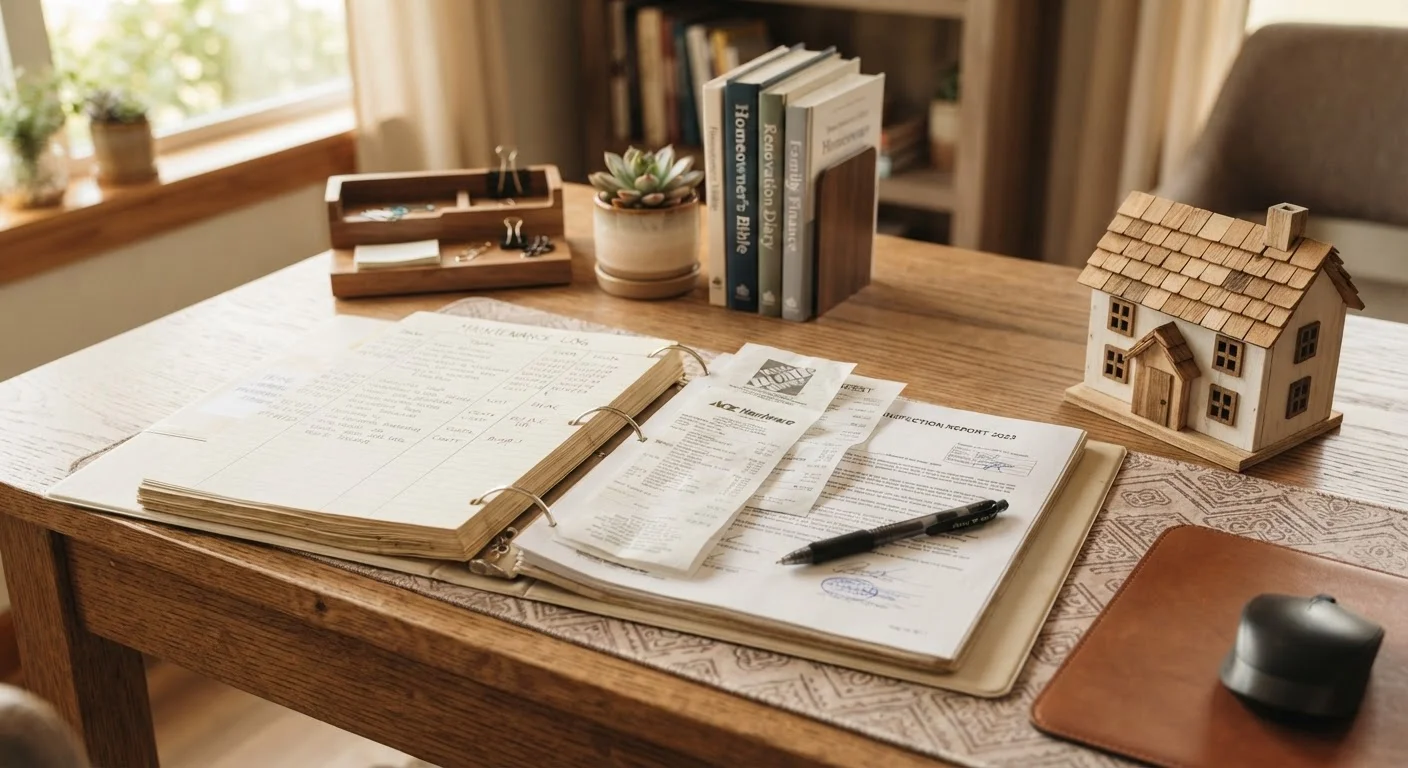
Why a Home Maintenance Log Pays Off
Most homeowners remember big repairs but forget the details — the date a water heater was serviced, which contractor replaced the roof flashing, or when the HVAC filter was last swapped. Those details quietly matter. When an insurance adjuster asks whether a roof leak was a sudden event or a slow-developing neglect issue, a dated service record is far more convincing than a best guess.
Maintenance records also carry real weight at the point of sale. A buyer reviewing a binder of organized receipts, inspection reports, and contractor invoices gains confidence that the property has been cared for — and a seller with documentation may be in a stronger negotiating position than one who can offer only verbal assurances. Think of a maintenance log the same way you'd think of a service history for a vehicle — it tells a story of responsible ownership. (For a parallel look at vehicle record-keeping, see how drivers keep vehicle records organized.)
~35%
Home insurance claims disputed due to unclear documentation
Industry estimates suggest a significant portion of residential property claims face delays or disputes when homeowners cannot provide maintenance history or evidence of prior repairs.
1 in 5
Home sales complicated by undisclosed maintenance issues
Real estate professionals commonly report that missing or incomplete maintenance history contributes to renegotiation or delays during the home inspection phase of a sale.
What Belongs in Your Records
A useful home maintenance log doesn't need to be elaborate. The goal is capturing enough detail that you — or someone else — can reconstruct the property's care history years from now. For each entry, aim to record:
- Date of the work — day, month, and year
- What was done — a plain-language description (e.g., "replaced pressure relief valve on water heater")
- Who did it — your own name for DIY tasks, or the contractor's name and license number for professional work
- Cost — labor and materials separately if possible
- Outcome or notes — did the problem fully resolve? Is a follow-up needed?
- Attached documents — receipts, warranties, permits, before/after photos
Keep permits and inspection reports in a dedicated folder — these are legal documents and carry more weight than informal notes alone. If a contractor pulls a permit on your behalf, request a copy once the inspection is signed off.
Use a Simple Folder Structure from Day One
Whether you go digital or physical, label folders by home system — Roof, HVAC, Plumbing, Electrical, Appliances — rather than by year or contractor. This makes it faster to retrieve relevant history when a problem reappears and creates a logical handoff document for future owners. A free note-taking app, a shared cloud drive folder, or a three-ring binder with tabbed dividers all work equally well.
Best Practices for Building and Keeping the Log
The system you'll actually use is better than the perfect system you'll abandon. Below are proven approaches that fit a range of habits and comfort levels.
Log every repair or service within 48 hours of completion.
Memory fades quickly, and small details — the part number, the technician's recommendation, whether a follow-up was advised — are easy to lose. A prompt entry while the work is fresh ensures accuracy and reduces the chance of missing something important.
Keep digital backups of all physical receipts and warranties.
Paper receipts fade, get lost in moves, or survive house fires as ash. A photo taken immediately and stored in cloud storage or a dedicated folder on a backed-up device ensures your records survive physical disasters.
Organize records by system, not chronologically.
When a problem resurfaces, you want to quickly find everything related to, say, the roof or the HVAC — not sort through years of mixed entries. System-based organization makes patterns visible and makes handoff to future owners far cleaner.
Record both professional work and significant DIY repairs.
A log that captures only contractor visits misses half the picture. DIY work — caulking windows, replacing a toilet flapper, resealing a deck — represents real maintenance history that affects warranty validity and can explain a condition a future inspector notices.
Flag recurring issues with a distinct marker.
Isolated repairs can hide a pattern. If a basement corner shows moisture three times in two years, that's a different problem than a one-off event — and your log is the only reliable way to make that pattern visible before it becomes structural damage.
For a comprehensive framework of what to inspect and when, our seasonal home maintenance guide pairs well with a maintenance log — it gives you the schedule, and your log captures what you find and fix.
Start Today: Quick Wins for Getting Organized
You don't need to reconstruct years of history before your log becomes useful. Even a partial record started today is more valuable than waiting for the perfect moment. Focus on what you can capture right now and build forward from there.
If you're wondering which repairs to prioritize tracking first, our guide on home maintenance on a budget can help you identify the highest-stakes systems in your home — the ones where documentation matters most.
The content on this site is for informational purposes only and is not a substitute for professional advice. Always consult a qualified professional for guidance specific to your situation.