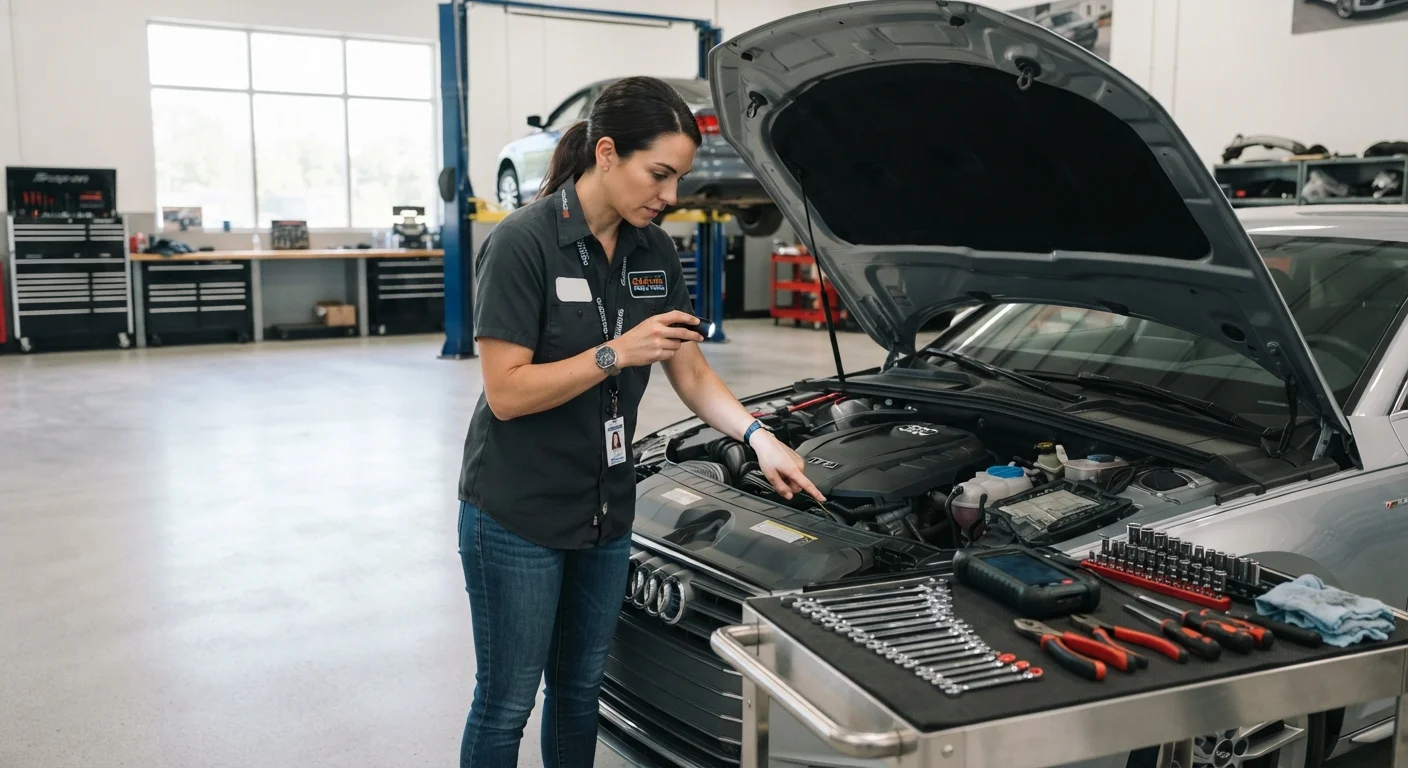
Most drivers rely on scheduled dealership visits to catch problems, but a lot can change between service appointments. Brake pads wear, tyres lose pressure unevenly, wiper blades crack, and small fluid leaks develop — often without triggering a dashboard warning light. A structured self-inspection once a year puts you back in the driver's seat when it comes to understanding your vehicle's condition.
Think of this checklist the same way you might approach a home safety audit — methodical, zone by zone, with nothing skipped because it looks fine at a glance. For context on how this fits into the broader picture, see your car's service schedule guide to understand what professional visits cover and where personal checks fill the gaps.
Work through each section below with your engine cold, parked on level ground, and in good lighting. Note anything that looks worn, leaking, cracked, or inconsistent — then prioritise follow-up with a qualified mechanic for anything beyond a simple DIY fix.
Required
Tyre Pressure Gauge
Accurately measures tyre inflation levels in all four tyres and the spare.
Required
Tread Depth Gauge
Provides a precise measurement of remaining tyre tread to confirm legal and safe depth.
Required
Flashlight or Inspection Light
Illuminates dark areas under the hood, beneath the vehicle, and inside the wheel wells.
Required
Clean Lint-Free Rags
Used to wipe the dipstick clean when checking engine oil and to identify fluid contamination.
Required
Notepad or Phone for Notes
Records findings zone by zone so nothing is forgotten before speaking with a mechanic.
Optional
Battery Load Tester
Tests battery health under load conditions — useful for batteries more than three years old.
The Five-Zone Inspection Framework
This checklist is organized into five logical zones — exterior, under the hood, tyres and wheels, interior, and electrical systems. Each zone has its own set of checks grouped by priority. Work through them in order to avoid backtracking.
Exterior Body and Glass
Walk around the entire vehicle and note any new dents, scratches, or rust spots, particularly along door sills and wheel arches where moisture collects.Must
Inspect all glass — windshield, rear window, and side windows — for chips or cracks larger than a quarter, which can spread and compromise structural integrity.Must
Check wiper blades for cracking, splitting, or streaking; blades typically need replacement every 6–12 months depending on climate.Must
Examine all exterior lights (headlights, taillights, brake lights, turn signals, reverse lights) to confirm they illuminate correctly.Must
Inspect door seals and trunk weatherstripping for cracking or compression loss that can allow water ingress.Should
Under the Hood
Check engine oil level and condition using the dipstick — oil should sit between the min and max markers and appear amber or brown, not black or milky.Must
Inspect the coolant reservoir level and verify the coolant appears green, orange, or pink — never brown or rusty, which indicates contamination.Must
Check brake fluid level in the reservoir; a notably low level may indicate pad wear or a slow leak and warrants prompt professional assessment.Must
Examine belts (serpentine and timing belt where visible) for fraying, cracking, or glazing; consult a mechanic if any wear is visible.Must
Look underneath the vehicle for fluid stains or fresh drips on the ground — oil, coolant, and brake fluid each have distinct colours and smells.Must
Check the air filter by pulling it out and holding it to light; heavy grey or black contamination means it's due for replacement.Should
Top up windshield washer fluid if needed, using a product rated for your climate's lowest expected temperature.Nice to have
Tyres and Wheels
Check tyre pressure on all four tyres (and the spare) using a calibrated gauge when the tyres are cold; compare readings against the placard found inside the driver's door jamb.Must
Inspect tread depth on all tyres using a tread depth gauge or the penny test — tyres with less than 2/32 inch of tread are legally unsafe and must be replaced.Must
Look for uneven wear patterns across the tyre width, which can indicate alignment, suspension, or inflation issues.Must
Examine tyre sidewalls for bulges, cuts, or cracks — any of these defects means the tyre should be professionally assessed before further driving.Must
Inspect wheel nuts or lug nuts for visible looseness or corrosion; have them torqued to spec by a mechanic if you lack a torque wrench.Should
Check the condition of the spare tyre and confirm its pressure meets the manufacturer's specification.Should
Interior and Safety Equipment
Test all seatbelts by pulling firmly and confirming the retractor locks; check for cuts, fraying, or damage along the webbing.Must
Confirm the horn operates and sounds clearly — this is a requirement for roadworthiness in most US states.Must
Check that all dashboard warning lights extinguish after startup; any light that stays on should be diagnosed before your next long drive.Must
Verify the emergency brake (parking brake) engages and releases properly and holds the vehicle on a slight incline.Must
Inspect floor mats to ensure they are not bunched or sliding near the pedal area, which poses a throttle interference risk.Should
Check that your vehicle emergency kit (jumper cables, reflective triangles, first aid kit, and flashlight) is present and in usable condition.Should
Electrical and HVAC Systems
Test the battery visually for corrosion on terminals (white or blue crust); have battery health tested with a load tester if the vehicle is slow to crank.Must
Run the heating and air conditioning systems to confirm they reach the expected temperature range within a few minutes.Should
Test all powered accessories — windows, mirrors, locks — to confirm they operate without hesitation or unusual noises.Should
Check cabin air filter condition if accessible; a visibly dirty filter reduces HVAC airflow and should be replaced per your owner's manual interval.Nice to have
Know the Limits of a Self-Inspection
A personal walk-through is not a substitute for professional diagnosis. Brake system integrity, suspension wear, and emissions compliance all require specialist tools and trained eyes to assess properly. If you find something during your inspection that you're uncertain about — especially related to brakes, steering, or fluid leaks — have a qualified mechanic evaluate it before driving further. Never assume a problem is minor simply because it's not yet affecting how the car drives.
Once complete, log your findings and compare them against last year's notes if available. This longitudinal view is more valuable than any single snapshot. Our guide to keeping vehicle records organised covers practical approaches to storing inspection notes alongside your service history.
If your annual check falls near a seasonal transition, pair it with the tasks outlined in seasonal car maintenance preparation to make the most of your time.
Record and Act on What You Find
Completing this checklist without acting on findings offers little safety benefit. Items marked as concerns should be prioritised by severity: brake, tyre, and steering-related issues take precedence over cosmetic or comfort items. Keep a written record of the date, your findings, and any follow-up work completed. For a broader view of annual ownership obligations — including registration and insurance renewals — refer to the annual vehicle ownership checklist.
Autos & Driving Editorial Team is the collective byline for our editorial team and contributor network. Articles published under this byline or an editorial pen name are researched, written, and reviewed according to our editorial standards for clarity, consistency, and independence before publication.
The content on this site is for informational purposes only and is not a substitute for professional advice. Always consult a qualified professional for guidance specific to your situation.