

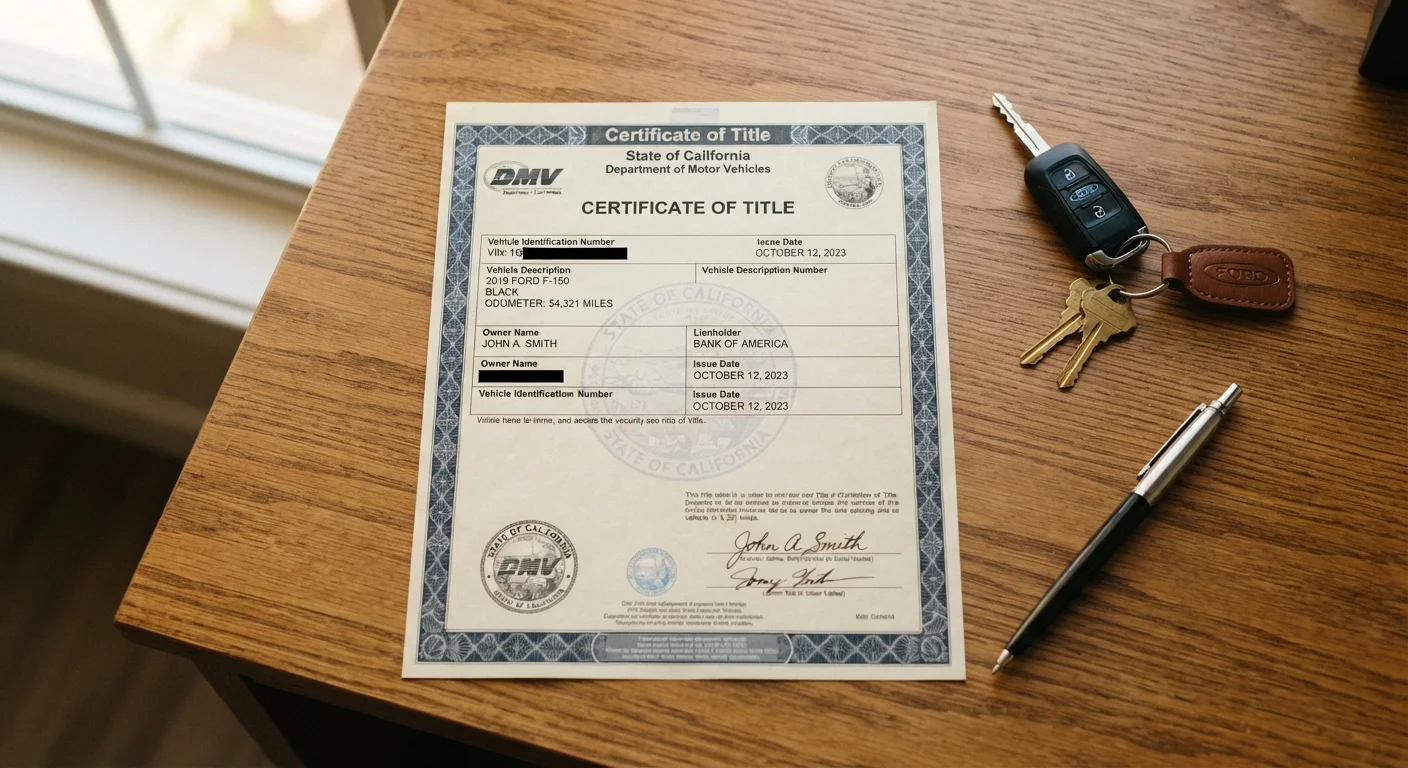
Why Title Transfers Matter
A vehicle title is the legal document that establishes who owns a car. Without a properly executed transfer, the buyer has no documented proof of ownership — which creates problems when registering the vehicle, obtaining insurance, or eventually selling it. For the seller, failing to complete the transfer means the vehicle may still appear in their name for liability purposes even after it leaves their possession.
Understanding the terminology involved helps. Before diving into the steps, it's worth reviewing key vehicle ownership terms such as lienholder, odometer disclosure, and title assignment, all of which appear throughout this process.
What you will need
Unlike leasing — where the financing company holds title throughout the term — purchasing a vehicle means title eventually transfers directly to you. If you're weighing ownership against leasing, our comparison of leasing vs. owning outlines how responsibilities differ under each arrangement.
Original Vehicle Title
The primary legal document that proves ownership and must be signed by both parties to initiate the transfer.
Bill of Sale
Documents the agreed purchase price, which states use to calculate sales tax and verify the transaction.
Odometer Disclosure Statement
Federally required for most vehicles under ten model years old to confirm the vehicle's current mileage at time of sale.
Lien Release Letter
Required when the seller financed the vehicle; proves the lender no longer has a financial claim on the car.
Step-by-Step: Completing the Transfer
The steps below apply to the most common scenario: a private-party sale between two individuals in the US. Dealership sales follow a similar sequence, though dealers typically handle much of the paperwork on the buyer's behalf. Always verify current requirements with your state's DMV, as procedures and fees change periodically.
Verify the title is clean and lien-free
Before any money changes hands, confirm that the seller holds a clear title with no outstanding liens. A lien indicates a lender has a legal claim on the vehicle — that claim must be satisfied before ownership can transfer cleanly. Ask the seller for a lien release letter if the vehicle was previously financed. You can cross-reference the vehicle's history using the VIN (Vehicle Identification Number) through your state's DMV or a third-party vehicle history report service. Also confirm the title type — a salvage or rebuilt title carries specific implications for insurance and resale that you should understand before proceeding.
Complete the title assignment section
The back of most vehicle titles includes a section specifically for transferring ownership. The seller must fill in the buyer's full legal name and address, the sale price, the odometer reading, and the date of sale — then sign and date the document. In most states, the buyer must also sign. Use a ballpoint pen and write clearly. Do not use correction fluid (white-out) or cross out any information; a single alteration can render the title invalid and require the seller to apply for a duplicate from their state's DMV before the transfer can proceed.
Gather supporting documents
In addition to the signed title, most states require a completed bill of sale. This document records the purchase price (used to calculate sales tax), the VIN, and both parties' contact information. For most vehicles under ten model years old, a federal odometer disclosure statement is also required — this may be printed directly on the title or submitted as a separate form. Some states additionally require a vehicle inspection certificate or emissions test results before they will process a title transfer. Check your state DMV's official website for a complete, current list of required documents.
Submit the transfer application at your DMV
As the buyer, you are responsible for submitting the title transfer application to your state's Department of Motor Vehicles (DMV) or equivalent agency. Bring all required documents, your government-issued photo ID, and proof of insurance. At this point you'll pay the applicable title transfer fee — which varies widely by state — and any sales or use tax based on the purchase price. Some states allow online or mail-in submissions for straightforward private-party transfers; others require an in-person visit. Most states impose a deadline of 10 to 30 days from the date of sale to complete the transfer, with late fees applied beyond that window.
Handle special circumstances: gifts and inheritances
Gifted vehicles follow a similar process but often use a different sales price for tax purposes — many states accept an affidavit of gift to exempt the transaction from sales tax or assess it at a nominal value. Inherited vehicles require additional documentation: typically a copy of the death certificate, the will or letters testamentary, and sometimes a court order depending on the estate's complexity. Some states have simplified procedures for vehicles transferred between immediate family members. In all cases, the outcome is the same: a newly issued title in the recipient's name. Once the title is secured, you'll also need to complete vehicle registration — a separate but related step covered in our article on how vehicle registration works.
Make a Copy Before You Submit
Photocopy or photograph the completed title and all supporting documents before handing them to the DMV. If anything is lost or misprocessed, having a clear record of what you submitted will simplify resolution significantly.
After the Transfer: What to Expect
Once your DMV processes the application, a new title will be mailed to you — or to your lender if you financed the purchase. Processing times vary from a few days to several weeks depending on the state and submission method. In the interim, keep your receipt or confirmation from the DMV as proof that the transfer is in process. You are typically permitted to drive the vehicle during this window, but carry your bill of sale and any DMV receipts in case you're asked to demonstrate legal possession.
If you financed the purchase, your lender will hold the title until the loan is paid off, at which point they are required to release it to you — another step worth documenting and tracking carefully.
Don't Drive on an Untransferred Title
Operating a vehicle before the title is transferred and registration is updated can create legal complications if you're involved in an accident or traffic stop. If the previous owner still appears on the title, liability questions become considerably more complex. Complete the transfer process as promptly as your state's deadline allows.
The content on this site is for informational purposes only and is not a substitute for professional advice. Always consult a qualified professional for guidance specific to your situation.