

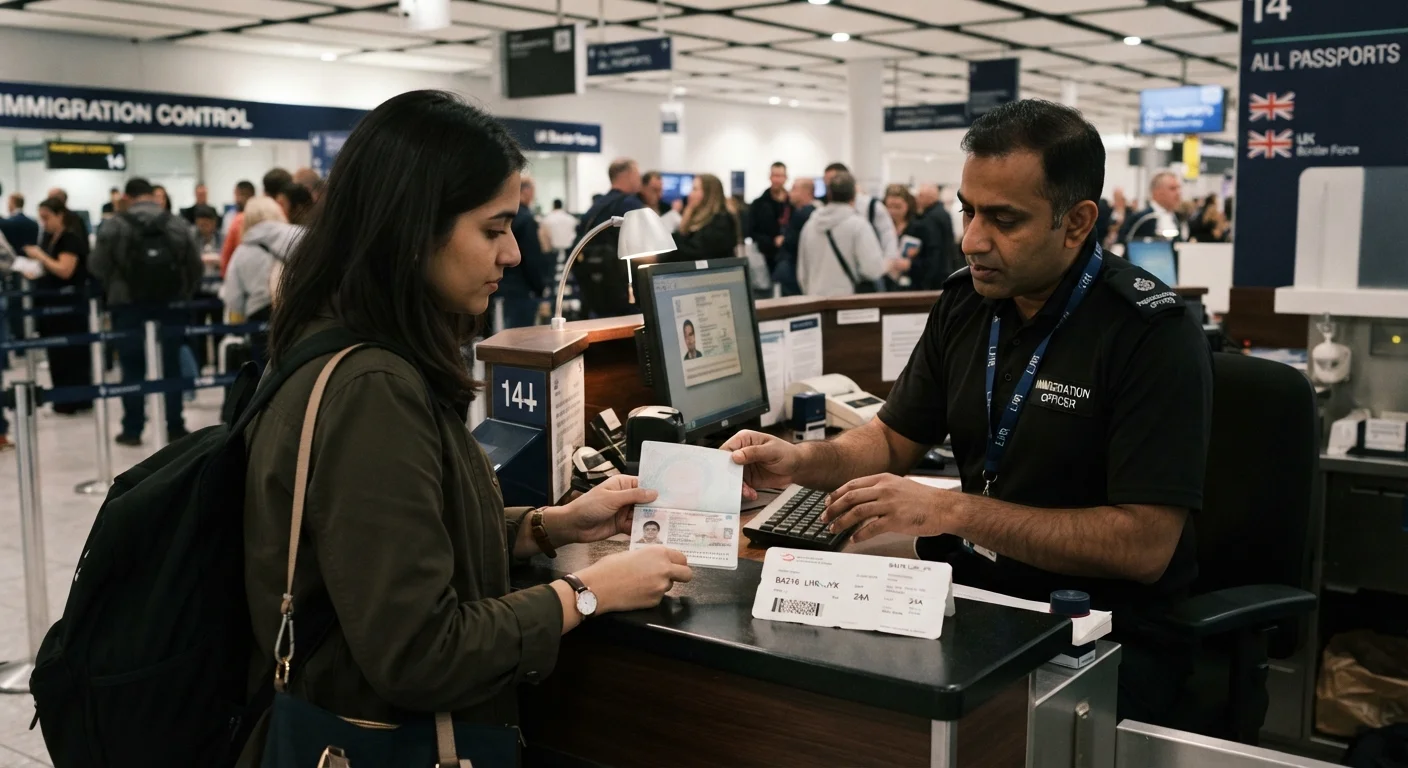
What Is Proof of Onward Travel?
Proof of onward travel is documentation showing that you have a confirmed plan to leave a country before your permitted stay expires. Immigration officers and airlines use it to confirm that a visitor does not intend to overstay or work illegally. It is one of the entry conditions most frequently overlooked by travelers — and one of the most consequential to miss.
Common forms of acceptable proof include a return airline ticket, a confirmed ticket to a third country, a bus or ferry reservation, or — in some cases — a cruise itinerary. An open-jaw or multi-city itinerary generally qualifies provided it shows departure from the country in question. Check with the relevant embassy or official government source before travel, as accepted documents vary by country and can change without notice. For a broader overview of the documents required before departure, see our pre-departure document guide.
Regions That Commonly Enforce This Requirement
While individual countries set their own entry rules, certain regions have a notably consistent pattern of requesting onward travel proof at the border or during airline check-in.
Southeast Asia
Countries including Thailand, Indonesia, the Philippines, and Vietnam routinely ask visa-exempt visitors for evidence of departure. Thailand, in particular, is widely cited by frequent travelers as a country where this check occurs at both the airline gate and the immigration desk. Visitors arriving on a land border crossing may face the same scrutiny.
Central America and the Caribbean
Several Central American nations — including Guatemala, Costa Rica, and Honduras — participate in the CA-4 border agreement, and proof of onward travel is a standard expectation. Many Caribbean island nations, especially those with US or UK territory status, enforce this rule as a condition of visa-free entry.
South America
Ecuador and Colombia are frequently cited examples where immigration authorities or airlines request a return or continuing ticket, particularly from travelers arriving on tourist allowances.
South Asia
India and Sri Lanka may request onward evidence for certain passport holders as part of their entry procedures, especially for travelers on e-visas or visa-on-arrival programs.
Always Verify with Official Sources
Immigration rules are set by individual governments and can change with little public notice. The regional patterns described in this article reflect general trends but are not exhaustive and may not reflect current policy. Before you travel, check the destination country's official immigration website and your home government's travel advisory portal for the most current requirements.
The rules above reflect general patterns observed across the regions. Entry requirements are subject to change — always verify directly with the destination country's official immigration authority or your country's foreign affairs ministry before you travel. For additional context on why entry refusals happen, see why travelers underestimate entry requirements.
Why Countries Require It — and How to Prepare
The rationale is primarily immigration control. Countries that offer visa-free or visa-on-arrival access to a large number of passport holders have a practical interest in ensuring visitors do not overstay or seek informal employment. Requiring a confirmed exit ticket is a low-friction way to assess intent at the point of entry without conducting a full background inquiry.
Airlines face an additional incentive: under many international agreements, carriers that transport inadmissible passengers are responsible for returning them at the airline's expense. This explains why check-in agents — not just immigration officers — sometimes request the documentation before boarding.
Onward travel
A confirmed travel arrangement showing that a visitor will depart from a country before their permitted stay expires. It may be a return ticket or a ticket to a third destination.
Visa-on-arrival
A visa issued to a traveler upon reaching the destination country's port of entry rather than being obtained in advance from an embassy or consulate.
Overstay
Remaining in a country beyond the duration permitted by the visa or entry stamp. Overstays can result in fines, detention, deportation, and future entry bans.
CA-4 border agreement
A treaty among Guatemala, El Salvador, Honduras, and Nicaragua allowing nationals of those countries — and, in some conditions, foreign visitors — to cross shared borders without a separate visa, though entry requirements still apply.
Open-jaw itinerary
A flight itinerary where the departure and return airports are different — for example, flying into Bangkok and departing from Chiang Mai. It can satisfy onward travel requirements if it shows confirmed departure from the country.
Inadmissible passenger
A traveler whom immigration authorities determine does not meet entry requirements and who is denied admission to the country. Airlines are typically responsible for returning inadmissible passengers they transported.
If you are on an open-ended trip with no fixed return date, practical options include purchasing a fully refundable onward ticket, using a short-duration bus or ferry reservation to a neighboring country, or booking the cheapest available flight out of the destination and canceling once you have cleared immigration. Each approach carries its own cost and risk; research what is acceptable at your specific destination. For a fuller pre-departure checklist, including visa considerations, see the international traveler's essential pre-departure checklist and review what a travel visa actually is and when you need one if you are still clarifying your visa status.
This article provides general travel information only. Entry requirements, immigration rules, and accepted documentation can change at any time. Always verify current requirements through the official government sources of your destination country and your home country's foreign affairs ministry before you travel.
The content on this site is for informational purposes only and is not a substitute for professional advice. Always consult a qualified professional for guidance specific to your situation.