

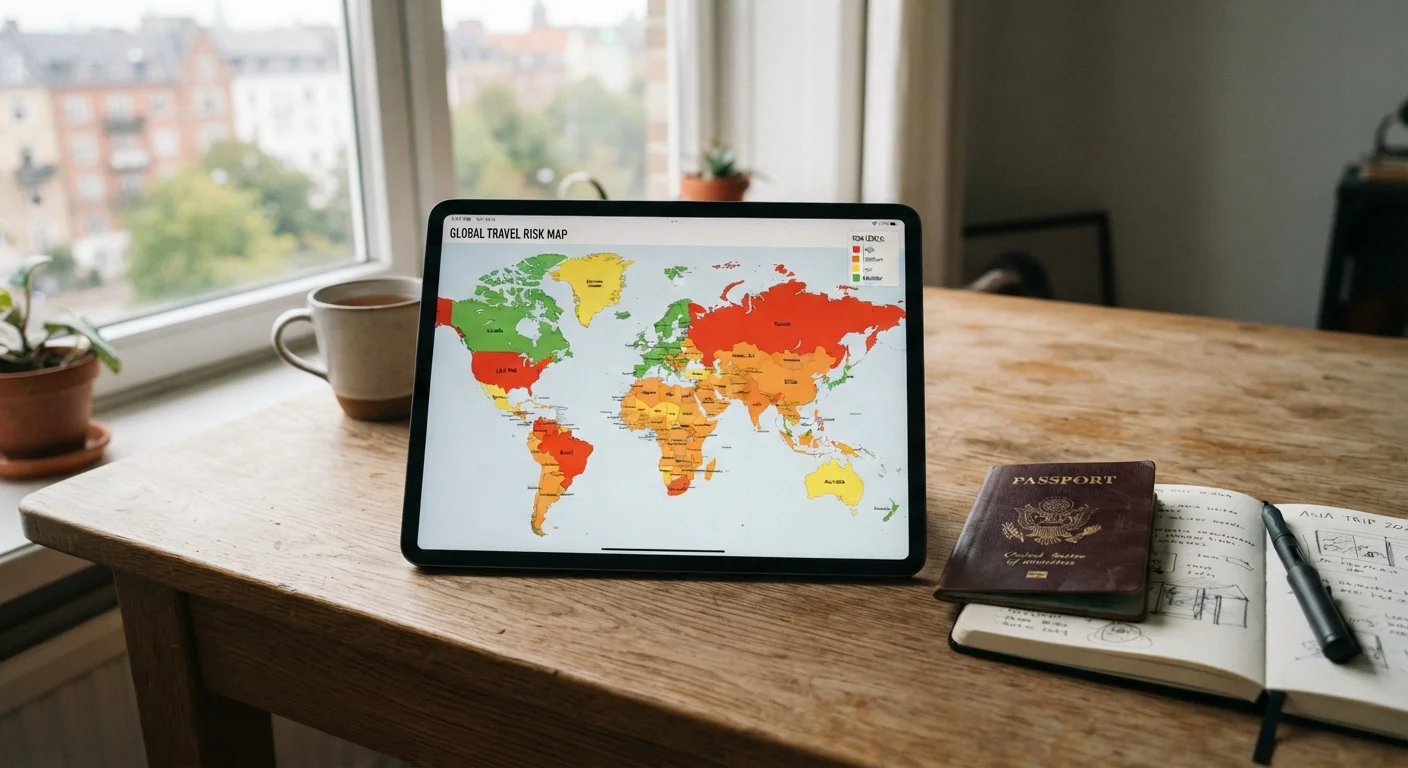
How the U.S. Advisory System Is Structured
The U.S. Department of State operates a four-level travel advisory system that applies to every country in the world. Understanding those levels is the starting point for using advisories effectively.
- Level 1 — Exercise Normal Precautions: The baseline for countries with low overall risk. Travelers should still practice standard safety habits but face no heightened concern.
- Level 2 — Exercise Increased Caution: Indicates elevated risks from crime, terrorism, or civil unrest in some areas or contexts. Travelers should research specific regions within the country carefully.
- Level 3 — Reconsider Travel: Serious and widespread risks that could directly affect traveler safety. The State Department recommends weighing whether the trip is necessary.
- Level 4 — Do Not Travel: Reserved for countries with extreme risk from war, widespread violence, life-threatening disease outbreaks, or situations where the U.S. government has very limited ability to assist its citizens.
For practical safety planning beyond advisory levels, our guide to staying safe abroad walks through situational awareness, digital security, and emergency contacts.
4
Advisory levels in the U.S. State Department system
The U.S. Department of State's tiered framework ranges from Level 1 (Exercise Normal Precautions) to Level 4 (Do Not Travel), as published at travel.state.gov.
200+
Countries and territories assessed annually
The U.S. State Department publishes and reviews travel advisories for every country and territory in the world, updating them whenever conditions materially change.
What Advisories Actually Measure
An advisory level is not a single-variable score — it reflects a composite assessment of several distinct risk categories, which are detailed in each country's advisory page at travel.state.gov.
Common risk factors include:
- Crime: Rates of violent crime, kidnapping, or theft targeting foreign nationals.
- Terrorism: Active threats or recent attacks, including areas where extremist groups operate.
- Civil unrest: Protests, political instability, or ethnic and sectarian conflict that could turn dangerous with little warning.
- Health risks: Disease outbreaks, limited healthcare infrastructure, or vaccination requirements.
- Natural disasters: Seismic activity, flood zones, or severe weather seasons.
A country can receive a moderate overall level while containing specific sub-regions flagged as far more dangerous. Analysts refer to these as regional distinctions, and they appear within the country-specific advisory text — a detail many travelers overlook when they stop at the headline level.
Advisory Levels Can Vary by Country of Origin
The U.S., UK, Canada, and Australia each operate independent advisory systems with their own assessment criteria and tier structures. A destination rated Level 2 by the U.S. State Department might receive a different classification from the UK Foreign Commonwealth & Development Office for the same period. When planning international travel, cross-referencing multiple official sources can provide a more complete picture of conditions on the ground.
How Advisories Interact with Insurance and Assistance
Advisory levels have real, practical consequences beyond informational guidance. Two areas where travelers often discover this too late are travel insurance and consular services.
Travel insurance: Many standard travel insurance policies contain clauses that void coverage — or exclude claims — when a traveler voluntarily visits a destination under a Level 3 or Level 4 advisory. This can affect medical evacuation, trip cancellation, and emergency assistance benefits. Policies vary widely, so reviewing the specific terms of any plan before booking is essential. Your insurer, not a travel agent or booking platform, is the authoritative source on your coverage.
Consular assistance: U.S. embassies and consulates provide emergency assistance to American citizens abroad — but their capacity is directly limited by conditions on the ground. At Level 4, the State Department may have reduced or suspended operations in that country, meaning the help available to stranded or endangered travelers can be minimal.
Entry requirements are a related but separate consideration. Why travelers underestimate entry requirements explains common mistakes around passport validity, visas, and border rules that can derail a trip before advisory concerns even arise.
Reading an Advisory — and Using It Wisely
The headline advisory level is a starting point, not a complete picture. Experienced travelers treat the full advisory text as the real resource. Each country page on travel.state.gov includes:
- A summary of the overall risk environment
- Specific areas within the country flagged at different risk levels
- Broken-down risk categories (crime, terrorism, civil unrest, etc.)
- Links to health information, entry requirements, and local emergency contacts
It is also worth consulting advisories from other governments. Canada's travel.gc.ca and the UK's Foreign Commonwealth & Development Office often assess the same destination differently, and comparing perspectives can surface nuances that a single source might underweight.
For understanding another travel document that often travels alongside advisories, what a travel visa actually is provides a clear explainer on visa requirements and how they differ by destination and citizenship.
Sign Up for STEP Before You Travel
The U.S. State Department's Smart Traveler Enrollment Program (STEP) allows American citizens traveling or living abroad to register their trip with the nearest U.S. Embassy or Consulate. Enrolling means you'll receive location-specific security alerts and makes it easier for the Embassy to contact you or your emergency contacts if a crisis occurs. Registration is free and takes only a few minutes at step.state.gov.
This article provides general information about government travel advisory systems. Always verify current advisory levels and entry requirements directly with official government sources — including the U.S. Department of State at travel.state.gov — before making any travel decisions. Conditions can change rapidly, and only official sources reflect the most current assessments.
Frequently Asked Questions
A Level 3 advisory from the U.S. State Department means 'Reconsider Travel.' It signals significant risks — such as serious crime, ongoing civil unrest, or health hazards — that may affect traveler safety. It is not a legal prohibition, but the State Department strongly advises reconsidering whether the trip is necessary. Travel insurance policies may also exclude coverage for destinations at this level or higher.
No, U.S. travel advisories are not legally binding — they are official risk assessments, not travel bans. American citizens retain the right to travel to most countries regardless of advisory level. However, a Level 4 advisory may result in very limited or no consular assistance if something goes wrong, and travel insurance may be voided.
The U.S. State Department reviews each country's advisory at least annually, but can update them at any time in response to rapidly changing conditions. Major events such as political upheaval, terrorist incidents, or disease outbreaks can trigger immediate revisions. Travelers should check the official State Department website close to their departure date.
Official U.S. travel advisories are published at travel.state.gov, the U.S. Department of State's travel information portal. Each country page includes the current advisory level, a detailed summary of risks, and practical safety information for travelers.
Yes, advisory levels can significantly affect travel insurance. Many policies exclude claims arising from travel to countries under a Level 3 or Level 4 advisory. Some insurers require that a trip be booked before an advisory is elevated to honor cancellation coverage. Always read your policy terms carefully and consult your insurer before traveling to elevated-risk destinations.
The content on this site is for informational purposes only and is not a substitute for professional advice. Always consult a qualified professional for guidance specific to your situation.