

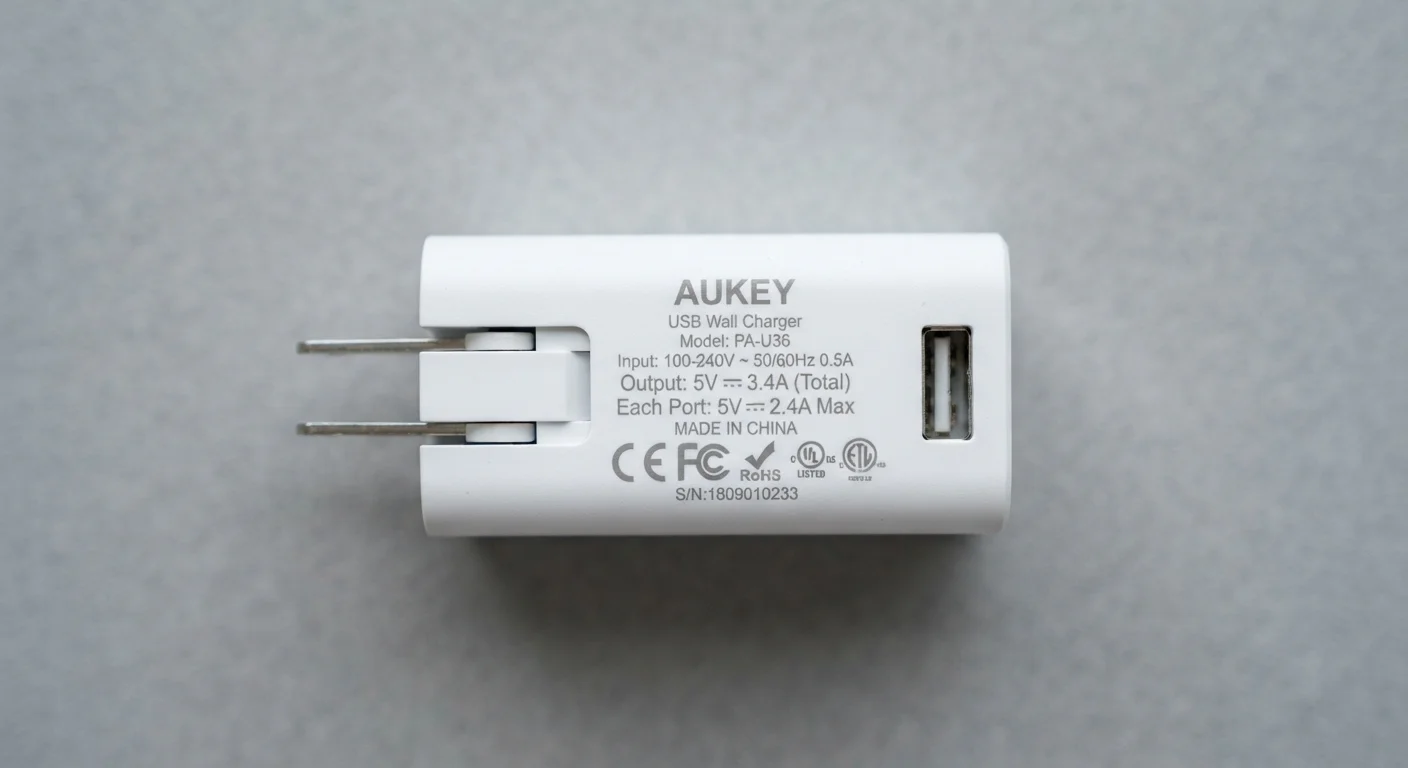
The Three Numbers That Matter Most
Flip any charger over and you'll see a block of small text packed with abbreviations. The three measurements you'll encounter on almost every charger are volts (V), amps (A), and watts (W). Each describes something different about how power moves.
Volts represent electrical pressure — the force pushing electricity through the circuit. Most standard USB chargers output 5V, though fast chargers can step this up to 9V, 12V, or even 20V. Amps (sometimes shown as milliamps, or mA) represent how much current is flowing — think of it as the volume of electricity delivered per second. Watts combine the two: watts equal volts multiplied by amps. A charger labeled 5V/2A is delivering 10W of power.
Understanding these three values lets you immediately assess whether a charger is adequate for a specific device — no guesswork required. For a broader look at how device numbers inform your tech decisions, see our plain-English guide to device specs.
5W → 140W
Typical range of consumer charger outputs
Standard phone chargers often deliver 5–20W, while high-performance laptop chargers can reach 100–140W under USB Power Delivery specifications.
W = V × A
Formula for calculating charger wattage
This relationship means a charger rated at 9V and 2A delivers 18W — a common fast-charging tier for modern smartphones.
100–240V
Input range indicating global compatibility
Chargers with this input range can operate on outlet voltages found in North America (120V) and most of Europe and Asia (220–240V) without a converter.
Input vs. Output: Two Different Conversations
Every charger has two sets of ratings: input and output. These are easy to confuse but serve entirely different purposes.
The input rating describes what the charger draws from the wall outlet. A rating of 100–240V ~ 50/60Hz means the charger can accept power from virtually any outlet globally — useful context before you travel. The output rating is what gets delivered to your device through the charging cable. This is the number that actually matters for charging speed.
When a charger shows multiple output options — for example, 5V⎓3A / 9V⎓2A / 12V⎓1.5A — it's communicating that it supports a fast-charging protocol. The charger and device negotiate which voltage-and-current combination to use, based on what both can handle.
Check Output Specs Before You Assume Compatibility
Don't assume that because a charger physically fits your cable, it's the right match for your device. Look at the output rating and compare it to what your device's manufacturer recommends. When in doubt, the device's original charger specs — usually found in the manual or on the manufacturer's website — are your most reliable reference point.
Why Your Device Controls the Charge
A common worry is that a charger with higher specs than the device requires will push too much power through and cause damage. In practice, this isn't how charging works. Your device contains a charge controller — a small chip that negotiates with the charger and draws only the current the battery can safely accept at any given moment.
This is why plugging a phone into a laptop charger rated at 65W won't harm the phone — the phone simply requests the level of power its circuitry allows. The charger's higher rating is just available headroom, not a command.
What can cause problems is going in the other direction: using a charger rated too low for a high-demand device, or using cheaply made chargers that lack proper regulation. Poorly regulated chargers may not respond correctly when a device requests less power, which creates genuine risk. This is one of those gadget myths that refuse to die — the danger isn't from chargers being too powerful, but from them being too poorly built.
Fast Charging: What the Standards Actually Do
If your charger mentions USB Power Delivery (USB-PD), Quick Charge, or a similar fast-charging standard, it's doing something more sophisticated than a basic charger. Rather than delivering a fixed output, it communicates with the device to identify the fastest safe charging rate and adjusts voltage and current accordingly.
For example, a USB-PD charger might start at 5V/0.9A, then ramp up to 9V/2A once the device confirms it can handle that load. This negotiation happens in milliseconds and continues throughout the charge session as the battery fills and slows its acceptance rate.
The catch is compatibility: fast charging only activates when both the charger and the cable support the same standard. A USB-PD charger paired with an old cable that can only carry 5V will default to standard charging speeds. The USB connector type and standard matter just as much as the charger's rated wattage.
Frequently Asked Questions
Generally, no. Your device's charging circuitry requests only the power it can safely handle. A higher-wattage charger simply means more capacity is available, not that more is forced through. However, using a very low-quality or counterfeit charger is a different risk — those may not regulate power correctly.
The input rating (e.g., 100–240V, 50/60Hz) describes the wall power the charger itself requires to operate. A charger showing 100–240V is compatible with outlets worldwide, making it suitable for international travel.
Slow charging usually means the charger's amperage is lower than your device expects. For example, plugging a phone that supports 18W fast charging into a 5W charger will result in noticeably slower fill times. The charger is the bottleneck.
USB Power Delivery is a fast-charging standard that allows compatible chargers and devices to negotiate higher voltages — often up to 20V — over a USB-C connection. This dramatically reduces charge time compared to older fixed-voltage charging.
Conceptually no — both use voltage, current, and wattage. However, laptops typically require much higher wattage (45W–140W) compared to phones (5W–65W). Using a phone charger on a laptop may keep it from dying but won't meaningfully charge it under load.
The content on this site is for informational purposes only and is not a substitute for professional advice. Always consult a qualified professional for guidance specific to your situation.