

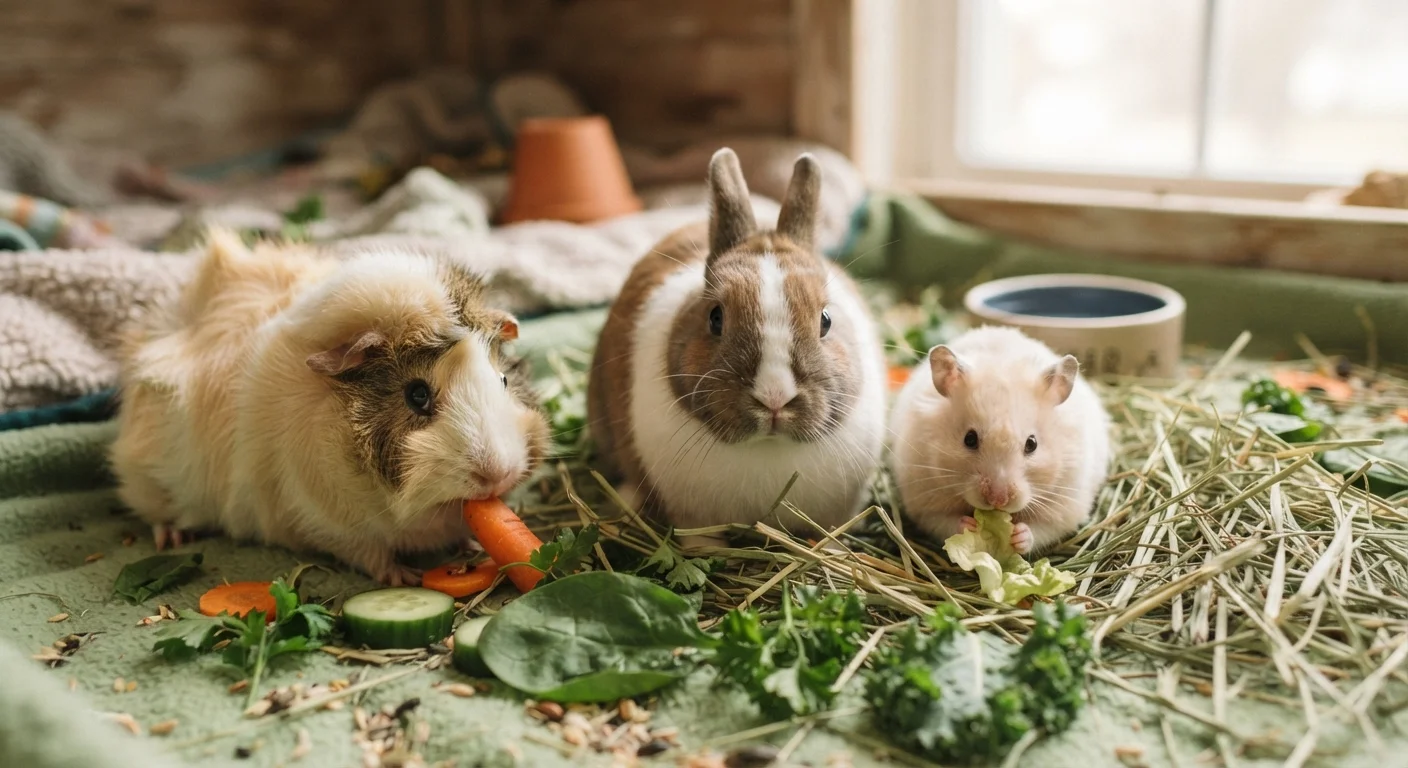
Our Verdict
Guinea pigs, rabbits, and hamsters are all rewarding companions, but they suit different households and lifestyles. Rabbits demand the most space and interaction, guinea pigs thrive on companionship and social engagement, and hamsters offer a more low-footprint option for those with limited space or time. Matching a species to your realistic daily routine is the most important factor in long-term animal welfare.
| Best for | Recommended |
|---|---|
| Families with children seeking a social, interactive small pet | Guinea Pigs |
| Owners with dedicated space and time for daily interaction | Rabbits |
| Adults or older children who prefer a lower-maintenance, independent pet | Hamsters |
| Those who want a pet compatible with a quieter evening schedule | Hamsters |
Why Small Pet Care Is More Complex Than It Looks
Small pets are often marketed as easy starter animals, but veterinary professionals consistently point out that guinea pigs, rabbits, and hamsters each have species-specific needs that owners frequently underestimate. Meeting those needs directly affects lifespan, stress levels, and overall health. Before choosing a species, it helps to understand what separates their care requirements rather than treating them as interchangeable.
See our new pet owner checklist for a practical preparation guide before any animal comes home. And if you're considering multiple pets, bringing a second pet home outlines what the adjustment period really involves.
8–12 years
Average rabbit lifespan with proper care
House rabbits regularly live into their second decade when diet, housing, and veterinary care meet species needs — a commitment many adopters underestimate.
450 sq in
Minimum hamster floor space recommended
Animal welfare organizations and exotic veterinarians commonly cite 450 square inches of unbroken floor space as the minimum for a single hamster's enclosure.
2+
Minimum guinea pigs recommended per enclosure
Guinea pig welfare guidelines in multiple countries now advise against single-animal housing, recognizing their herd-social nature as a core behavioral need.
Diet: What Each Species Truly Needs
Guinea pigs cannot synthesize their own vitamin C — a physiological fact with serious consequences. Without adequate dietary vitamin C (from fresh leafy greens, bell peppers, or fortified pellets), they develop scurvy. Timothy hay should make up the bulk of their diet, supplemented with measured fresh vegetables and a small portion of high-quality pellets daily.
Rabbits share the same reliance on unlimited grass hay — primarily timothy or orchard grass — which is essential for gut motility and dental wear. Leafy greens like romaine lettuce and cilantro are appropriate additions, while sugary fruits and starchy vegetables should be offered only sparingly. Pellets, if used, should be plain and limited in quantity for adult rabbits.
Hamsters are omnivores and benefit from a varied diet of commercial hamster mix, small amounts of fresh vegetables, and occasional protein sources such as plain cooked egg or mealworms. Seeds and grains are appropriate but should not dominate their intake due to fat content. Unlike the other two species, hamsters naturally hoard food — check pouches and corners of their enclosure regularly to remove perishables.
| Guinea Pig | Rabbit | Hamster | |
|---|---|---|---|
| Lifespan | 5–7 years | 8–12 years | 2–3 years |
| Social needs | Pairs or groups essential | Pairs preferred | Solitary (mostly) |
| Minimum enclosure space | 7.5 sq ft per pair | 12+ sq ft | 450+ sq inches |
| Diet staple | Hay + vitamin C sources | Unlimited grass hay | Commercial seed/grain mix |
| Activity pattern | Diurnal (daytime) | Crepuscular (dawn/dusk) | Nocturnal/crepuscular |
| Veterinary complexity | Moderate | High | Moderate |
| Suitable for children | Yes, with supervision | Older children only | Older children/adults |
Habitat and Space Requirements
Enclosure size is one of the most commonly misrepresented aspects of small pet care. Commercially sold cages are frequently too small for any of these three species.
Rabbits need the largest footprint — at minimum, a space several times their body length in each direction, plus substantial daily free-roaming time outside the enclosure. Many rabbit welfare organizations recommend a minimum of 12 square feet of living space and at least 3 hours of supervised exercise per day. Rabbits also benefit from being housed indoors where temperature and hazards can be controlled. Our guide on creating a safe home environment covers rabbit-proofing in detail.
Guinea pigs require a minimum of 7.5 square feet of floor space for a pair, and more for larger groups. They do not climb or use vertical space efficiently, so wide, low enclosures are preferable to tall, narrow ones. Solid flooring is essential — wire-bottom cages cause foot injuries (a condition called bumblefoot).
Hamsters are often kept in enclosures that are far too small. A commonly cited minimum is 450 square inches of unbroken floor space. They are burrowers by nature and require deep substrate — at least 6 inches — for psychological wellbeing. A solid-surface wheel of appropriate diameter (10 inches for Syrian hamsters, 8 inches for dwarf varieties) is not optional; it is a behavioral necessity.
Substrate Depth Matters for Hamsters
Providing at least 6 inches of paper-based or organic substrate allows hamsters to burrow naturally, which is a key stress-reduction behavior in the wild. Shallow bedding in an otherwise adequate enclosure can still lead to stereotypic behaviors like bar-chewing or repetitive pacing. Deeper is generally better — some owners provide 10 to 12 inches without issue.
Social Needs and Handling
Social structure differs fundamentally across these three species, and getting it wrong can cause chronic stress.
Guinea pigs are herd animals. Keeping a single guinea pig is now considered poor welfare practice in many countries. Same-sex pairs or neutered mixed-sex pairs are recommended. They communicate through a range of vocalizations — wheeking, purring, and chutting — that owners learn to interpret over time. Understanding these signals is part of responsible ownership; the animal behavior hub offers broader context on how pets communicate.
Rabbits are also social and generally do better in bonded pairs, though introductions must be managed carefully. They are capable of complex emotional bonds with both other rabbits and their human caregivers. Rabbits are prey animals and can die from acute stress; handling should be calm, low, and infrequent until trust is established.
Hamsters, by contrast, are solitary — especially Syrian hamsters, which will fight if housed together. Dwarf species such as Campbell's and Winter White hamsters can sometimes coexist in pairs, but this requires careful monitoring. Hamsters are also nocturnal or crepuscular, meaning their active hours overlap poorly with daytime family schedules. Forcing interaction during sleep cycles increases stress.
For all three species, building everyday habits that support long-term health — consistent feeding times, enrichment rotation, and calm handling routines — makes a measurable difference in behavioral wellbeing.
This article provides general educational information about small animal care and is not a substitute for advice from a licensed veterinarian or exotic animal specialist. Always consult a qualified professional for health, dietary, or behavioral concerns specific to your pet.
The content on this site is for informational purposes only and is not a substitute for professional advice. Always consult a qualified professional for guidance specific to your situation.