

Why Cat Body Language Matters
Cats are not silent creatures — they simply speak a different language. Unlike dogs, who evolved alongside humans as social pack animals, cats domesticated themselves on their own terms. Their communication system relies heavily on posture, facial expression, and tail position rather than vocalisation. Misreading these signals is one of the most common reasons cat owners feel their pet is aloof, unpredictable, or difficult to connect with.
Learning to interpret what your cat is telling you strengthens your bond, reduces stress for both of you, and helps you spot early signs of discomfort. For a broader foundation, this primer on animal communication is an excellent starting point for newer owners.
| Primary communication method | Body language, posture, and scent |
| Vocalisation directed at | Primarily humans, not other cats (Animal behavior research consensus) |
| Slow blink meaning | Trust and affiliative signaling (Humphrey et al., Scientific Reports, 2020) |
| Petting-induced aggression trigger | Sensory overstimulation |
| High tail position | Friendly, confident approach |
| Flattened ears signal | Fear or defensive aggression |
The Eyes: Slow Blinks, Dilated Pupils, and Stares
A cat's eyes are among the most expressive parts of its body. Understanding what each eye state means allows you to gauge your cat's emotional temperature at a glance.
- Slow blink: Often called the "cat kiss," a slow, deliberate blink directed at you signals trust and contentment. Returning the slow blink is widely regarded among animal behaviorists as an effective way to affirm your bond.
- Dilated pupils: Large, round pupils in normal lighting indicate fear, excitement, or overstimulation. Context matters — a cat mid-play may have dilated pupils from excitement, while a cat backed into a corner has them from fear.
- Constricted pupils: Narrow, slit-like pupils in low light can signal alertness, aggression, or focused intensity. Combined with a hard stare, this is a warning signal.
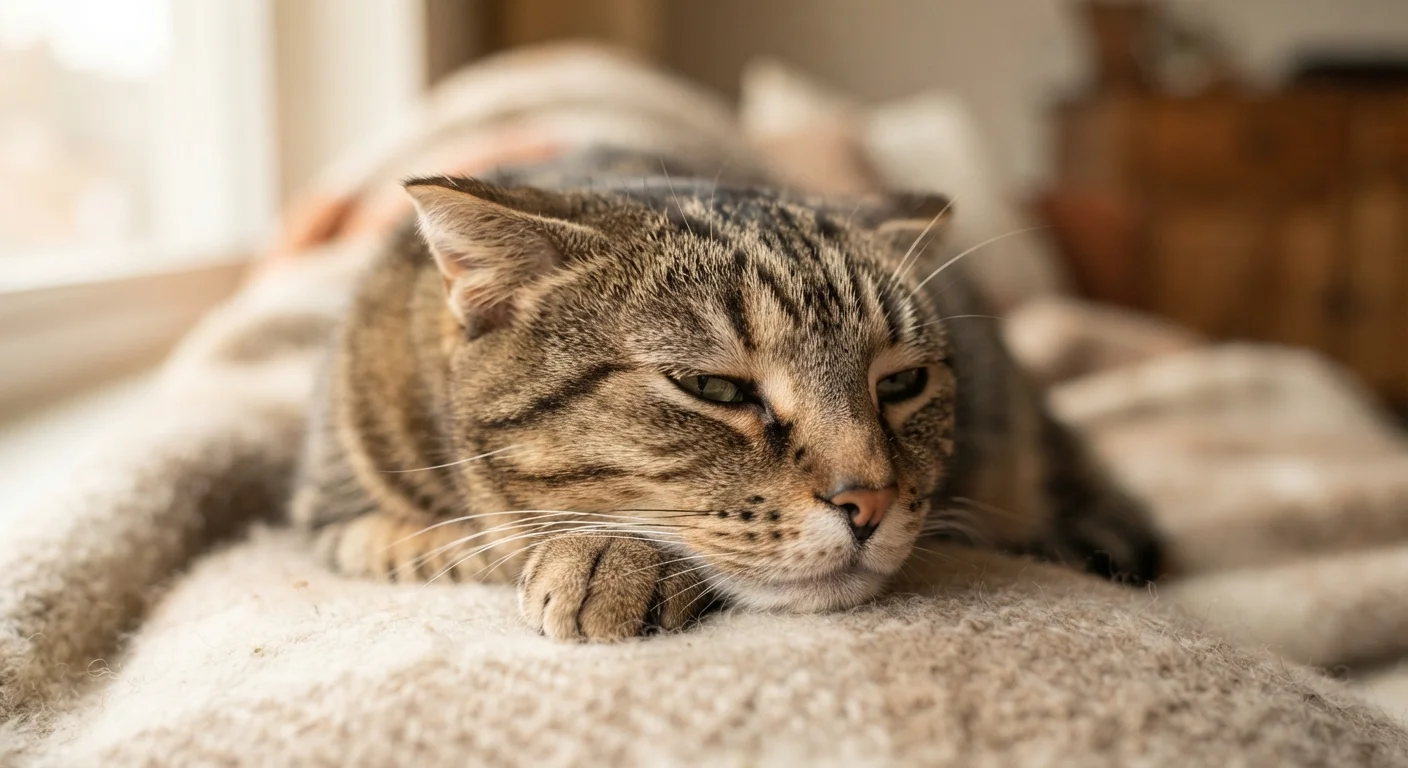
- Half-closed eyes: Relaxed, drooping eyelids indicate a cat that feels safe and at ease in its environment.
- Hard, unblinking stare: In cat social dynamics, a sustained direct stare is a challenge or threat. Cats typically avert their gaze to de-escalate tension with each other — and with humans.
Ears, Tail, and Posture: Reading the Full Picture
No single signal should be read in isolation. A cat's ears, tail, and overall body posture form a composite picture of its emotional state.
Ear Positions
- Upright and forward: Alert, curious, engaged with its environment.
- Rotated to the side: Mild irritation or uncertainty — a transitional state worth noting.
- Flattened against the head: Fear or aggression. A cat with flat ears is telling you to back off. Combined with a puffed body, this is a defensive threat display.
Tail Signals
- Tail held high: Confidence and friendly greeting. A tail held high with a slight curl at the tip is a particularly positive social signal.
- Tail tucked low or between legs: Anxiety, submission, or fear.
- Puffed or bristled tail: The cat feels threatened and is attempting to appear larger.
- Slow, deliberate lashing: Irritation or predatory focus — not the same as a dog's wagging tail. Understanding this distinction is explored further in what your dog's tail is actually telling you.
Body Posture
- Loaf position (paws tucked under): Relaxed and comfortable.
- Belly exposed: Often misread as an invitation to pet — it is actually a display of trust, not necessarily a request for belly rubs, which many cats actively dislike.
- Crouched low with weight shifted back: Ready to flee or feeling threatened.
Petting-induced aggression
A sudden aggressive response that occurs when a cat reaches its threshold for physical stimulation. It is preceded by warning signals such as tail lashing and skin rippling that owners frequently miss.
Affiliative behavior
Friendly, bonding behaviors between individuals. In cats, slow blinking, head bunting, and grooming are affiliative behaviors that signal social comfort and trust.
Displacement behavior
Actions performed out of context — such as grooming during a tense interaction — that indicate a cat is experiencing internal conflict or stress.
Threat display
A set of postures and signals a cat uses to appear more formidable and deter a perceived threat. Includes puffed fur, arched back, flattened ears, and hissing.
When multiple distress signals appear together — flat ears, dilated pupils, tucked tail, crouched posture — your cat is telling you it is overwhelmed. Knowing how to recognise these combined cues is also essential for recognising signs of stress, pain, and illness before they escalate.
Common Misreads and How to Respond
Even experienced owners misinterpret feline signals. A few patterns come up repeatedly:
- The slow turn-and-walk-away: Not rejection — cats often approach sideways or turn their back to signal they feel safe. Facing away from a threat is a vulnerability only confident, comfortable cats display.
- Chirping at windows: That chattering sound directed at birds is widely believed to be a form of predatory excitement or frustration, not fear.
- Kneading ("making biscuits"): Retained from kittenhood nursing behavior, kneading on you or soft surfaces indicates deep comfort and contentment.
- Sudden aggression during petting: Known as petting-induced aggression, this occurs when a cat reaches sensory overstimulation. Tail lashing and skin twitching are the warning signs most owners miss. Subtle stress signals like these are worth studying in detail.
In multi-cat households, misread signals between cats — not just between cats and humans — are a leading source of conflict. Understanding which signals escalate tension between pets can help you intervene early and keep the peace.
The content on this site is for informational purposes only and is not a substitute for professional advice. Always consult a qualified professional for guidance specific to your situation.