

Start here
The Two Sides of Every Plumbing System
Next
Your Water Supply System
Then
Drain, Waste, and Vent (DWV) System
Build on it
Key Fixtures and Shutoff Points
Apply it
Spotting Early Warning Signs
The Two Sides of Every Plumbing System
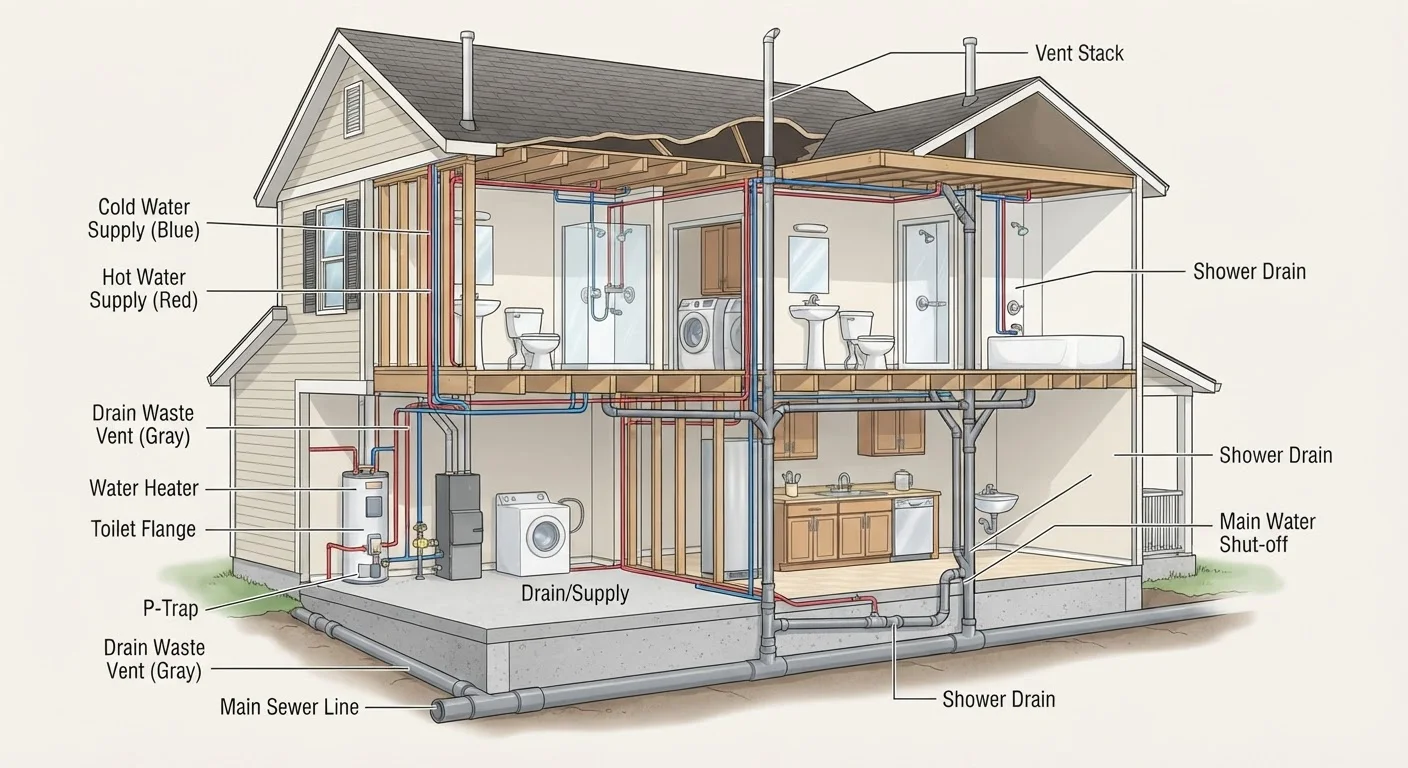
Every residential plumbing system operates on a simple principle: water comes in clean under pressure, and waste water leaves by gravity. These two functions — supply and drainage — are entirely separate systems that happen to share the same walls and floors. Understanding that distinction is the foundation for everything else.
If you are working through a broader home maintenance education, our complete home maintenance guide covers how plumbing fits alongside electrical, HVAC, and structural care.
Supply line
The pressurized pipe that brings fresh, clean water into your home from a municipal main or private well.
P-trap
The curved pipe section under sinks and drains that holds a water seal, preventing sewer gases from entering your home.
Vent pipe
A pipe that runs from the drain system up through the roof, allowing air in so waste water can flow freely without creating a vacuum.
Shutoff valve
A valve that can stop water flow to the whole house or to a single fixture, used for repairs and emergencies.
Water pressure (psi)
The force that pushes water through your supply pipes, measured in pounds per square inch. Too high or too low can cause fixture damage or poor performance.
DWV system
Short for Drain, Waste, and Vent — the three-part system that carries used water and waste out of your home using gravity and airflow.
Your Water Supply System
Water enters your home from a municipal main or a private well through a single supply line. From there it splits into two paths: one that delivers cold water directly to fixtures, and one that routes through your water heater before branching to hot-water outlets.
- Supply pipes are typically copper, CPVC plastic, or cross-linked polyethylene (PEX), all rated to handle the pressure of incoming water.
- Water pressure is what pushes water upstairs and to the far ends of your home. Most homes operate between 40 and 80 psi (pounds per square inch). A pressure regulator near the main shutoff keeps this in range.
- Shutoff valves exist at the main line and at each fixture. Knowing the location of your main shutoff before an emergency is one of the most valuable things a homeowner can do — it is the first step covered in our article on maintenance tasks new homeowners overlook.
Test Your Shutoff Valves Annually
Shutoff valves that are never used can seize or fail to close fully when you actually need them. Once a year, slowly turn each valve off and back on to keep it operating smoothly. If a valve is stiff, leaks around the stem, or will not fully close, have it replaced before an emergency arises.
Drain, Waste, and Vent (DWV) System
Unlike the supply side, drain pipes rely entirely on gravity. They are larger in diameter and slope gently downward — typically at least ¼ inch per foot — toward a main drain that connects to the municipal sewer or a private septic system.
Three components work together in this system:
- Drain pipes carry used water away from sinks, tubs, showers, toilets, and appliances.
- P-traps are curved sections of pipe found under every drain opening. They hold a small water seal that physically blocks sewer gases — including hydrogen sulfide — from rising into living spaces.
- Vent pipes run vertically through interior walls and exit through the roof. They let air into the drain system so water can flow freely without creating a vacuum that would siphon the water seal out of P-traps.
A blocked roof vent is a surprisingly common cause of slow drains and gurgling noises, because without airflow the drain essentially has to fight to pull waste through.
Never Ignore Sewer Gas Odors
A persistent rotten-egg or sulfur smell inside your home may indicate a dried-out P-trap (easily fixed by running water in little-used drains) or a cracked drain pipe — which requires professional repair. Sewer gases can be harmful in enclosed spaces. If the smell is strong or pervasive, ventilate the area and contact a licensed plumber promptly.
Key Fixtures and Shutoff Points
Every major fixture in your home has its own isolation valve — usually a small oval-handled valve on the supply lines beneath sinks or behind toilets. Being able to shut off a single fixture without cutting water to the whole house is enormously useful for repairs and inspections.
Key locations to identify and label in your home:
- Main shutoff valve — stops all water to the house
- Water heater shutoff — isolates the heater for service
- Toilet supply valve — located at the wall behind or below the tank
- Under-sink valves — one each for hot and cold at every sink
- Washing machine valves — typically two valves on the wall behind the machine
If you are planning a bathroom remodel, understanding these shutoff points is the first practical step before any work begins. See our bathroom renovation planning roadmap for how plumbing fits into the larger project sequence.
Spotting Early Warning Signs
Most plumbing failures do not happen suddenly. They develop over weeks or months through signals that are easy to dismiss — until they become expensive. Knowing what to look for lets you act early.
- Slow drainage
- Gradual buildup of grease, hair, or mineral scale inside drain pipes. Clearing the P-trap is a reasonable first step; persistent slowness deeper in the line may need professional snaking.
- Water stains on ceilings or walls
- Brown or yellow staining below an upstairs bathroom almost always indicates a slow leak from a supply line, drain connection, or wax ring seal. Do not ignore these — hidden moisture causes structural damage and mold.
- Unusually high water bills
- A spike in consumption without an obvious cause often points to a running toilet or a slow leak on the supply side. A standard dye test in the toilet tank can confirm whether the flapper is failing.
- Banging or hammering pipes
- A sudden bang when a tap is shut off is called water hammer — it happens when fast-moving water is stopped abruptly. It can stress pipe joints over time and is often addressable with a pressure regulator or hammer arrestor.
This article is for general informational purposes only. For work involving structural pipe changes, gas lines, or any task that may require permits, consult a licensed plumber and verify requirements with your local building authority.
Frequently Asked Questions
The main shutoff valve controls all water entering your home. It is usually located near the water meter — often in the basement, utility room, garage, or near an exterior wall. Turning it fully clockwise stops water flow to the entire house.
Gurgling typically means air is being pulled through the water trap in a nearby fixture, often because a vent pipe is partially blocked. It can also signal a slow-developing clog in a shared drain line. Persistent gurgling is worth having a plumber inspect.
A P-trap is the curved pipe under sinks that holds a small amount of water, blocking sewer gases from entering the home. A vent pipe runs up through the roof and lets air into the drain system so waste flows freely without creating suction that empties the trap.
Minor repairs like replacing a faucet washer or a P-trap generally do not require a permit in most jurisdictions. However, any work involving new pipe runs, moving fixtures, or connecting to the main supply or sewer typically does require a permit and licensed labor. Always check with your local building authority.
Normal residential water pressure is generally between 40 and 80 psi. Banging pipes (water hammer), unusually forceful flow from faucets, or frequent fixture leaks can all suggest pressure is too high. An inexpensive pressure gauge that attaches to a hose bib can give you a reading.
Whole-house low pressure often points to a partially closed main shutoff valve, a failing pressure regulator, or a supply-line issue from the utility. Localized low pressure at a single fixture usually means a blocked aerator or a valve that needs to be fully opened.
The content on this site is for informational purposes only and is not a substitute for professional advice. Always consult a qualified professional for guidance specific to your situation.