

Why New Homeowners Miss the Basics
Buying a home comes with a steep learning curve. When you're adjusting to mortgage payments, new neighborhoods, and furnishing every room, routine maintenance often gets pushed aside. The problem is that many of the tasks most likely to be skipped are also the ones that quietly snowball into expensive repairs.
This isn't about blame — it's about patterns. First-time homeowners tend to focus on what's visible: a leaky faucet, a squeaky door, a scuffed floor. The invisible systems doing the heavy lifting every day — airflow, drainage, water pressure, structural seals — rarely get attention until something goes wrong. Understanding the full scope of home upkeep from the start can save you thousands down the road.
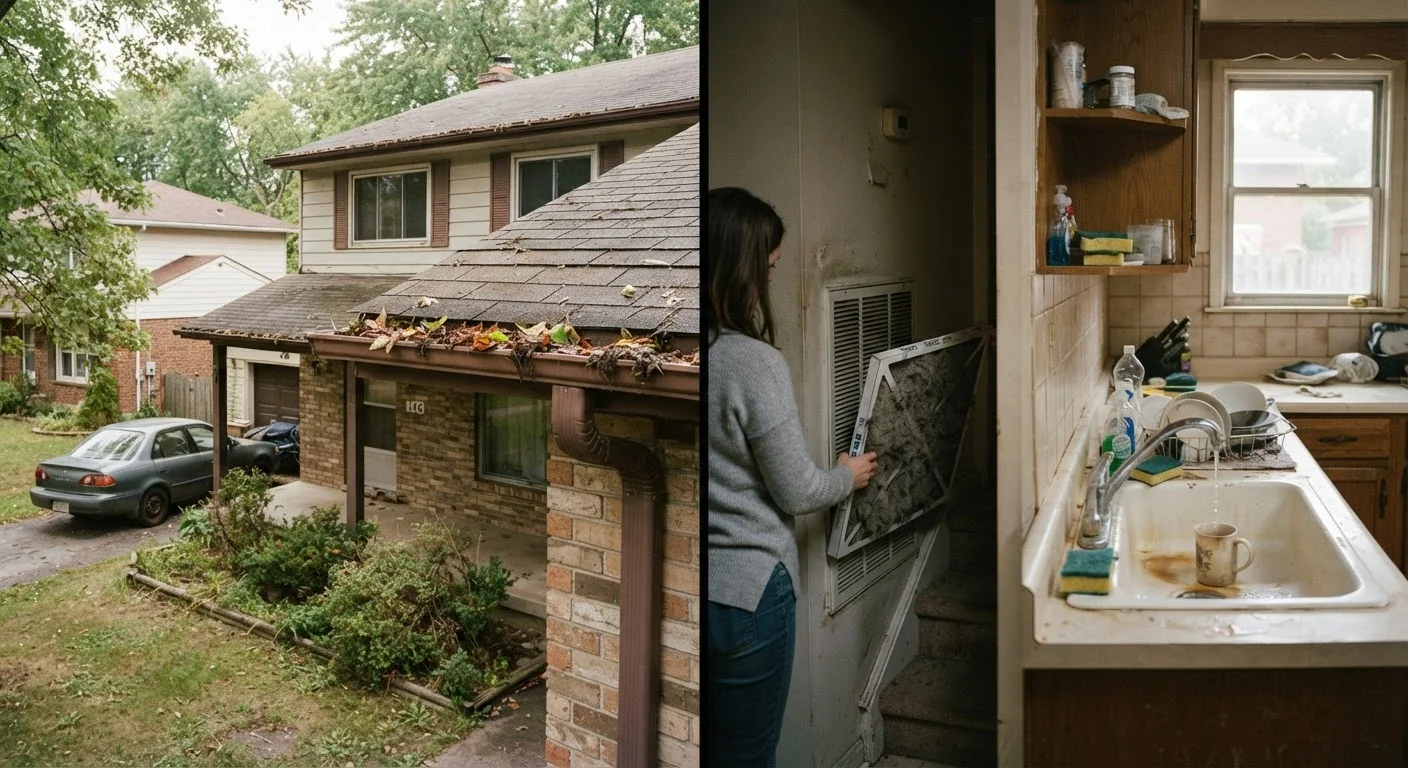
Never replacing the HVAC air filter.
Why it happens: New homeowners often don't know where the filter is located or how frequently it needs changing — and since the system appears to be working, it doesn't seem urgent.
Ignoring gutter cleaning until visible problems appear.
Why it happens: Gutters are out of sight, and their role in protecting the home's foundation and roofline isn't obvious until water damage is already occurring.
Skipping annual caulk and weatherstripping inspections.
Why it happens: Caulk and weatherstripping look fine from a distance and don't announce when they've failed. Most new homeowners don't know to check them.
Not locating or testing the main water shutoff valve.
Why it happens: Most homeowners assume they'll find the valve when they need it — but in a burst pipe emergency, a frantic search costs precious minutes and serious water damage.
Letting minor grout and tile cracks go unaddressed.
Why it happens: A small crack in bathroom grout seems cosmetic, so it's deprioritized. But grout is the primary barrier preventing water from reaching the substrate behind tile.
Assuming the smoke and carbon monoxide detectors are fine.
Why it happens: If the alarm hasn't gone off and no light is blinking, new homeowners often assume these devices are functional — but batteries expire silently and sensors degrade over time.
How to Build a Routine That Actually Sticks
The most effective maintenance habit is a simple one: a written schedule. Whether you use a notebook, a calendar app, or a dedicated spreadsheet, logging what's been done and what's coming due creates accountability. Our guide to keeping home maintenance records explains exactly what to log and why it matters — especially if you ever plan to sell.
Pair your log with a seasonal checklist. Spring and fall are natural reset points — gutters need clearing after leaves fall, and HVAC systems should be inspected before peak heating or cooling season. For a full breakdown by season, see seasonal home maintenance guidance.
1–4%
Annual home value recommended for maintenance spending
A commonly cited rule of thumb among housing professionals suggests setting aside 1–4% of your home's value each year for upkeep and repairs.
35%
Of home water damage linked to plumbing failures
According to insurance industry data, plumbing system failures and frozen pipes are among the leading causes of homeowner water damage claims.
If budget is a limiting factor, prioritize tasks that protect against water intrusion and system failure first — those carry the highest risk of cascading damage. The guide to home maintenance on a budget can help you triage effectively.
Don't Skip Permits for Repair Work
Some maintenance tasks — particularly those touching electrical panels, gas lines, or structural elements — may require a permit or a licensed contractor in your municipality. Skipping this step can create liability issues and complications when you sell. Always verify local requirements before beginning any work that goes beyond basic upkeep. For renovation-specific concerns, see the steps homeowners skip in renovations.
The content on this site is for informational purposes only and is not a substitute for professional advice. Always consult a qualified professional for guidance specific to your situation.