

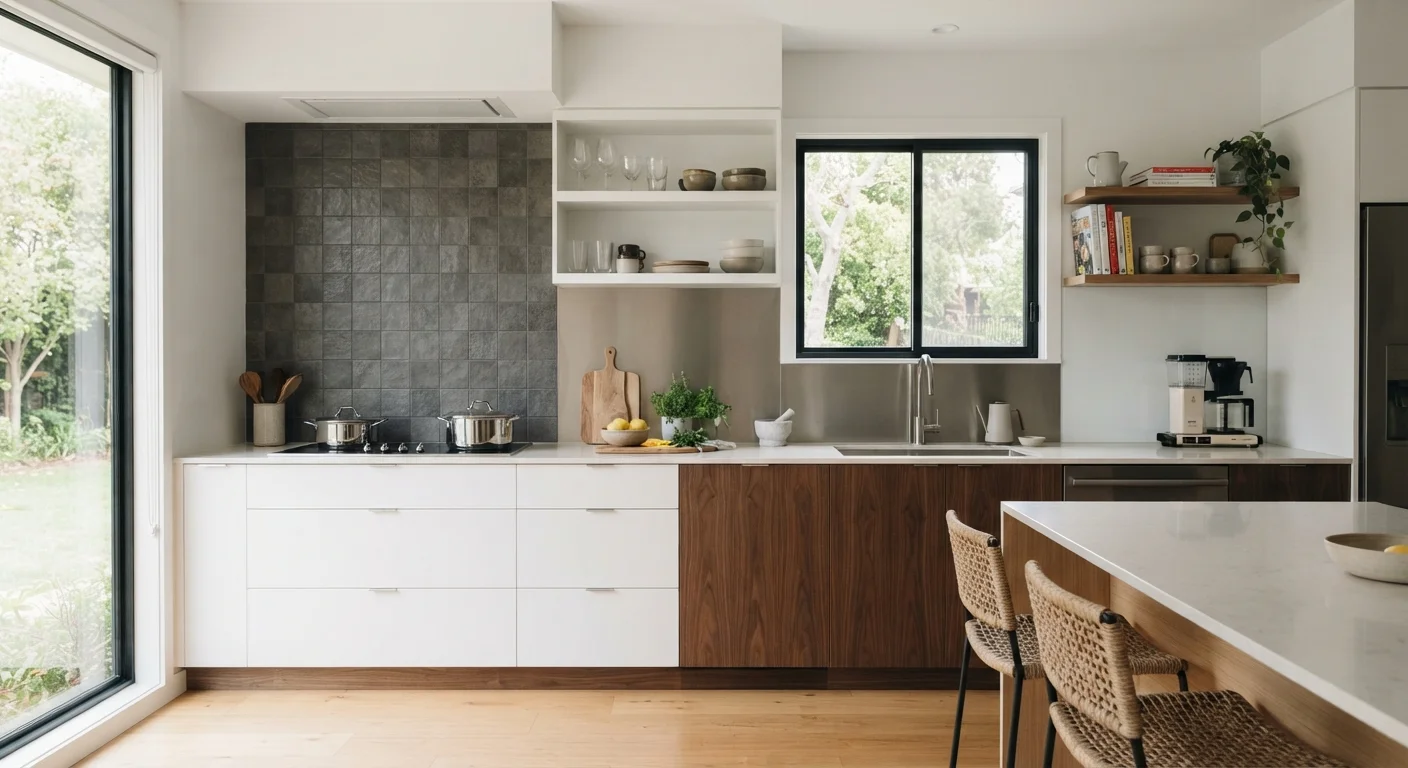
Our Verdict
No single splashback material suits every kitchen. Tiles remain the most flexible all-rounder, glass rewards those who prioritize seamless cleaning, stainless steel excels in high-heat professional-style kitchens, and stone delivers unmatched character for those willing to maintain it. The right pick comes down to your cooking habits, cleaning preferences, and design vision.
| Best for | Recommended |
|---|---|
| Homeowners wanting design flexibility on a moderate budget | Ceramic or porcelain tiles |
| Those prioritizing effortless, streak-free cleaning | Glass panels |
| High-heat cooking environments and industrial aesthetics | Stainless steel |
| Buyers seeking unique, premium visual character | Natural stone |
Why Splashback Material Matters More Than You Think
A kitchen splashback does two jobs simultaneously: it protects your wall from steam, grease, and water — and it anchors the visual style of the entire room. Choosing the wrong material can mean stubborn staining, damaged surfaces near the hob, or a finish that clashes with your cabinetry after two years of daily cooking. Getting it right, on the other hand, makes maintenance easier and the space more cohesive for the long haul.
If you're navigating a broader renovation, understanding where to invest versus where to hold back is genuinely useful — the home maintenance prioritisation guide covers exactly that kind of decision-making. For the splashback itself, the key variables are heat resistance, cleanability, installation complexity, and how the material ages.
| Ceramic/Porcelain Tile | Glass Panel | Stainless Steel | Natural Stone | |
|---|---|---|---|---|
| Heat Resistance | High (especially porcelain) | Moderate (toughened glass) | Very high | Varies by stone type |
| Ease of Cleaning | Moderate (grout lines) | Very easy (seamless surface) | Moderate (shows smears) | Requires care, sealing |
| Typical Cost Range | Low to moderate | Moderate to high | Moderate | High |
| DIY Friendly | Yes, with skill | Not recommended | No | No |
| Durability | High, tiles replaceable | Scratches over time | Scratches accumulate | Long-lasting if sealed |
| Maintenance Demand | Low to moderate | Low (but shows marks) | Moderate | High (regular sealing) |
Ceramic and Porcelain Tiles
Tiles are the most common splashback choice for good reason. Ceramic is affordable, available in an enormous range of colours, sizes, and finishes, and relatively straightforward to install as a DIY project. Porcelain is denser and less porous, making it more resistant to staining and moisture — a meaningful advantage directly behind a hob.
Both materials handle heat well when properly installed, and individual damaged tiles can be replaced without redoing the whole wall. The main maintenance consideration is grout: it can discolour over time and requires periodic cleaning or resealing, particularly in zones exposed to cooking splatter. If you're planning to tile yourself, the bathroom tiling guide covers adhesive selection and grouting pitfalls that apply equally to kitchen installations.
Choose Larger Format Tiles for Easier Upkeep
Larger tiles mean fewer grout lines, which directly reduces the surface area where grease and residue can accumulate. If low maintenance is a priority but you prefer the look of tile, consider a large-format porcelain in a simple grid pattern — it significantly cuts cleaning time without sacrificing the material's other advantages.
Glass Panels
Glass splashbacks offer a sleek, seamless appearance that's genuinely easy to wipe down — no grout lines to harbour grease. Toughened (tempered) glass is the standard, offering solid heat tolerance, though it should not be installed immediately adjacent to a naked flame without an appropriate gap or heat buffer. Custom-cut glass is typically colour-matched using paint applied to the back face, giving you precise design control.
The downsides are worth acknowledging. Glass scratches more readily than tile or steel, and marks, smudges, and water spots show up clearly on darker colours. Professional installation is strongly recommended, as improper fitting around electrical outlets or behind a hob carries real safety risks. Cost tends to be higher than standard tiling, especially for bespoke sizing.
Glass Near Open Flames: Check Clearance First
Toughened glass splashbacks should not be installed without adequate clearance from open gas burners. Sustained direct flame contact can stress even tempered glass over time. Always consult the manufacturer's specifications and, where in doubt, have a qualified tradesperson assess the installation before proceeding.
Stainless Steel
Stainless steel is the material of choice in commercial kitchens for practical reasons: it's extremely heat-resistant, non-porous, and highly durable. In domestic settings it suits industrial or contemporary kitchen aesthetics well. It can be cut precisely to fit awkward spaces and won't warp or discolour under sustained heat exposure.
The trade-off is visible fingerprints and smearing, which requires regular wiping with appropriate products to maintain a clean appearance. Brushed finishes hide marks better than polished ones. Scratches accumulate over time and are difficult to remove from flat sheets, though some homeowners find this patina acceptable. Installation is typically a professional task, involving mechanical fixing or specialist adhesives.
Natural Stone
Marble, slate, granite, and travertine each bring a tactile, one-of-a-kind quality that manufactured materials can't replicate. Stone splashbacks work particularly well in kitchens with natural material themes — timber, concrete, or linen tones. Each slab or tile is unique in veining and colour, which is part of the appeal.
The practical requirements are real, however. Most natural stone is porous and must be sealed before use and resealed periodically — how often depends on the stone type and how intensively the kitchen is used. Acidic substances (lemon juice, vinegar, certain cleaning sprays) can etch some stones, particularly marble. Heat tolerance varies by stone type, so confirm the specific material's properties before placing it directly behind a hob. For homeowners considering the broader design discipline of choosing durable, low-upkeep materials, the low-maintenance design principles article offers useful framing that translates well indoors too.
Stone generally represents the higher end of the cost range and is best installed by a professional to ensure correct sealing and secure fixing.
Making Your Decision
Match your material to your actual kitchen behaviour. If you cook frequently with high heat and want minimal fuss, porcelain tile or stainless steel are reliable choices. If your kitchen is more of a social and aesthetic space where cleaning is the priority, glass rewards that mindset. If you want longevity and character and are willing to maintain it, stone delivers.
Also consider installation honestly. Some tile layouts are within reach of a capable DIYer — a balanced look at DIY trade-offs can help you assess whether to hire a professional — while glass and stone almost always warrant one. Getting the installation right matters as much as the material itself: a poorly fitted splashback, regardless of how beautiful the material, will cause problems within months.
~70%
Kitchen renovators choosing tile splashbacks
Industry surveys consistently indicate ceramic and porcelain tile remains the most commonly selected splashback material in US kitchen renovations.
1–5 years
Typical stone sealing interval
Depending on the stone type and kitchen use intensity, natural stone splashbacks generally require resealing every one to five years to maintain stain resistance.
The content on this site is for informational purposes only and is not a substitute for professional advice. Always consult a qualified professional for guidance specific to your situation.