

Why Damage Patterns Matter More Than Spotting the Pest
Most garden pests feed at night, hide under soil, or are simply too small to notice until their damage is already visible. That means learning to read the signs they leave behind — on leaves, stems, roots, and fruit — is often more practical than trying to catch the culprit in action.
Misidentifying a pest leads to misapplied controls, wasted effort, and sometimes harm to the beneficial insects doing useful work nearby. This reference guide helps you match damage patterns to likely causes so you can respond with confidence.
If you're just getting started in the garden, understanding your growing environment first makes pest identification much easier. Our ground-up beginner's guide covers the foundational steps before problems arise.
| Most common leaf-chewing pests | Caterpillars, beetles, slugs, snails |
| Most common sap-sucking pests | Aphids, whiteflies, spider mites, scale insects |
| Key sign of borer activity | Frass near entry holes, wilting despite watering |
| Slug activity indicator | Ragged leaf edges with visible slime trails |
| Root damage indicator | Stunted or yellowing plants that uproot easily |
| Best time to inspect for pests | Early morning or after dark with a flashlight |
Leaf Damage: What Chewing, Sucking, and Mining Look Like
Leaves are where most pest activity becomes visible first. The pattern of damage is the key diagnostic clue.
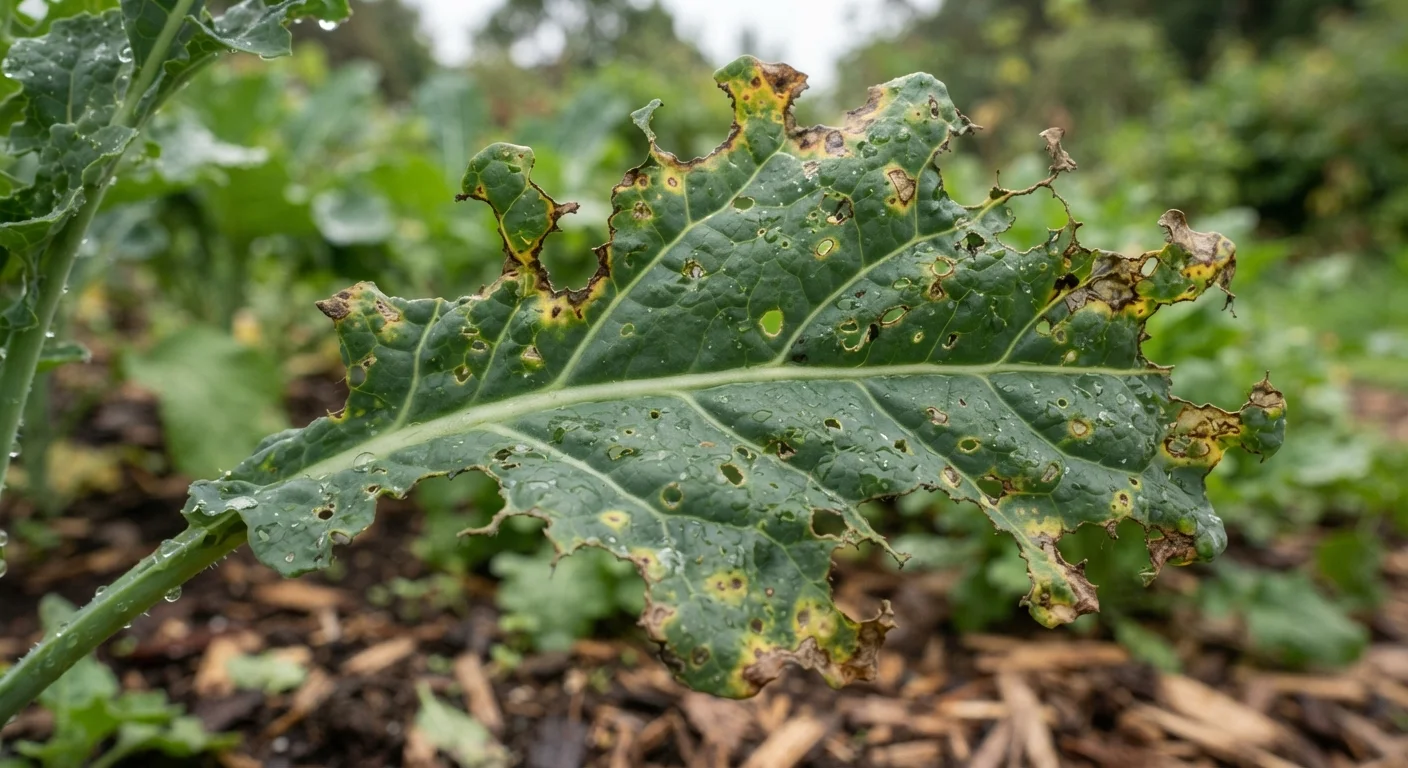
- Irregular holes with smooth edges — typically caterpillars or beetles feeding openly on leaf tissue. Check the undersides of leaves for eggs or larvae.
- Ragged edges and slime trails — the calling card of slugs and snails, especially noticeable after wet nights or early mornings.
- Tiny, scattered pinhole damage (shot-hole pattern) — flea beetles are the usual suspect, particularly on brassicas and eggplant seedlings.
- Silvery or bronzed stippling across the leaf surface — spider mites feed by piercing individual plant cells. Hold a white sheet of paper under a leaf and tap: moving specks confirm their presence.
- Winding, pale trails inside leaves — leaf miners (the larvae of certain flies, moths, or beetles) tunnel between leaf layers. The trail's width increases as the larva grows.
- Curling, cupped, or distorted new growth — aphids and whiteflies cluster on tender growth and excrete honeydew, which also encourages sooty mold.
Frass
Excrement and debris produced by insect larvae, often resembling fine sawdust or dark granules. It is a key indicator of borer or caterpillar activity inside stems and fruit.
Leaf miner
The larval stage of certain flies, moths, or beetles that tunnels between the upper and lower surfaces of a leaf, creating winding pale trails visible from outside.
Root-knot nematode
A microscopic roundworm that infects plant roots and causes abnormal swellings called galls. Infested plants typically show stunted growth and poor nutrient uptake.
Stippling
A pattern of tiny, pale dots on leaf surfaces caused by piercing-sucking insects such as spider mites or thrips puncturing individual plant cells and removing their contents.
Cutworm
The soil-dwelling larva of several moth species that feeds at night, often severing seedling stems at or just below soil level. Larvae curl into a C-shape when disturbed.
Honeydew
A sticky, sugar-rich substance excreted by aphids, whiteflies, and scale insects as they feed on plant sap. It coats leaf surfaces and often supports the growth of sooty mold.
Stem, Root, and Fruit Damage: Below the Surface and Beyond
Not all pest activity shows up on leaves. Stem and root damage can be especially frustrating because plants may wilt or collapse before you realize what's happening.
Stem Damage
- Seedlings cut cleanly at soil level overnight — cutworms, the larvae of several moth species, feed at night and sever young plants at the base. Look for the curled larva just below soil surface near the damaged plant.
- Wilting despite adequate water, with stem tunneling visible when cut open — borers (such as squash vine borers or corn borers) enter stems and feed internally. Entry holes are often marked by frass (sawdust-like excrement).
Root Damage
- Stunted growth, yellowing, or easy uprooting — root-feeding grubs (white grubs, wireworms) chew roots underground. Dig around the root zone to investigate.
- Knobby galls on roots — root-knot nematodes cause distinctive swellings that interfere with water and nutrient uptake. Healthy soil biology can help suppress nematode populations — see our article on what makes garden soil healthy for context.
Fruit Damage
- Soft, sunken spots or surface scarring on ripening fruit — stink bugs (including brown marmorated stink bugs) pierce fruit skin to feed, leaving corky patches beneath the surface.
- Small entry holes in fruit with internal tunneling — fruit worm or codling moth larvae enter from the blossom end or side, often leaving frass near the entry point.
Many pest pressures can be reduced through smart plant combinations. Companion planting strategies — pairing plants that naturally deter specific pests — are worth exploring as a preventive layer in your garden design.
When Damage Looks Like More Than One Pest
It's common for a garden to host multiple pest species simultaneously, especially in mid to late summer. If a plant shows several distinct damage types — say, both stippling and chewed edges — inspect it carefully for multiple culprits before deciding on a response. Treating for only one pest while another goes unaddressed will produce disappointing results.
Quick Response Principles
Once you've identified a likely pest, a proportionate response avoids unnecessary disruption to your garden's ecosystem. Consider these general principles:
- Confirm before acting. Look for the pest itself, not just damage, before applying any control measure.
- Start with physical removal. Hand-picking, row covers, and sticky traps are effective first steps for many common pests.
- Protect beneficial insects. Ladybugs, lacewings, ground beetles, and parasitic wasps keep many pest populations in check naturally. Avoid broad-spectrum treatments that harm them.
- Improve cultural conditions. Overcrowded plants, overwatering, and stressed root systems all increase pest vulnerability. Good soil structure and drainage matter more than most gardeners expect.
- Document and track. Note which plants were affected, when, and under what conditions. Patterns across seasons are your best guide for prevention next year.
As you move into fall, end-of-season cleanup is one of the most effective ways to reduce overwintering pest populations. Our winter preparation checklist walks through exactly what to do before the first frost.
The content on this site is for informational purposes only and is not a substitute for professional advice. Always consult a qualified professional for guidance specific to your situation.