

Why Calorie Counting Isn't the Only Path to Balanced Eating
Calorie counting works for some people, but research consistently shows that rigid numerical tracking can feel unsustainable and, for some individuals, may increase stress around food. A growing body of nutrition science supports a simpler framework: focus on what and how much goes on your plate rather than the arithmetic behind it.
The goal isn't to ignore energy intake — it's to develop enough pattern awareness that good choices become habitual rather than calculated. If you're curious about how movement fits alongside nutrition, our everyday fitness guide offers a similarly low-barrier approach to physical activity.
Aim for Progress, Not Perfection
No single meal needs to be textbook-balanced. Nutrition science evaluates dietary patterns over days and weeks, not individual plates. If lunch skews heavy on grains, let dinner lean toward vegetables and protein — balance plays out across the day and week, not just one sitting.
What You'll Need Before You Start
Building a balanced plate is more about awareness than equipment, but a few practical items make the habit easier to sustain.
What you will need
Standard Dinner Plate
Acts as a built-in portion guide — the plate's surface area provides natural limits and section reference points.
Measuring Cup (1-cup size)
Useful initially to calibrate what a half-cup or full-cup portion looks like before estimating by eye.
Meal-Prep Containers
Allow batch-cooked grains and proteins to be stored and assembled into balanced plates throughout the week.
Step-by-Step: Composing a Balanced Plate
Follow these steps each time you assemble a meal. With practice, the proportions become intuitive and the process takes no longer than plating food normally.
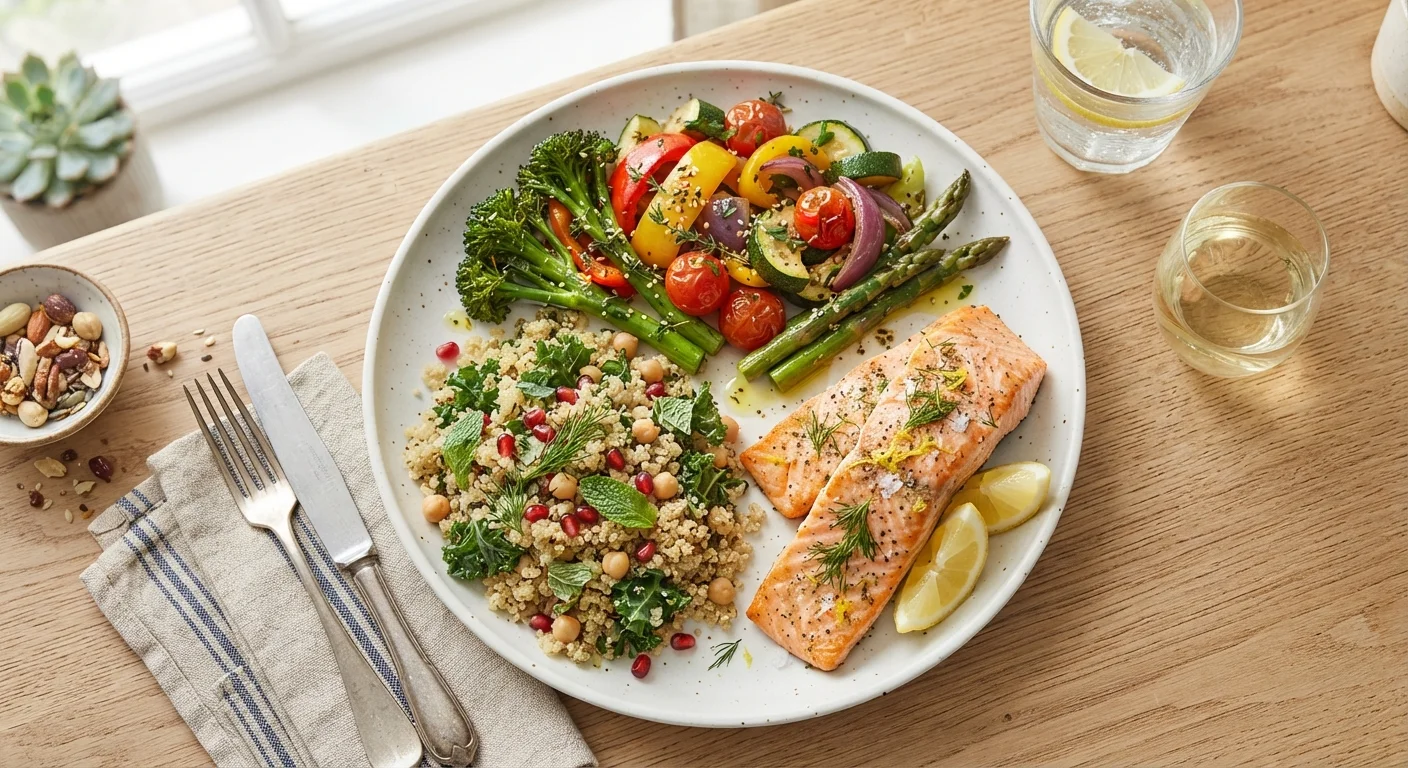
Fill Half Your Plate with Vegetables (and Some Fruit)
The largest portion of any balanced plate should be non-starchy vegetables — think leafy greens, broccoli, bell peppers, carrots, cucumbers, or tomatoes. Aim for two or more different colors, which generally signals a broader range of vitamins and phytonutrients. Fruit can occupy a portion of this half, particularly at breakfast.
Reserve One Quarter for Whole Grains or Starchy Vegetables
One quarter of your plate should hold an energy-providing carbohydrate source: brown rice, quinoa, whole-wheat pasta, oats, sweet potato, corn, or legumes like lentils. Whole grains provide fiber that slows digestion and supports steady energy, unlike their refined counterparts.
Fill the Remaining Quarter with a Protein Source
The final quarter of the plate goes to protein: fish, poultry, eggs, lean meat, tofu, tempeh, edamame, or cooked legumes. Protein supports satiety and muscle maintenance. Varying your protein sources across the week — including plant-based options — broadens your overall nutrient profile.
Add a Small Amount of Healthy Fat
A modest addition of unsaturated fat improves the absorption of fat-soluble vitamins from your vegetables. Drizzle olive oil over the plate, add a few slices of avocado, or include a small handful of nuts or seeds. This doesn't need to be a separate component — cooking your vegetables in a little oil or adding tahini to a grain bowl counts.
Choose a Beverage and Eat Without Distraction
Water is the default best choice with meals. Eating without screens or multitasking allows you to notice fullness cues more accurately — research consistently associates distracted eating with consuming larger amounts before satiety registers. Sit, slow down, and check in with your hunger level halfway through the plate.
This Approach Has Limits for Some Individuals
The plate method is a general framework for healthy adults. People managing diabetes, kidney disease, eating disorders, food allergies, or other conditions may need individualized guidance that differs significantly from these proportions. Always work with a registered dietitian or physician if you have a specific health condition affecting your nutritional needs.
Troubleshooting Common Challenges
Even straightforward frameworks hit friction in real life. Here are the most common sticking points and how to navigate them.
"I don't have time to cook varied meals."
Batch-cooking one or two grain and protein components at the start of the week means you're assembling rather than cooking from scratch each night. A well-stocked pantry is one of the highest-leverage investments you can make — our practical pantry checklist can help you audit what you already have and identify gaps.
"I'm still hungry after eating this way."
Hunger after a plate-method meal often signals that the protein or fiber portions are too small, or that eating happened too quickly for satiety signals to register. Slowing down and ensuring the vegetable half includes fiber-rich options — leafy greens, legumes, cruciferous vegetables — usually addresses this. If persistent hunger continues, consulting a registered dietitian is a worthwhile step.
"I want to eat more plant-based but don't know how."
Shifting the protein quarter of your plate toward legumes, tofu, or tempeh is a low-friction starting point. For a deeper look at what plant-focused eating actually delivers, see our evidence review of plant-based diets.
This article is for general informational and educational purposes only and does not constitute medical or dietary advice. Consult a qualified healthcare professional or registered dietitian before making significant changes to your diet, especially if you have an existing health condition.
The content on this site is for informational purposes only and is not a substitute for professional advice. Always consult a qualified professional for guidance specific to your situation.