

Summary
28 items · 20–40 minutes
Why Your Pantry Is Your First Line of Nutritional Defence
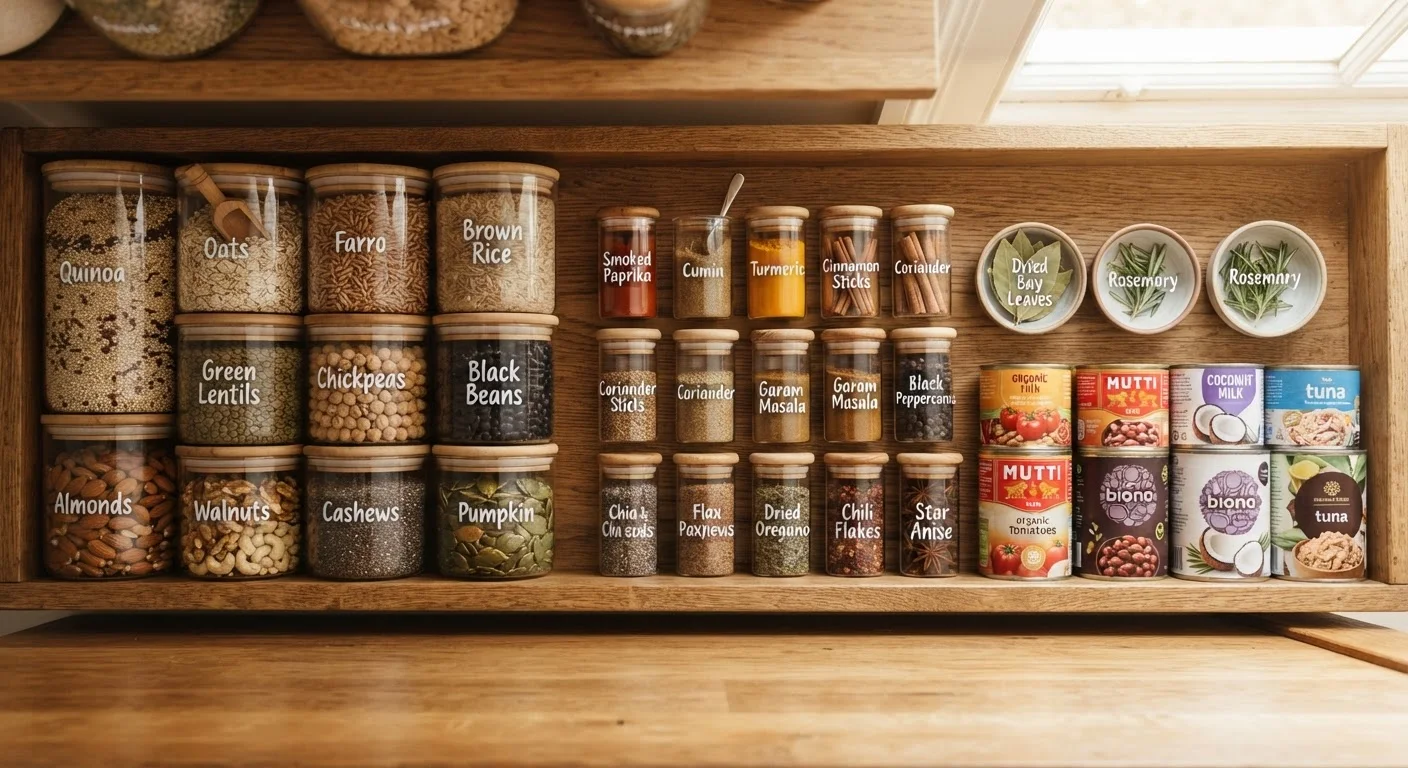
What you keep on hand largely determines what you eat. When ingredients are accessible, balanced meals come together with far less friction — especially on busy weeknights when convenience tends to win. A nutritionally varied pantry doesn't mean filling every shelf; it means stocking the right range of staples so that wholesome, satisfying meals are always within reach.
This checklist is designed to help you audit your current supplies and identify meaningful gaps — not to restrict your choices or prescribe a rigid eating plan. Think of it as a practical inventory tool. Pair it with our guide to building a balanced plate without counting every calorie for a fuller picture of how pantry staples translate to everyday meals.
Use the checklist below to work through your kitchen section by section. Items marked must represent broadly useful, evidence-supported staples. Items marked should expand your nutritional range. Nice-to-have items add variety and culinary flexibility without being essential.
Whole Grains & Starchy Staples
Legumes & Plant Proteins
Healthy Fats & Oils
Canned & Preserved Goods
Herbs, Spices & Flavour Builders
Sweeteners & Baking Essentials
Hydration & Beverage Staples
Pantry Organisation & Audit Habits
Tools That Make Pantry Management Easier
You don't need specialist equipment to maintain a well-organised pantry, but a few basics make the process smoother — from initial stocking to ongoing auditing.
Airtight Glass or BPA-Free Containers
Extend the shelf life of bulk grains, legumes, nuts, and flours while keeping your pantry visually organised.
Pantry Audit Notepad or Digital List App
Track what you have, what's running low, and what needs replacing on your next grocery run.
Shelf Labels or Masking Tape Markers
Mark open-date and expiry information on containers and packages to manage freshness reliably.
Kitchen Scale
Useful for portioning bulk items accurately when transferring into storage containers.
Spice Rack or Drawer Organiser
Keeps your herb and spice collection visible and accessible, reducing the likelihood of duplicate purchases.
How to Use This Checklist Effectively
Work through each category shelf by shelf. Check expiration dates as you go — many pantry staples have long but finite shelf lives, and stale grains or rancid oils quietly undermine both flavour and nutrition. Aim to keep at least two to three items ticked in every group; a pantry that's deep in one category but empty in others limits meal variety more than a sparse-but-balanced setup.
Check Dates and Storage Conditions
Pantry items with long shelf lives can still degrade in quality well before their printed expiry date if stored incorrectly — particularly oils, nuts, and whole grain flours, which can turn rancid when exposed to heat, light, or air. Always store these in cool, dark spots in sealed containers. If something smells off or has changed in colour or texture, it's safer to discard it than to consume it.
Dietary Needs Are Highly Individual
This checklist reflects general nutritional principles for a broadly healthy adult population. If you're managing a chronic health condition, food allergy, or have specific dietary restrictions, some items listed here may not be appropriate for you. Consult a registered dietitian or your healthcare provider before making significant changes to your diet based on any generalised guidance.
Revisit this checklist once a month as part of a broader household review. Just as you might track spending patterns — similar to the approach outlined in a monthly budget review — a pantry audit catches waste and highlights patterns before they become habits.
Keep in mind that nutritional needs vary significantly across life stages, health conditions, and activity levels. This checklist reflects broadly applicable guidance, not personalised advice. See our overview of nutrition across life stages for context on how requirements shift over time, and always consult a registered dietitian or qualified healthcare professional if you have specific dietary concerns or health conditions.
This article is for general informational and educational purposes only and does not constitute medical or nutritional advice. Please consult a qualified healthcare professional for guidance specific to your individual health needs.
The content on this site is for informational purposes only and is not a substitute for professional advice. Always consult a qualified professional for guidance specific to your situation.