

What Research Actually Shows About Nature and Mood
The idea that spending time outside is good for mental health is not merely intuitive — it has accumulated a meaningful evidence base. Studies using physiological measures, including cortisol levels and heart rate variability, consistently show that time in natural environments reduces markers of stress compared with equivalent time in urban or indoor settings. Self-reported measures of anxiety, mood, and mental fatigue follow a similar pattern.
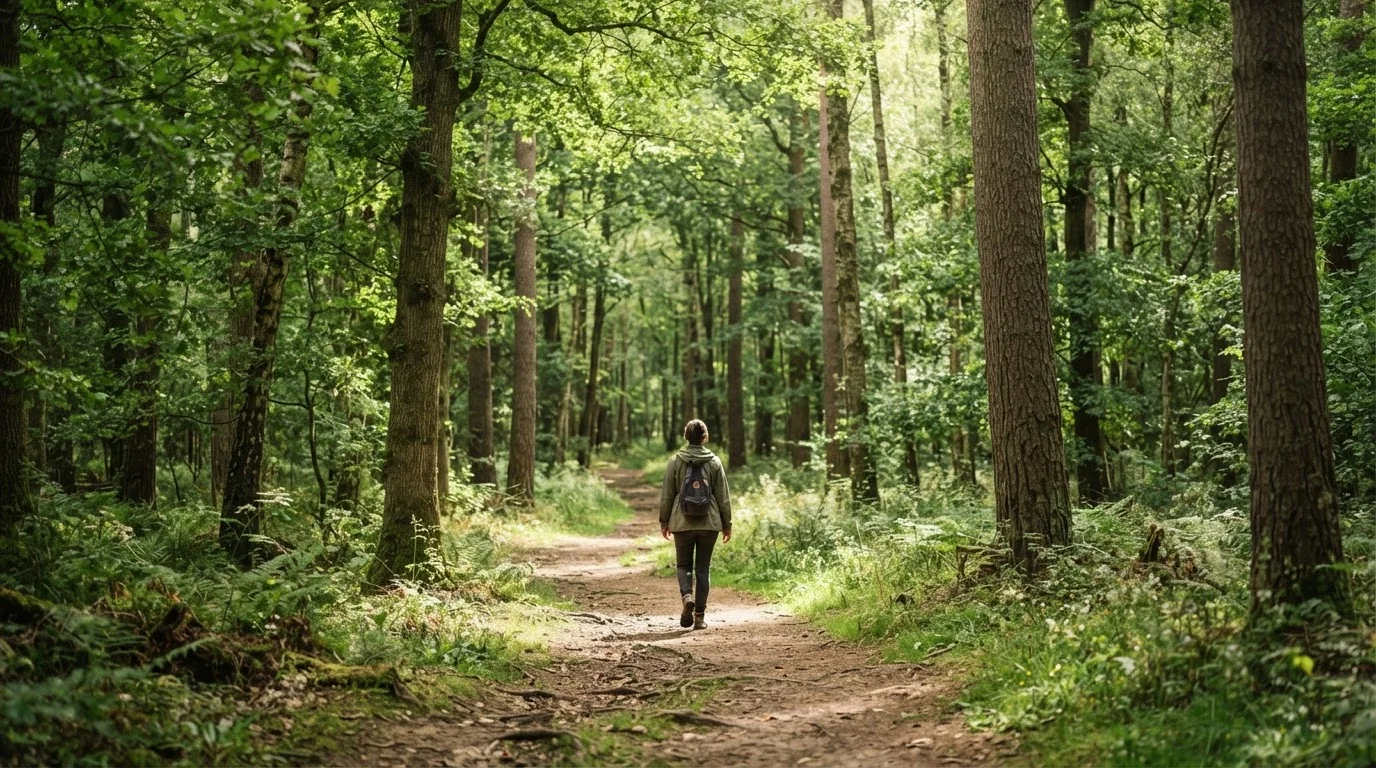
One well-cited body of research from Japanese studies on shinrin-yoku (forest bathing) found that participants who walked in forested areas showed lower cortisol and blood pressure compared with those who walked in city environments. Similar findings have emerged from European and North American studies across urban parks and green corridors.
Researchers have proposed several mechanisms. Attention Restoration Theory suggests natural environments allow the directed-attention system to recover from mental fatigue. Stress Recovery Theory holds that natural stimuli trigger faster physiological recovery from stress than built environments. Neither theory is fully settled, but both have supporting experimental evidence.
A Note on Research Quality in This Field
Most studies on nature and mental health use observational or short-term experimental designs. Self-reported outcomes and small sample sizes are common limitations. While the overall direction of findings is consistent — nature exposure supports well-being — the strength of evidence varies, and researchers continue to refine their understanding of which populations benefit most and under what conditions.
It is worth noting that most studies in this area rely on short-term self-report measures and observational designs. Longer-term, randomised controlled trials are less common, which means causal claims should be stated carefully. The association between nature exposure and well-being is robust; the precise mechanisms remain an active area of inquiry.
Movement's Role in Emotional Well-Being
Physical activity is one of the most consistently supported behavioral interventions for mood and anxiety management in the general population. Exercise influences brain chemistry in ways that support emotional regulation — including effects on serotonin, dopamine, and endorphin systems — and promotes neuroplasticity in regions associated with mood and memory.
For everyday mental wellness, moderate-intensity activities — including walking, cycling, swimming, and dancing — appear to offer benefits comparable to more vigorous exercise for most people. Our evidence-informed overview of walking as exercise explores what realistic daily targets look like and why consistency tends to outperform intensity for long-term benefit.
Combine Outdoor Time With Other Wellness Habits
The benefits of nature and movement are reinforced when paired with quality sleep, social engagement, and emotional awareness practices. Even a modest daily walk outdoors — especially with a friend or in a green space — can touch multiple well-being factors at once. Small, consistent habits tend to outperform occasional intensive efforts.
Movement also interacts with other wellness pillars. The relationship between sleep and mood is bidirectional, and regular physical activity is one of the lifestyle factors most reliably associated with better sleep quality — which in turn supports emotional regulation.
When Nature and Movement Combine
A growing line of research investigates what happens when outdoor exposure and physical activity occur together — sometimes called 'green exercise.' A systematic review published in Environmental Science and Technology found that exercise in natural environments produced greater improvements in self-esteem and mood than the same exercise indoors, with particularly pronounced effects in the first five minutes of activity.
The combination also appears to support sustained motivation. People who exercise outdoors report higher enjoyment and greater intention to repeat the activity compared with indoor exercisers. This has practical implications: an activity that feels more enjoyable is one a person is more likely to sustain over time, and consistency is central to long-term mental health benefit.
20–30 min
Nature exposure linked to stress reduction
Multiple studies suggest even brief exposures of this duration in natural settings are associated with measurable decreases in cortisol and self-reported anxiety.
~5 min
Fastest mood improvement in green exercise
A systematic review in Environmental Science and Technology found the largest self-esteem and mood improvements occurred within the first five minutes of outdoor exercise.
Consistent
Outdoor exercisers' motivation to repeat activity
Research on green exercise participants shows higher reported enjoyment and greater stated intention to continue exercising compared with indoor counterparts.
Pairing outdoor movement with social connection may amplify these effects further. Research on group outdoor activities — community walks, outdoor fitness classes, hiking groups — suggests that the social dimension adds a distinct layer of well-being benefit. For more on how intentional social habits support emotional health, see our piece on social connection as a mental wellness practice.
Practical Takeaways and Important Limits
The evidence supports outdoor movement as a meaningful, accessible, and low-cost tool for supporting everyday emotional well-being. For most people, regular time in natural environments — even local parks or green urban spaces — combined with moderate physical activity represents a well-grounded self-care practice. It fits alongside other evidence-supported habits like mindfulness and relaxation practices and reflective journaling.
That said, important limits apply. Nature and movement are wellness supports, not clinical treatments. They are not substitutes for professional care in cases of depression, anxiety disorders, trauma, or other conditions requiring diagnosis and treatment. Anyone experiencing persistent or distressing mental health symptoms should speak with a qualified healthcare provider. Well-being strategies work best as part of a broader picture — one that may include professional support, emotional regulation skills, adequate sleep, and social connection.
This article is for general informational and educational purposes only and does not constitute medical or mental health advice. Please consult a qualified healthcare professional for guidance specific to your circumstances.
Frequently Asked Questions
Research suggests that even short exposures — around 20 to 30 minutes in a natural setting — can produce measurable reductions in stress hormones and self-reported anxiety. More frequent and longer exposure appears to offer greater benefit, but there is no established universal threshold. Consistency matters more than duration alone.
Urban green spaces, including local parks and tree-lined streets, show documented mental health benefits in research settings. Wilderness or more immersive natural environments may produce stronger effects, but access to them is not required. Regular contact with any green or natural space is meaningful.
No. Nature and movement are evidence-supported wellness practices, but they are not treatments for clinical depression or other mental health conditions. Anyone experiencing persistent low mood, anxiety, or other symptoms should consult a qualified healthcare professional for personalised evaluation and care.
Several studies suggest that outdoor exercise produces greater improvements in mood and self-esteem than the same activity performed indoors, though the difference is not always large. Both indoor and outdoor exercise benefit mental health; the outdoor setting appears to add a modest additional effect in many — but not all — studies.
Even small doses of urban greenery — a park bench surrounded by trees, a community garden, or a route with street plantings — can support well-being. Research on 'nearby nature' shows benefits do not require rural or wilderness settings. Indoor plants and natural light exposure also show some supportive effects, though evidence is weaker.
The content on this site is for informational purposes only and is not a substitute for professional advice. Always consult a qualified professional for guidance specific to your situation.