

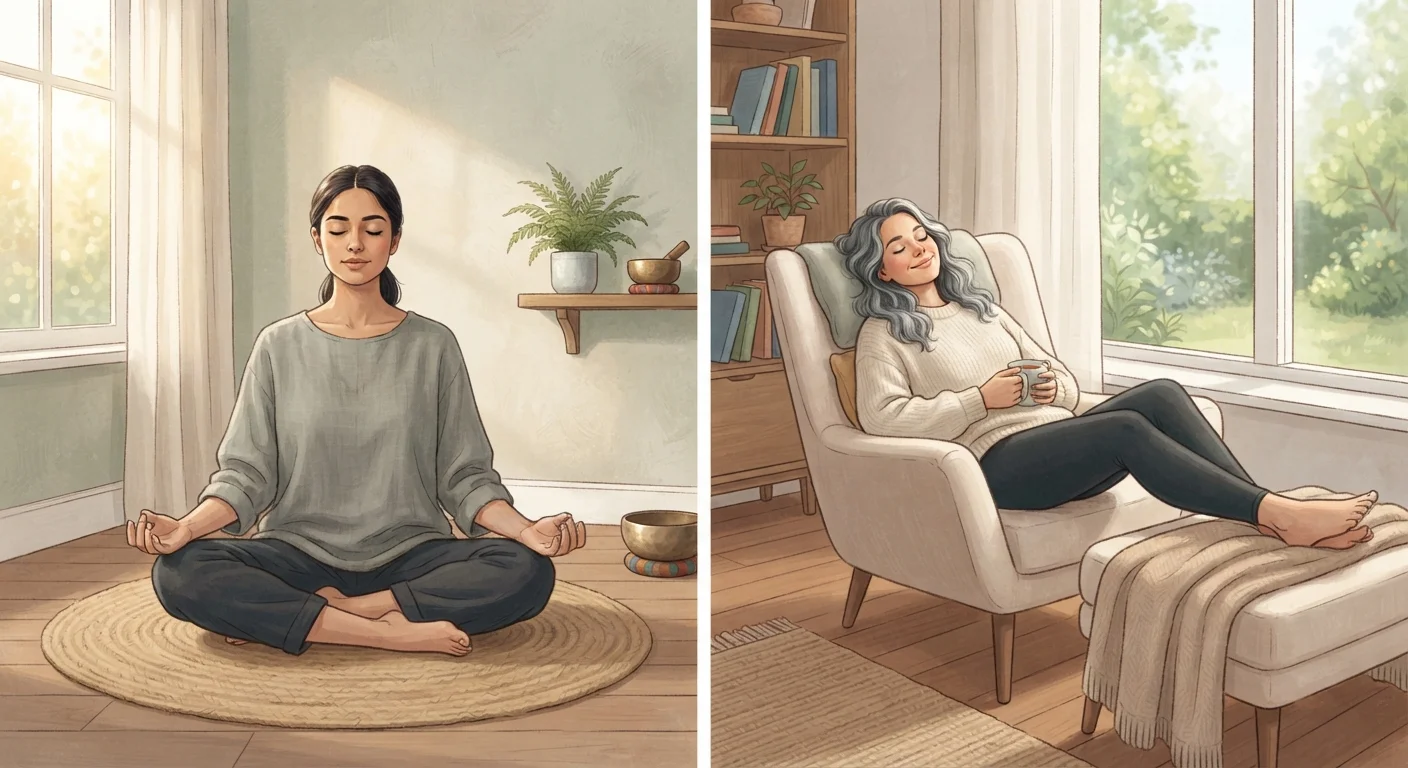
Option A
Mindfulness Meditation
The intentional, awareness-building practice.
Best for: People who want to develop a lasting relationship with their thoughts and emotions through structured, ongoing mental training.
Option B
Relaxation Techniques
The accessible, body-focused stress relief approach.
Best for: People seeking immediate relief from physical tension or acute stress without a formal mental training commitment.
Why the Confusion Exists — and Why It Matters
The words "mindfulness" and "relaxation" are often used interchangeably in wellness conversations, on app store descriptions, and even in some clinical settings. That blurring is understandable — both practices can feel calming, both are commonly recommended for stress, and they sometimes overlap. But treating them as the same thing can lead you to choose a tool that doesn't quite match your goal.
Understanding the distinction isn't about finding one that's "better." It's about matching the right approach to what you're actually trying to address — whether that's winding down after a tense meeting or gradually changing how you respond to stress over weeks and months. For a broader lens on why these distinctions matter in everyday self-care, see what mental wellness actually means.
How Each Practice Works
Mindfulness meditation is an intentional mental practice rooted in ancient contemplative traditions and extensively studied in clinical psychology. At its core, it involves directing attention to present-moment experience — typically the breath, bodily sensations, or sounds — and noticing when the mind wanders without judging it. The goal is not to empty the mind or feel calm, but to develop a clearer, more stable relationship with your own thoughts and feelings. Calm is often a byproduct, not the primary objective.
Relaxation techniques encompass a range of methods explicitly designed to reduce physiological arousal. Common examples include diaphragmatic (belly) breathing, progressive muscle relaxation (PMR), guided imagery, and autogenic training. These techniques work primarily through the autonomic nervous system — signaling the body to shift from a stress response (sympathetic activation) toward a rest-and-digest state (parasympathetic activation). The goal is measurable physical and mental quieting.
| Criterion | Mindfulness Meditation | Relaxation Techniques |
|---|---|---|
| Primary goal | Develop awareness and attention | Reduce physiological arousal |
| Time to noticeable effect | Weeks to months of regular practice | Minutes during or after session |
| Mental engagement | Active observation of thoughts | Passive or guided body focus |
| Skill required | Builds progressively with practice | Accessible with minimal instruction |
| Research focus | Emotional regulation, anxiety, depression | Acute stress, sleep, pain, blood pressure |
| Typical format | Seated, focused attention sessions | Breathing, muscle, or imagery exercises |
Research published in peer-reviewed journals, including studies associated with the Mindfulness-Based Stress Reduction (MBSR) program developed at the University of Massachusetts, suggests that regular mindfulness practice can produce lasting changes in how the brain processes stress — distinct from the acute relief that relaxation techniques provide.
What the Evidence Supports
8 weeks
Typical MBSR program duration
The Mindfulness-Based Stress Reduction program, developed at the University of Massachusetts Medical School, uses an eight-week structured course as its evidence base.
~50%
Reduction in depressive relapse risk
A Cochrane review of Mindfulness-Based Cognitive Therapy found it reduced the risk of depressive relapse by approximately 50% in people with three or more previous episodes.
Minutes
Time for relaxation response to activate
Research by Dr. Herbert Benson at Harvard Medical School identified that techniques like deep breathing can trigger the relaxation response within minutes of practice.
Both approaches have meaningful evidence behind them, though for somewhat different outcomes. Relaxation techniques consistently show short-term reductions in heart rate, blood pressure, and self-reported stress. They are well-established tools in clinical practice for managing procedural anxiety, insomnia, and pain perception.
Mindfulness meditation has a larger and growing body of research supporting longer-term outcomes: reduced depressive relapse, improved emotional regulation, and greater psychological flexibility. The effects tend to be cumulative and require consistent practice — typically weeks to months before the benefits are reliably felt.
It's also worth noting that some relaxation techniques, particularly body-scan exercises, share qualities with mindfulness when practiced with present-moment awareness rather than as a purely mechanical physical exercise. Context and intention matter. This connection between mental and physical practices is explored further in what research says about movement and mental health.
Can You Combine Both Approaches?
Yes — and many practitioners recommend it. A body-scan relaxation session in the evening can complement a morning mindfulness sit. Relaxation techniques are particularly useful in high-stress moments when focused meditation feels difficult. Think of them as complementary tools rather than rivals. If you're managing stress while travelling, calm traveller habits offers practical ideas for applying both on the go.
This article is for general informational purposes only and does not constitute medical or mental health advice. If you are experiencing persistent anxiety, depression, or other mental health concerns, please consult a qualified healthcare professional.
The content on this site is for informational purposes only and is not a substitute for professional advice. Always consult a qualified professional for guidance specific to your situation.