

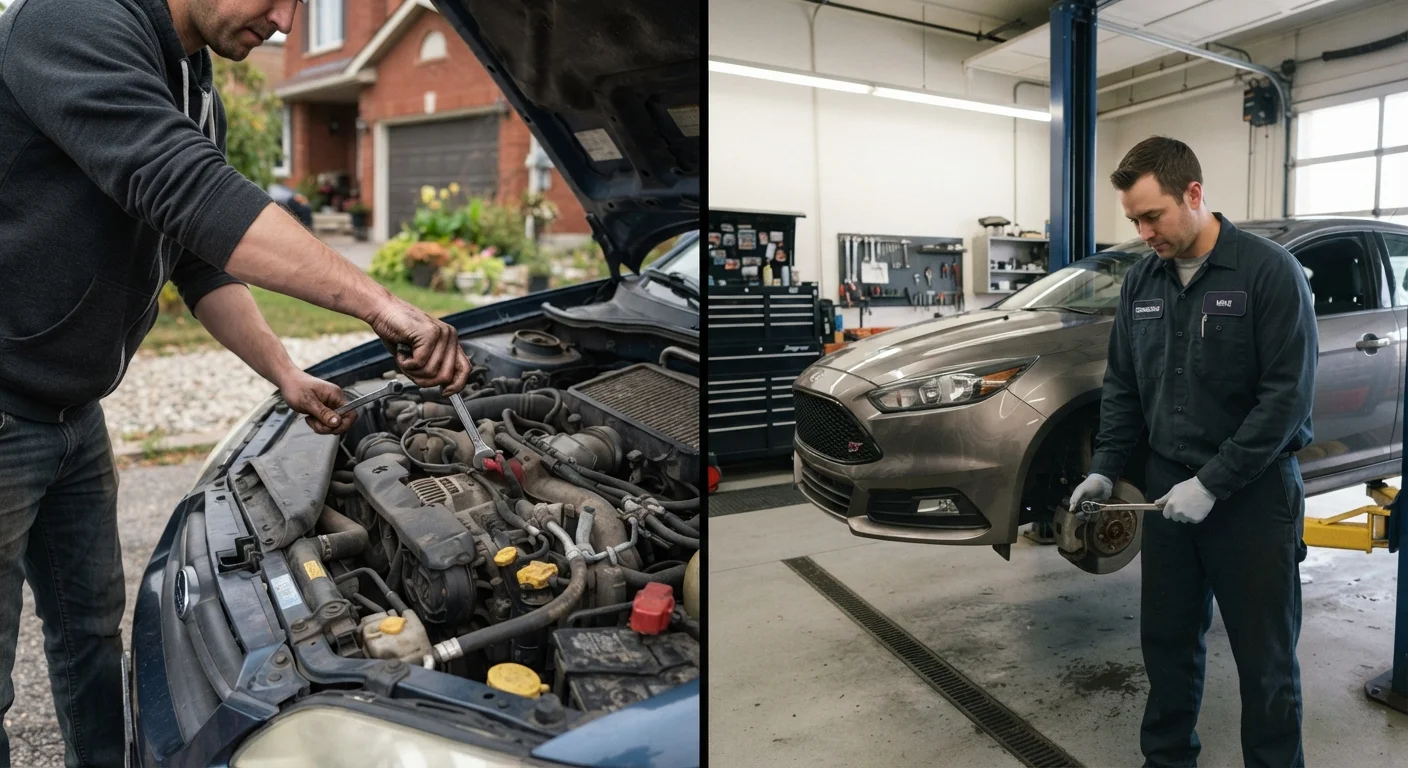
Our Verdict
For straightforward, well-documented tasks — fluid checks, cabin air filters, wiper blades — DIY is a practical, cost-effective approach for drivers willing to research carefully. For anything touching safety systems, complex diagnostics, or work that could void a manufacturer warranty, a qualified mechanic is the right call. Most drivers will benefit from doing both: handling simple upkeep themselves while relying on professionals for anything that carries real risk.
DIY maintenance suits confident, research-driven drivers comfortable with basic tools; professional garages are the safer choice for safety-critical repairs, complex diagnostics, or anyone new to working on vehicles.
What Counts as DIY-Friendly Maintenance?
Not all car maintenance is created equal. Some tasks are genuinely accessible to a careful, well-prepared home mechanic — others carry real safety consequences if done incorrectly. Understanding where that line falls is the starting point for any honest comparison.
Tasks commonly considered DIY-friendly include checking and topping up fluid levels, replacing cabin and engine air filters, swapping wiper blades, changing engine oil and oil filters (with the right tools and disposal plan), and replacing basic items like battery terminals or spark plugs on older vehicles. Our guide on checking fluid levels at home walks through the specifics without requiring specialist knowledge.
Tasks that generally require professional tools, training, or both include brake system repairs, suspension and steering components, transmission work, advanced electrical diagnostics, and anything requiring a lift for safe access underneath the vehicle. Attempting these without proper equipment doesn't just risk getting the job wrong — it can create serious safety hazards on the road.
When in Doubt, Ask a Mechanic First
If you're unsure whether a task is within your skill level, many independent garages will offer a quick assessment or quote without obligation. Some community auto shops also provide supervised bay time for owners who want to work on their own vehicles with guidance available. Starting with a professional opinion doesn't mean you can't do the job yourself — it just means you'll go in better informed.
The Case for DIY: Real Advantages Worth Considering
Doing your own maintenance isn't just about saving money — though that's a significant factor. There are genuine skill, convenience, and knowledge benefits too.
Lower labour costs on straightforward tasks
Labour charges at garages can add significantly to a bill even for simple jobs. Doing an oil change or air filter swap yourself eliminates that cost entirely, provided you have the right materials and dispose of waste properly.
Builds practical mechanical knowledge
Hands-on experience develops an intuitive understanding of how your vehicle works, making it easier to identify problems early and communicate clearly with mechanics when professional help is needed.
Work on your own schedule
Booking a garage appointment isn't always convenient, especially for time-pressed drivers. DIY maintenance can be done on weekends or evenings without waiting for availability.
You control the quality of parts used
Home mechanics can choose which parts go into their vehicle, ensuring they meet or exceed OEM (original equipment manufacturer) specifications rather than relying on whatever a shop has in stock.
That said, the savings only materialise when the job goes right. A DIY repair that requires a professional to undo and redo can end up costing more than simply booking the garage from the outset. The learning curve is real, and honest self-assessment matters more than optimism.
The Case for a Garage: Why Professional Work Has Clear Value
Professional mechanics bring more than just experience. Modern vehicles — particularly those with advanced driver-assistance systems (ADAS), hybrid drivetrains, or complex on-board diagnostics — often require dealer-level or specialist equipment that simply isn't available to a home mechanic.
Safety risks if work is done incorrectly
Errors on brake systems, suspension components, or wheel torque can create dangerous conditions on the road. Unlike a missed paint touch-up, a botched safety repair can have serious consequences.
Upfront tool costs can be substantial
A proper floor jack, jack stands, torque wrench, and diagnostic scanner represent a real investment. For infrequent DIY, these costs may outweigh the savings on labour.
Potential to void warranty coverage
Improperly documented or out-of-spec DIY work on newer vehicles may affect manufacturer warranty claims, particularly for powertrain coverage on vehicles still within their warranty period.
Professional garages offer diagnostic equipment
Modern vehicles generate fault codes and sensor data that require specialist scanners to interpret accurately. Without these tools, diagnosing the root cause of a warning light or intermittent fault is difficult.
Garage work comes with professional accountability
Reputable shops typically warranty their labour and parts for a set period. If a repair fails within that window, they're obligated to address it — a safety net DIY work doesn't provide.
For drivers who own newer vehicles still under manufacturer warranty, it's also worth noting that certain DIY work, if not performed to specification or documented correctly, could affect warranty coverage. Always review your warranty terms before undertaking any significant maintenance yourself. The same principle applies in the home: as explored in when to hire a tradesperson vs. DIY, some jobs have consequences that outweigh the cost of professional help.
~35%
Share of vehicle owners who perform some DIY maintenance
Industry surveys consistently suggest a significant minority of US drivers handle at least some routine maintenance themselves, most commonly oil changes and fluid checks.
$100–$150
Typical hourly labour rate at US independent garages
AAA has reported average shop labour rates in this range, with dealership rates often running higher — underscoring why labour costs factor heavily into the DIY calculus.
Making the Call: A Practical Framework
The decision isn't binary. Most vehicle owners benefit from a hybrid approach — handling simple, well-documented upkeep themselves while routing anything safety-critical or technically complex to a qualified mechanic.
Before starting any job yourself, ask three questions: Do I have the right tools? Improvising with incorrect tools is a leading cause of DIY mistakes. Have I found reliable, vehicle-specific instructions? Generic advice doesn't always translate across makes and models. What's the consequence of getting it wrong? If the answer involves brake failure, steering loss, or fire risk, the task belongs in a shop.
This kind of structured thinking applies well beyond cars. The same trade-off analysis is useful in home repair contexts — see DIY home improvements: an honest look at the trade-offs for a parallel breakdown. For a broader look at what vehicle ownership decisions involve beyond maintenance, the vehicle ownership hub is a useful starting point.
The content on this site is for informational purposes only and is not a substitute for professional advice. Always consult a qualified professional for guidance specific to your situation.