

Our Verdict
Neither DIY nor hiring out is universally right — the best choice depends on the specific task, the risks involved, your skills, and what the job legally requires. Use safety, reversibility, and permit requirements as your primary filters, then weigh cost and time honestly.
Homeowners who want a clear framework for evaluating each job on its merits, rather than defaulting to one approach for everything.
The Real Question: What's Actually at Stake?
Most homeowners don't need to choose between being a committed DIYer or someone who calls a tradesperson for everything. The smarter approach is task-by-task evaluation. Two questions cut through most of the noise:
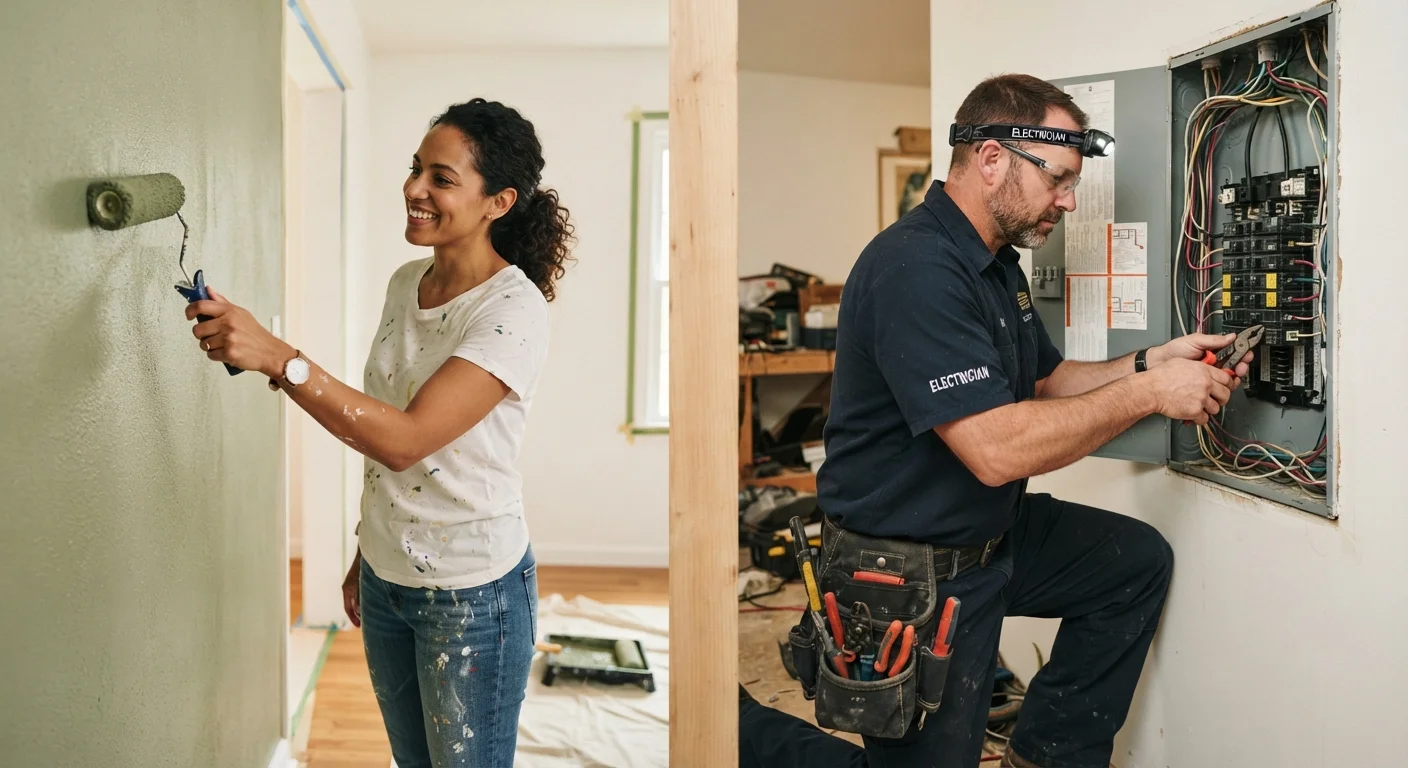
- If this goes wrong, what's the worst realistic outcome? A badly painted wall is an inconvenience. A mishandled gas fitting is a potential emergency.
- Does this job require a permit or a licensed contractor by law? In most U.S. jurisdictions, electrical panel work, gas line modifications, structural alterations, and certain plumbing connections require licensed professionals and inspections. Unpermitted work can void homeowner's insurance, trigger penalties at resale, and create genuine safety hazards.
These two filters alone will sort the majority of home tasks into the right column. For everything that falls in the middle, the pros and cons below will help you weigh the trade-offs more honestly. See our honest look at DIY trade-offs for a deeper dive into what's typically worth attempting yourself.
Advantages and Disadvantages of Doing It Yourself
DIY has genuine, well-documented benefits — but it also carries real risks that are easy to underestimate when you're watching a confident tutorial online.
Reduces labour costs on straightforward tasks
Labour typically represents the largest portion of a tradesperson's invoice. For simple, low-risk jobs, doing the work yourself can cut that expense entirely.
Builds practical skills and home knowledge
Successfully completing a repair yourself teaches you how your home works — knowledge that helps you spot problems earlier and communicate better with contractors when you do hire out.
Work on your own schedule and timeline
You're not dependent on contractor availability, which can matter when a minor issue needs attention but doesn't justify emergency call-out rates.
Satisfaction and increased home familiarity
Hands-on experience with your home's systems — plumbing shutoffs, circuit layout, structural features — makes you a more confident and informed owner over time.
Cost savings are the most obvious draw, but skill-building and scheduling flexibility matter too: you're not waiting on a contractor's availability. That said, the cons deserve equal attention.
Mistakes can be costly or dangerous to fix
An error in a DIY electrical or plumbing job may require a professional to diagnose and correct what went wrong, costing more than hiring out from the start.
Some work requires permits you may not obtain
Homeowners generally cannot pull permits for licensed trades work. Unpermitted improvements can complicate home sales and may not be covered by insurance.
Time investment is often underestimated
A job a professional completes in two hours may take an inexperienced homeowner a full weekend once research, mistakes, and supply runs are factored in.
Tool and material costs reduce savings
Specialty tools required for a single project can eliminate much of the cost advantage, especially if the tool won't be reused.
Work quality may affect home value or safety
Visible DIY finishes of inconsistent quality can raise concerns for buyers and inspectors, particularly in kitchens, bathrooms, and high-visibility areas.
A common trap is underestimating job complexity. Tasks that look straightforward on video often involve hidden variables — uneven surfaces, non-standard fittings, or code requirements the tutorial never mentions. For first-time renovators, setting realistic expectations upfront is one of the most important things you can do.
A Practical Decision Framework
Run any home task through this sequence before picking up a tool or calling a contractor:
- Is it legally required to be done by a licensed professional? Check your local building department. If yes, stop — hire a licensed tradesperson.
- Is it reversible if it goes wrong? Painting, landscaping, and minor carpentry are forgiving. Plumbing into main lines, load-bearing wall work, and electrical wiring are not.
- Do you have — or can you safely acquire — the right skills and tools? Honest self-assessment here matters more than optimism.
- What does a professional quote actually cost? Get at least one estimate before deciding. Sometimes the gap between DIY and professional is smaller than expected, especially factoring in your time and tool costs.
When to Get a Quote Before Deciding
Getting a professional estimate doesn't lock you in — it gives you real data. Many homeowners discover that for complex or time-intensive jobs, the gap between DIY costs (materials, tools, time) and a contractor's quote is narrower than assumed. Request itemised quotes so you can see exactly where costs fall, and compare that against an honest estimate of your own time and skill.
If you're trying to prioritise which tasks deserve attention first, the home maintenance budget guide offers a practical urgency framework for limited resources.
Tasks That Typically Belong in Each Column
While every home and situation differs, these general categories hold up across most circumstances:
Usually safe to DIY (with adequate preparation)
- Interior painting and wallpaper
- Basic landscaping and garden bed installation
- Replacing light fixtures and outlets (with power off and appropriate knowledge)
- Caulking, weatherstripping, and minor sealant work
- Tile installation in low-moisture areas
- Cabinet hardware and minor carpentry
Typically require a licensed professional
- Electrical panel upgrades or new circuits
- Gas line installation, extension, or repair
- Structural modifications (removing walls, adding beams)
- Roof replacement (safety risk, often warranty-dependent)
- Main plumbing line connections or sewer work
- HVAC installation and refrigerant handling
~35%
DIY home repairs that require professional correction
Industry estimates suggest roughly a third of DIY repair attempts result in follow-up professional intervention, often at higher total cost than hiring out initially.
Varies by state
Permit requirements for common home tasks
Electrical, plumbing, and structural permit thresholds differ significantly by jurisdiction — always verify with your local building department before starting work.
When in doubt about a specific task, your local building and safety department is the authoritative source — not online forums or general articles including this one. Local codes vary significantly, and what's permit-exempt in one county may require inspection in another.
The content on this site is for informational purposes only and is not a substitute for professional advice. Always consult a qualified professional for guidance specific to your situation.