

Start here
Choosing the Right Island for Your Trip
Next
Getting There and Getting Around
Then
What First-Timers Often Underestimate
Before you book
Planning Checklist Before You Book
Choosing the Right Island for Your Trip
Hawaii is not one destination — it is eight main islands, each with a genuinely different character. Treating them as interchangeable is the most common mistake first-timers make.
Neighbor Islands
A common term for all Hawaiian islands other than Oahu — including Maui, Kauai, the Big Island, Molokai, and Lanai.
Inter-island flight
A short domestic flight between Hawaiian islands, typically 20–45 minutes, operated by airlines serving routes within the state.
Timed entry permit
A reservation required to enter a specific natural site during a designated time window, used to manage visitor numbers at high-demand locations.
DLNR
Hawaii's Department of Land and Natural Resources — the state agency that manages parks, trails, and natural reserves, including the permit systems for many popular sites.
Real ID
A federally compliant form of state-issued identification that US citizens can use for domestic air travel in place of a passport.
Oahu is home to Honolulu, Waikiki, and the bulk of Hawaii's tourism infrastructure. It suits travelers who want urban amenities, iconic landmarks like Diamond Head, and reliable transport links. It is also the most crowded island.
Maui offers a middle ground — resort infrastructure on the west and south shores, dramatic volcanic landscapes at Haleakala, and the famous Road to Hana. It attracts a broad range of visitors and has seen significant growth in visitor volume.
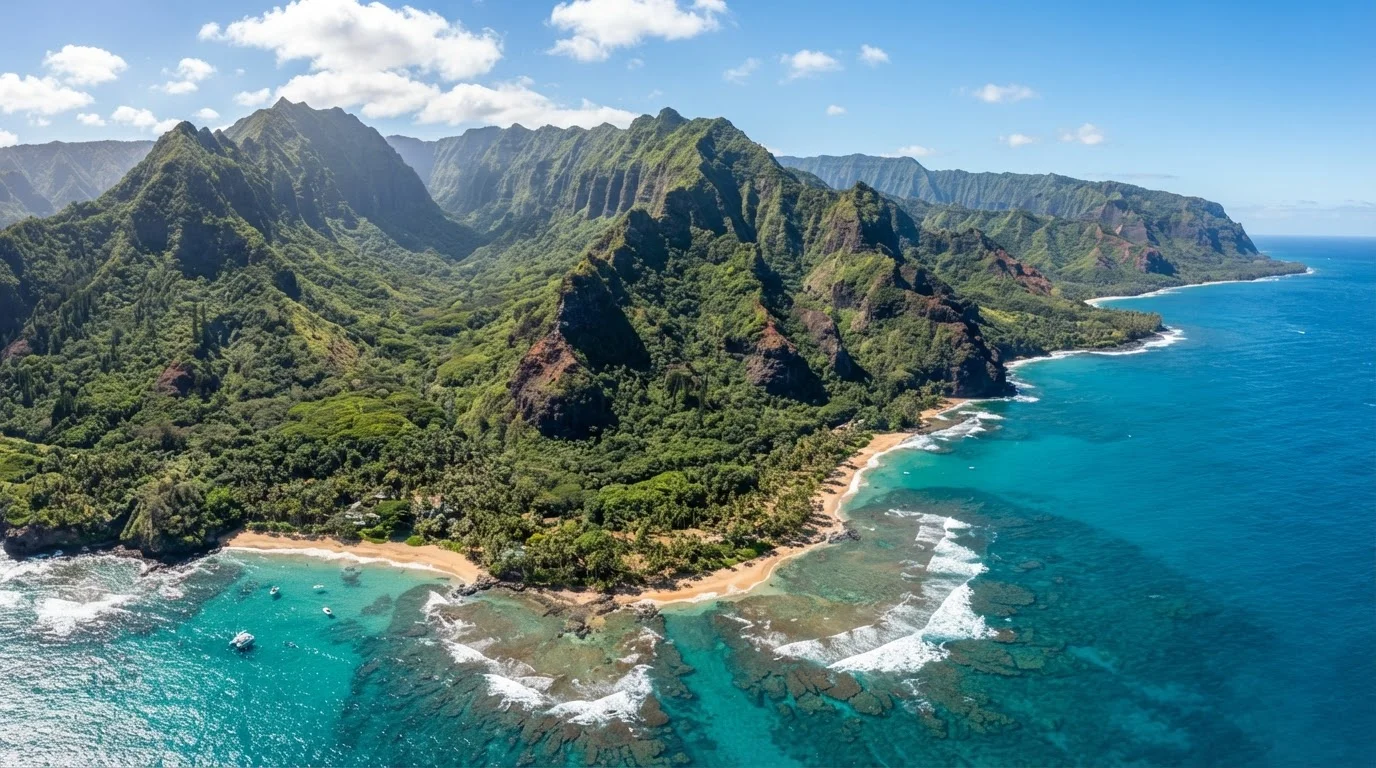
Kauai is the most geographically dramatic of the major islands, with the Na Pali Coast and Waimea Canyon. It has fewer resort areas and less development, which suits travelers seeking a quieter experience — but infrastructure is genuinely limited.
Hawaii Island (often called the Big Island) is geologically the youngest and the largest. It encompasses active volcanic landscapes within Hawaii Volcanoes National Park, diverse climate zones, and black and green sand beaches alongside white ones. The island's size means driving distances are substantial.
Choosing an island should start with an honest self-assessment: Do you want resort convenience or rugged exploration? Beach relaxation or hiking? Nightlife or quiet? There is no universally correct answer, but the wrong match leads to disappointed expectations.
Getting There and Getting Around
All major commercial flights from the US mainland arrive at Honolulu's Daniel K. Inouye International Airport on Oahu, or at Kahului Airport on Maui, Lihue Airport on Kauai, and Ellison Onizuka Kona or Hilo airports on the Big Island. Direct mainland flights to neighbor islands (Maui, Kauai, Big Island) exist from several West Coast cities, which can eliminate an Oahu stopover if you're not planning to visit it.
Consider Flying Direct to a Neighbor Island
If Oahu is not your primary destination, look for direct flights from major West Coast cities to Maui, Kauai, or Kona. Skipping an Oahu connection saves time and the temptation to add a third stop to an already ambitious itinerary. Airlines serving Hawaii from the mainland vary by departure city, so compare routings carefully at booking.
Inter-island travel is almost universally done by air. The only passenger ferry service currently operating connects Maui, Molokai, and Lanai in limited capacity — it does not serve Oahu, Kauai, or the Big Island. Budget both time and cost for inter-island flights if you plan to visit more than one island.
On the ground, a rental car is the practical necessity on Kauai, Maui, and the Big Island. Oahu has a more developed bus network (TheBus) and is the only island where some visitors manage without a vehicle, particularly if staying in Waikiki. Rideshare services operate on Oahu and Maui but coverage is inconsistent in rural areas on all islands.
What First-Timers Often Underestimate
Several realities tend to catch first-time Hawaii visitors off guard.
Cost: Hawaii is consistently among the more expensive domestic US destinations. Accommodation, groceries, gas, and dining carry a noticeable premium over mainland prices. Plan your budget with generous margins.
Driving distances: Islands look compact on a map but road travel — especially on the Big Island or around Maui's coast — takes far longer than distances suggest. Winding coastal highways, single-lane bridges, and limited through-roads are common.
Permit requirements: An increasing number of popular natural sites require advance reservations. Haena State Park (including Kalalau Trail access) on Kauai, Diamond Head on Oahu, and certain sections of Haleakala on Maui all have managed entry systems. Showing up without a reservation means being turned away. Check the Hawaii Department of Land and Natural Resources (DLNR) website when planning.
Sun and weather intensity: Hawaii's tropical sun is significantly stronger than most mainland locations. UV exposure, ocean currents, and sudden weather changes in mountainous areas catch visitors unprepared. Check local forecasts, respect ocean warning flags, and treat sun protection seriously.
For a broader pre-trip framework applicable to any high-demand US destination, see our pre-trip planning checklist.
Ocean Conditions Are Unpredictable — Respect Them
Hawaiian waters can shift quickly from calm to hazardous. Drowning is one of the leading causes of visitor fatalities in the state. Always check posted beach warning flags, ask lifeguards about current conditions, and avoid entering the water at unguarded beaches when conditions are uncertain. No view or photo is worth the risk of ignoring ocean safety signals.
Planning Checklist Before You Book
Use this checklist to avoid the most common planning gaps before committing to flights and accommodation:
- Select your island(s) first, then build your itinerary around realistic driving times and activity clusters.
- Book accommodation early — desirable properties on Kauai and Maui in particular fill months in advance during peak periods.
- Reserve a rental car at the same time as flights; vehicle availability in Hawaii can be tight, and last-minute rentals are expensive.
- Check permit requirements for every natural site you plan to visit, and set up accounts on Hawaii's permit reservation systems before your travel window opens.
- Review ocean safety resources — the Hawaii Beach Safety website and county ocean safety programs provide current flag status and hazard information.
- Set a realistic daily budget that accounts for food, fuel, activities, and incidentals — these costs add up faster than most first-timers anticipate.
Hawaii rewards travelers who plan with intention. For general travel tips that apply across many destinations, our broader guides are a useful companion resource. If you are considering a scenic US road trip before or after your Hawaii trip, our guide to road-tripping the Pacific Coast Highway covers another iconic American journey in similar practical depth.
Hawaii DLNR Recreation Reservations
The official Hawaii Department of Land and Natural Resources portal for booking timed entry permits to state parks and popular trails. Essential for planning visits to Haena State Park, Diamond Head, and other managed sites.
Hawaii Beach Safety
A county-operated resource providing real-time ocean flag status, hazard alerts, and safety guidance for Hawaii's beaches. Checking this before each beach visit is strongly advisable.
Hawaii Visitors and Convention Bureau Island Guides
Official destination overviews for each Hawaiian island, covering geography, regional character, and general visitor information to help travelers compare islands before booking.
Frequently Asked Questions
No — Hawaii is a US state, so American citizens only need a valid government-issued ID such as a driver's license or Real ID. International visitors follow standard US entry requirements, including any applicable visa or ESTA authorization.
Most travel experts suggest focusing on one or two islands for a first trip. Island-hopping sounds appealing but adds logistical complexity, cost, and packing time that can strain a short vacation.
Hawaii has a fairly consistent tropical climate year-round. April through early June and September through November are generally considered shoulder seasons with smaller crowds and somewhat lower prices, though conditions vary by island and specific location.
Yes — Hawaii consistently ranks among the more expensive US destinations. Accommodation, groceries, dining, and activities carry a significant cost premium. Budgeting conservatively and booking accommodations early helps manage costs.
Many high-demand sites now require timed entry permits or advance reservations. Examples include Diamond Head State Monument on Oahu and Haena State Park on Kauai. Check the Hawaii DLNR website and relevant state park pages before your trip.
On most islands, a rental car is strongly advisable. Public transit is limited outside Honolulu, and many of Hawaii's most compelling natural areas are not served by buses or rideshare services reliably.
The content on this site is for informational purposes only and is not a substitute for professional advice. Always consult a qualified professional for guidance specific to your situation.