

Our Verdict
No single season is objectively the right time to visit New England — the region genuinely transforms across all four, each offering distinct rewards and clear limitations. Fall is unmatched for scenery but demands advance planning. Summer maximizes outdoor flexibility. Winter suits those drawn to ski culture and quiet villages. Spring rewards the patient traveler with value and emerging beauty.
| Best for | Recommended |
|---|---|
| Travelers prioritizing dramatic scenery and iconic landscapes | Fall (late September–mid-October) |
| Those seeking coastal access, warm weather, and family-friendly activities | Summer (June–August) |
| Skiers, snowshoers, and travelers who prefer quiet small towns | Winter (December–February) |
| Budget-conscious visitors willing to trade predictability for value | Spring (April–May) |
Why New England Rewards Year-Round Consideration
Few regions in the United States shift as visibly between seasons as New England. A Maine fishing village in August looks almost nothing like it does in January. A Vermont hillside in October barely resembles the same landscape in May. That variability is part of the region's enduring appeal — but it also means that the timing of your visit shapes the experience more fundamentally than in most destinations.
Rather than asking when New England is at its peak, it's more useful to ask what kind of trip you want and then match that to the season that delivers it. Crowds, costs, climate, and access to specific attractions all shift significantly across the calendar. For a broader look at the logic of visiting destinations outside their busiest windows, see our guide to off-season US city travel.
| Fall | Summer | Winter | Spring | |
|---|---|---|---|---|
| Scenery highlight | Blazing foliage color | Coastline and ocean | Snow-covered villages | Blossoms and fresh green |
| Crowd levels | Very high (peak) | High (coastal areas) | Moderate (ski resorts) | Low to moderate |
| Typical lodging cost | Highest | High | Moderate–high (ski) | Lower |
| Outdoor access | Excellent | Excellent | Limited (some trails) | Variable (mud season) |
| Coastal attractions | Open, winding down | Fully operational | Largely closed | Beginning to open |
| Planning lead time needed | Weeks to months | Weeks ahead | Moderate | Minimal |
Fall: The Headline Season and Its Trade-Offs
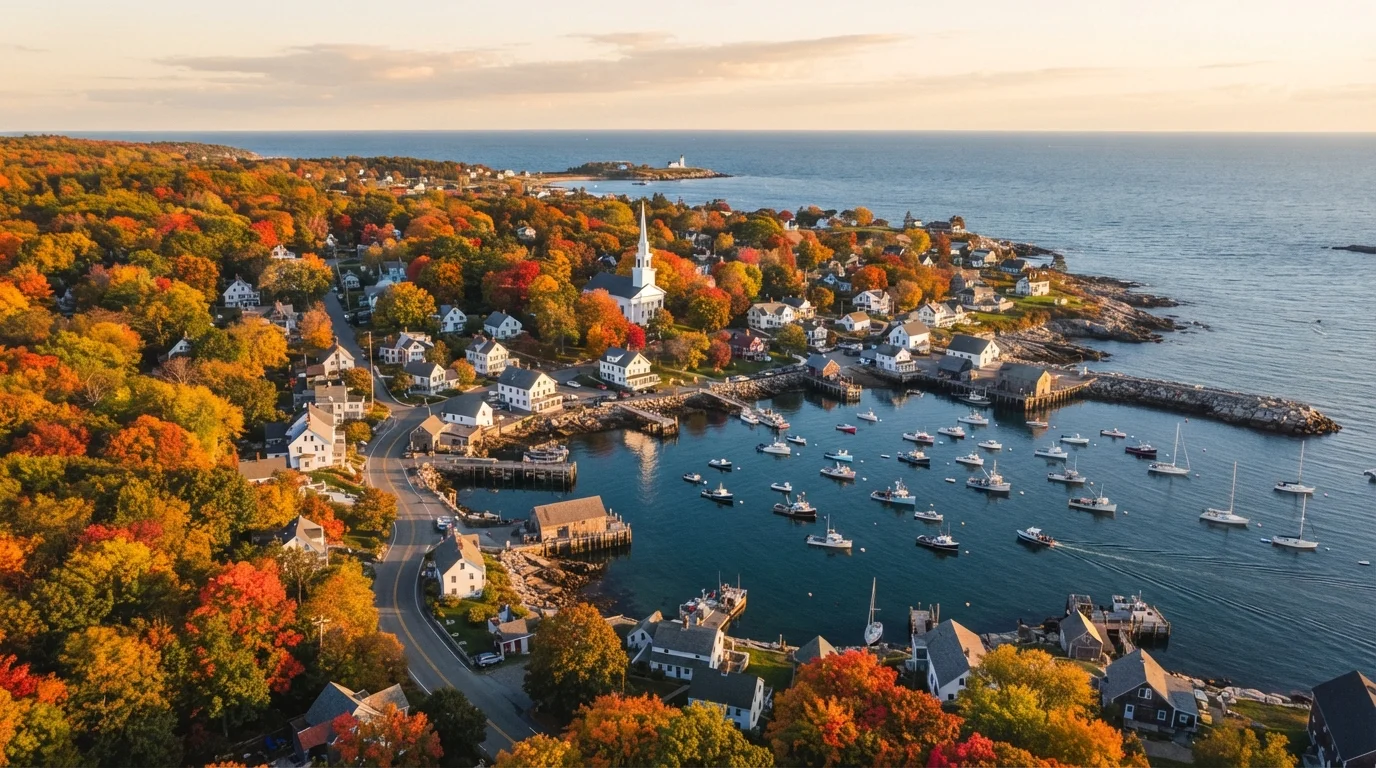
Autumn in New England is genuinely spectacular. From mid-September through late October, forests of maple, oak, birch, and beech turn gold, orange, and crimson across the region — most intensely across Vermont, New Hampshire's White Mountains, and the Berkshires in western Massachusetts. Foliage trackers note that peak color typically moves from north to south, with northern Vermont and Maine often peaking before Connecticut and Rhode Island.
The trade-off is real. Fall is the region's most crowded and expensive season. Lodging in popular foliage corridors — Route 100 in Vermont, the Kancamagus Highway in New Hampshire — often books out weeks in advance. Leaf-peeping weekends can cause genuine traffic congestion on two-lane roads through small towns. Visitors who arrive expecting solitude will find the opposite. If you're weighing whether the crowds are worth it, this honest look at off-season travel trade-offs provides useful perspective.
Booking Fall Foliage Trips Early Pays Off
If fall is your target season, plan accommodation three to four months in advance for peak weekends in Vermont and New Hampshire. Mid-week visits during the foliage window offer the same scenery with noticeably lighter traffic and more lodging availability. Exploring lesser-known foliage routes — rather than the most-publicized scenic byways — also reduces congestion significantly.
Summer: Coastal Access and Outdoor Flexibility
Summer is New England's most logistically straightforward season. June through August brings warm, relatively dry weather, full operating schedules for ferries to Nantucket and Martha's Vineyard, and access to the region's iconic rocky coastline — Maine's Acadia National Park, Cape Cod National Seashore, and the Connecticut shoreline among them. Whale-watching tours, lighthouse cruises, and lobster shacks all operate at full capacity.
The practical downside is demand. Accommodation in coastal Maine and Cape Cod fills fast, and prices reflect it. Acadia in July and August sees visitor volumes that require advance reservations for popular trails and the park's road lottery system for Cadillac Mountain. Inland destinations — Vermont's Northeast Kingdom, the Pioneer Valley in Massachusetts — tend to be less pressured and offer a quieter summer alternative.
~3.5M
Annual Acadia National Park visitors
Acadia National Park has consistently recorded over 3 million visits annually in recent years, with the majority concentrated in summer months, according to National Park Service data.
6–8 weeks
Duration of foliage season region-wide
The full New England foliage window runs roughly six to eight weeks from early September in northern Maine to late October in southern Connecticut, depending on weather conditions.
Winter and Spring: The Quieter Ends of the Calendar
Winter in New England is not for everyone, but it is genuinely distinct. Vermont, New Hampshire, and Maine host some of the East Coast's most established ski resorts, and post-storm snowfall transforms the region's village greens and forested hillsides into landscapes that attract landscape photographers and snowshoers alike. Many coastal towns, however, operate on reduced hours or close entirely — travelers should verify attraction schedules before planning around specific sites.
Spring is the most complicated season to sell and the one that often surprises visitors who make it. April brings mud season, particularly in Vermont and rural New Hampshire, which can close unpaved roads and limit some hiking trails. By May, however, the landscape greens quickly, apple blossoms appear in the Pioneer Valley and Connecticut River corridor, and lodging prices remain well below summer and fall levels. It is also the season when New England feels most like a place people actually live rather than a destination performing itself for visitors.
If a New England road trip is in your plans across any season, make sure your vehicle is ready for the conditions you'll encounter — see our seasonal car maintenance guide for what to check before you go.
The content on this site is for informational purposes only and is not a substitute for professional advice. Always consult a qualified professional for guidance specific to your situation.