

Our Verdict
Slow travel and fast-paced itineraries each deliver distinct, legitimate travel experiences — the choice comes down to what you're optimizing for. If depth of connection, lower daily costs, and reduced logistical friction matter most, slow travel rewards patience. If covering multiple destinations within limited vacation days is the priority, a structured itinerary delivers scope that slow travel simply cannot.
| Best for | Recommended |
|---|---|
| Travelers with flexible schedules and extended time off | Slow Travel |
| Those with limited vacation days wanting to see multiple destinations | Fast-Paced Itinerary |
| First-time visitors to a region wanting an overview before returning in depth | Fast-Paced Itinerary |
| Travelers prioritizing cultural immersion and lower daily expenditure | Slow Travel |
What Each Approach Actually Means
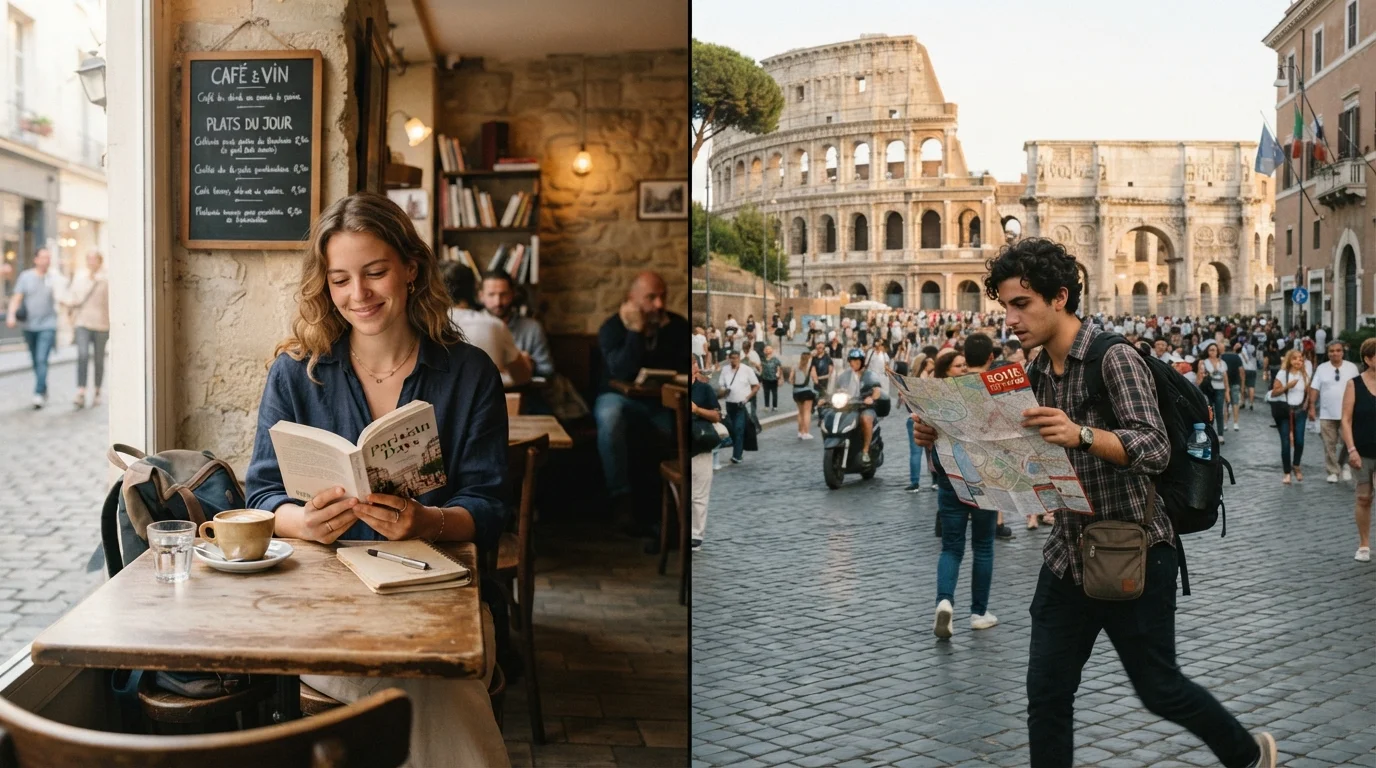
Slow travel, as a concept, isn't simply about moving at a leisurely pace — it's a deliberate choice to spend extended time in fewer places. A slow traveler might rent an apartment in one neighborhood for two weeks, shop at local markets, and build informal routines rather than ticking off a checklist of sights. The goal is immersion over accumulation.
Fast-paced itineraries take the opposite logic: maximize destination coverage within a fixed window. A ten-day European trip hitting five cities represents this approach — each stop delivers its headline experiences before the traveler moves on. This isn't inherently superficial; it's a rational response to limited time and a genuine desire for geographic breadth.
Understanding what each style actually optimizes for is essential before comparing them. See our practical travel tips hub for guidance on planning either approach effectively.
Depth of Experience: What You Actually Get
Slow travel's defining advantage is the quality of local engagement it makes possible. Spending a week or more in one place allows travelers to move past tourist-facing interactions and encounter a destination's rhythms — neighborhood dynamics, recurring faces, the way a city actually functions on a Tuesday morning. Research in tourism studies consistently identifies longer stays as correlating with higher traveler satisfaction on cultural immersion metrics, though individual experience varies widely.
Fast-paced travel delivers a different kind of depth: comparative experience. Visiting Barcelona, Rome, and Prague in succession creates a genuine, informed understanding of how those cities differ — architecturally, culturally, atmospherically. That perspective is difficult to develop from a single long stay. Many travelers report that a whirlwind first trip to a region clarifies exactly where they want to return and spend more time.
| Slow Travel | Fast-Paced Itinerary | |
|---|---|---|
| Destinations covered | One to two per trip | Three to six per trip |
| Daily cost | Generally lower | Generally higher |
| Total trip cost | Higher (more days) | Lower (fewer days) |
| Cultural immersion depth | High | Moderate |
| Logistical complexity | Low after arrival | Continuously high |
| Time off required | Significant (weeks) | Modest (days to one week) |
| Flexibility | Very high | Limited by schedule |
The honest trade-off is that fast itineraries involve a consistent adjustment cost — checking into new accommodations, reorienting in unfamiliar transit systems, and managing logistics — that slow travelers absorb once and then set aside for the rest of their stay.
Cost Patterns: A More Nuanced Picture
The financial comparison between these styles is frequently mischaracterized. Slow travel typically reduces daily spend: weekly apartment rentals undercut nightly hotel rates, self-catering replaces restaurant dependency, and the absence of multiple transit legs (flights, trains between cities) eliminates a significant cost category. However, a two-week slow trip costs more in total than a six-day fast one, simply because more days are spent traveling.
2–3 weeks
Average US paid vacation allowance per year
The Bureau of Labor Statistics reports that US private-sector workers with one year of service typically receive around ten days of paid vacation, with amounts increasing with tenure.
30–40%
Potential daily savings with weekly apartment rentals vs. hotels
Short-term rental platforms and accommodation research consistently show per-night rates drop significantly for stays of seven or more nights compared to nightly hotel bookings in the same area.
Fast itineraries concentrate expenses. Multiple transit bookings, central-location hotels in each city, and the tendency to rely on restaurants when there's no kitchen access push daily spend higher. Budget-conscious travelers on fast trips can manage costs with advance booking and strategic accommodation choices, but the structural expenses are harder to avoid.
For travelers comparing off-peak timing strategies alongside their pacing choices, the case for and against off-season travel covers how seasonality intersects with both approaches.
Practical Suitability: Matching Style to Circumstances
Vacation allowance is often the determining factor before any other preference. Most US workers receive two to three weeks of paid leave annually — a reality that shapes what's genuinely feasible. A two-week slow-travel stay in a single country is achievable; two months of slow travel through Southeast Asia typically requires remote work arrangements, a career break, or sabbatical leave.
Fast itineraries align more naturally with typical American vacation windows. A week in Japan covering Tokyo, Kyoto, and Hiroshima is logistically coherent and widely practiced. The same trip structured as slow travel — spending a week in Tokyo alone — requires accepting that Kyoto won't happen on this trip.
Consider a Hybrid Approach
Many experienced travelers combine both philosophies within a single trip: a fast opening segment covers multiple destinations to identify favorites, followed by a slower return to one place for deeper engagement. This structure works particularly well for first visits to a new region or country, and it scales to fit most vacation lengths without requiring a full commitment to either extreme.
Travel style preferences also interact with other variables. Travelers with mobility considerations, those journeying with young children, or those managing health conditions may find the reduced logistical complexity of slow travel meaningfully easier. Conversely, group travel with varied interests often benefits from the structured agenda a fast itinerary provides. Our comparison of solo travel versus group tours explores how group dynamics affect pacing decisions.
Sustainability considerations also favor slower pacing: fewer transit legs, particularly fewer flights, generally correspond to a lower carbon footprint per trip. Sustainable travel principles are worth weighing if environmental impact is part of your planning criteria.
The content on this site is for informational purposes only and is not a substitute for professional advice. Always consult a qualified professional for guidance specific to your situation.