

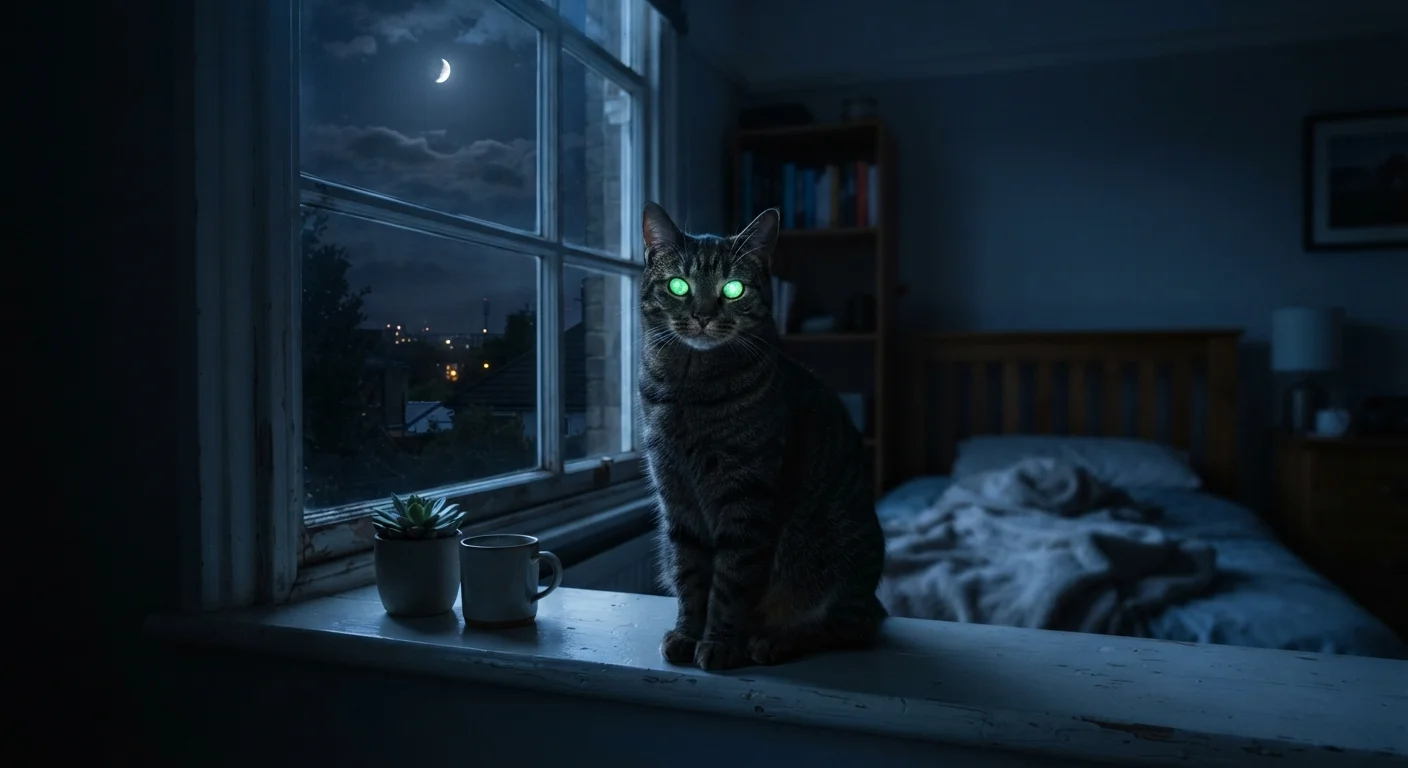
The Biological Roots of After-Dark Behavior
When your hamster's wheel starts spinning at midnight or your cat launches itself off the furniture at 2 a.m., the explanation lies in evolution, not defiance. Animals developed their activity patterns over millions of years in response to predator pressure, prey availability, and temperature cycles. These rhythms are encoded in their physiology — including hormone cycles, eye structure, and nervous system wiring — and persist even after generations of domestication.
The body clock governing these patterns is called the circadian rhythm, a roughly 24-hour internal cycle influenced by light exposure. In nocturnal animals, this clock is set to suppress activity during daylight and ramp it up after dark. Melatonin, the hormone associated with sleep, works in reverse timing compared to diurnal (daytime-active) species like humans and dogs.
Understanding this biology helps owners approach nighttime behavior with realism rather than frustration. For a deeper look at how behavior shifts across a pet's entire life, see how behavior evolves as pets age.
5–8 miles
Distance hamsters may run nightly in captivity
Research on hamster locomotion behavior has documented wheel-running distances of this magnitude in a single night, reflecting the species' strong nocturnal activity drive.
~12–16 hrs
Daily sleep typical for domestic cats
Cats conserve energy through extended rest, concentrating their active periods in shorter, intense bursts — a pattern consistent with their crepuscular, predatory heritage.
Which Common Pets Are Truly Nocturnal?
Not all pets labeled nocturnal share the same pattern. Understanding where your specific pet falls on the spectrum helps set realistic expectations.
- Hamsters and gerbils: Among the most strictly nocturnal of common pets, hamsters are active almost exclusively at night and can run up to 5–8 miles on a wheel in a single evening. Interrupting their daytime rest consistently can cause chronic stress.
- Cats: Technically crepuscular — most active at dawn and dusk — though indoor cats often shift their peaks based on household schedules. They retain strong predatory instincts that surface in low-light hunting behavior.
- Ferrets: Crepuscular by nature, ferrets are highly adaptable and often align their active periods with owner availability, making them somewhat easier to manage on a human schedule.
- Many reptiles: Geckos like leopard geckos are nocturnal, hunting insects after dark in the wild. Bearded dragons, by contrast, are diurnal and need UVB light during the day.
- Dogs: Naturally diurnal and among the most schedule-flexible of common pets, dogs generally adapt to their owner's routine with relative ease.
Indoor versus outdoor environments can also influence how strongly a pet's natural activity pattern expresses itself, since outdoor access provides light and temperature cues that reinforce biological timing.
Managing Nighttime Behavior Without Suppressing Natural Drives
The goal for most pet owners isn't to eliminate nocturnal behavior — which isn't realistic — but to reduce the disruption it causes while keeping the animal's needs met. Several evidence-supported strategies can help.
Time Play Sessions Before Bedtime
For crepuscular pets like cats, a dedicated 10–15 minute interactive play session in the hour before you go to bed can meaningfully reduce disruptive nighttime activity. Use wand toys or puzzle feeders to simulate the hunt-catch-eat sequence, which naturally leads to grooming and rest. Consistency matters — doing this at the same time each evening reinforces a predictable behavioral rhythm.
Structured daytime enrichment is one of the most effective tools. Cats that engage in active play sessions before an owner's bedtime tend to exhibit less disruptive midnight activity. For rodents, ensuring adequate wheel size, foraging opportunities, and hideaways satisfies behavioral drives so the animal expresses them constructively.
Feeding schedules also matter. Timed feeding — particularly a meal close to the owner's bedtime — can cue some crepuscular pets toward earlier activity peaks. This principle connects to broader findings on the role of routine in pet wellbeing, explored in why pets need routine.
For nocturnal small mammals, soundproofing or relocating the habitat (a wheel in another room, for example) is a practical compromise that respects the animal's biology while preserving the owner's sleep.
Crepuscular vs. Nocturnal: A Key Distinction
Many resources use 'nocturnal' loosely to describe any pet active at night, but crepuscular animals — those most active at dawn and dusk — have different peak windows than strictly nocturnal ones. This distinction is practically relevant: a crepuscular cat may settle by midnight, while a nocturnal hamster may only begin its most active phase after 10 p.m. Knowing which category your pet falls into helps you plan enrichment and manage expectations more accurately.
Finally, reading your pet's body language can help distinguish normal nocturnal restlessness from distress signals. A hamster actively foraging and running is expressing healthy behavior; one repeatedly trying to escape or showing signs of agitation may be communicating an unmet need or discomfort.
If a previously quiet pet suddenly becomes disruptively active at night — or the opposite, a nocturnal pet goes quiet — consult a veterinarian. Sudden changes in activity timing can reflect pain, cognitive decline in older animals, or other medical concerns that warrant professional evaluation. Consistent daily care habits remain the foundation for catching these shifts early.
Frequently Asked Questions
This behavior — sometimes called the 'zoomies' — reflects your cat's crepuscular nature, with energy peaks around dawn and dusk that can extend into nighttime. Cats that sleep most of the day may have excess energy that releases in bursts at night. Providing interactive play sessions before your bedtime can help reduce the intensity of these episodes.
Yes, this is entirely normal. Hamsters are true nocturnal animals that can run several miles per night in the wild. Wheel activity is a healthy outlet for that natural drive. Removing the wheel or restricting nighttime movement can cause stress and behavioral problems.
Partial adjustment is possible, particularly in cats, through consistent daytime engagement and scheduled feeding. However, you cannot fully override an animal's biological clock through training alone. Forcing a nocturnal animal to stay quiet at night without addressing its needs can cause anxiety and stress.
A sudden, unexplained change in activity patterns — especially if paired with changes in appetite or mood — is worth a veterinary check. Shifts in sleep-wake behavior can sometimes reflect pain, illness, or age-related cognitive changes. It is always worth ruling out a medical cause.
Dogs are not naturally nocturnal. They are primarily diurnal — active during daylight — though they are flexible and adapt well to their owner's schedule. This is one reason dogs tend to integrate more smoothly into human household routines than cats or small nocturnal mammals.
The content on this site is for informational purposes only and is not a substitute for professional advice. Always consult a qualified professional for guidance specific to your situation.