

The Core Mechanic: Interest on Interest
The concept is straightforward once you see it in action. Suppose you deposit $1,000 into a savings account earning 5% interest annually. After the first year, you earn $50 — giving you $1,050. In year two, that 5% applies to $1,050, not just the original $1,000, so you earn $52.50. By year three, you're earning on $1,102.50.
The numbers seem small early on, but the trajectory changes dramatically over longer periods. After 30 years at 5% annually, that $1,000 grows to roughly $4,322 — without adding another cent. That's the compounding effect: your earnings generate their own earnings.
For a deeper look at how this principle underpins investing strategy, see how compound interest builds long-term wealth.
$4,322
Growth of $1,000 over 30 years at 5% annual compound interest
Illustrative calculation based on annual compounding with no additional contributions — actual results depend on account terms and rate consistency.
20–30%
Typical US credit card APR range
According to the Consumer Financial Protection Bureau, credit card interest rates vary significantly by card type and creditworthiness.
Daily
Most common compounding frequency for US credit cards
Many US credit card issuers compound interest daily, meaning balances can grow faster than cardholders expect when carrying a balance month to month.
The Other Side: When Compounding Works Against You
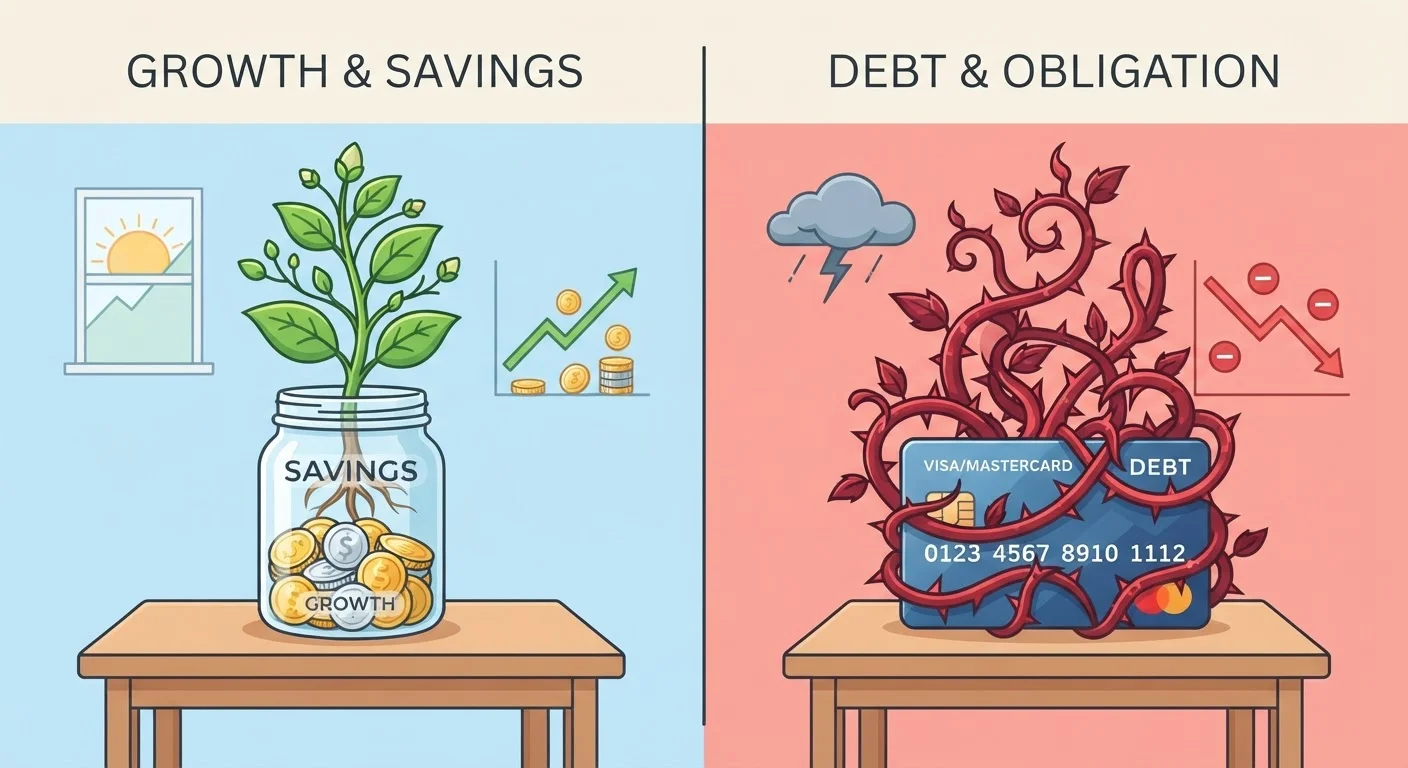
The same mechanism that builds savings also accelerates debt — and often at a far more aggressive rate. Credit cards commonly carry interest rates between 20% and 30% APR in the US. If you carry a $3,000 balance and make only minimum payments, the compounding of that debt can extend your repayment timeline by years and cost you multiples of the original balance in interest charges.
Here's why: when you don't pay the full balance, accrued interest is added to your principal. The next period, interest is charged on that new, higher balance. Unlike a savings account working quietly in your favour, high-rate debt compounds against you with urgency.
Pay More Than the Minimum When Possible
Even small additional payments above the minimum can dramatically reduce the total interest you pay and shorten your repayment period. Because debt compounds on the outstanding balance, reducing that balance faster limits the base on which future interest is charged. Check your loan or card statement to see how much of each payment currently goes toward interest versus principal.
For a comprehensive look at how interest rates determine what debt actually costs, see how interest rates shape your debt.
Putting Both Sides Together: A Practical Framework
Understanding compound interest on both sides of the ledger helps clarify a core personal finance tension: should you prioritise saving or paying down debt? The short answer is that it depends on the interest rates involved.
If your debt carries a 22% APR and your savings account earns 4.5% APY, the math generally favours paying down debt first — you're losing more to compounding on the debt side than you're gaining on the savings side. However, if your employer offers a retirement account match, capturing that match first may still make sense before redirecting all funds to debt, since a match is an immediate, guaranteed return.
Most financial planning guidance recommends building a modest emergency fund even while repaying debt, so that an unexpected expense doesn't force you to add to high-interest balances. This is general educational information — for decisions specific to your situation, a licensed financial adviser can offer personalised guidance.
To build a fuller vocabulary around these concepts, the plain-language glossary of saving and debt terms covers APR, APY, amortisation, and more. And if you're ready to explore what comes after saving, what investing actually means is a useful next step.
This article is for general informational and educational purposes only and does not constitute personalised financial, investment, tax, or legal advice. Consult a qualified, licensed financial professional before making decisions about your individual financial situation.
Frequently Asked Questions
Simple interest is calculated only on the original principal. Compound interest is calculated on the principal plus any accumulated interest. Over time, compound interest produces a significantly larger balance — for better or worse, depending on whether you're saving or borrowing.
When you carry a balance on a loan or credit card, any unpaid interest gets added to what you owe. The next billing cycle, interest is then charged on that larger balance. This cycle accelerates how quickly your debt grows if you're only making minimum payments.
Yes, though the difference is modest in the short term. Daily compounding produces slightly more growth than monthly or annual compounding at the same nominal rate. For long-term savings or high-interest debt, that difference adds up meaningfully over years.
Start saving or investing as early as possible to allow time for compounding to build. Simultaneously, pay down high-interest debt aggressively, since that debt is compounding against you. Prioritising both simultaneously — even in small amounts — generally improves your long-term financial position.
Compound interest on a savings account or fixed-rate product grows your balance predictably, subject to the account's terms. Investing carries market risk, and returns are not guaranteed — past performance does not predict future results. Always consult a qualified financial adviser for guidance specific to your situation.
The content on this site is for informational purposes only and is not a substitute for professional advice. Always consult a qualified professional for guidance specific to your situation.