

What Gutters Actually Do
It's easy to take gutters for granted — they sit quietly at the roofline, doing their job invisibly through every storm. But understanding their function changes how seriously you take their maintenance.
When rain hits your roof, it flows downward and concentrates at the edges. Without a gutter to intercept it, all of that water crashes directly against your foundation, saturates the soil beside your home, splashes up onto siding, and — in homes with basements — begins to find its way inside. A properly functioning gutter collects that runoff and routes it through a downspout to a discharge point safely away from the structure.
The volume of water involved is significant. A modest 1,500 square foot roof can shed over 900 gallons of water during a single inch of rainfall. That's a lot of water to mismanage. As noted in our guide to maintenance tasks new homeowners overlook, gutters are consistently among the first systems new owners forget — and among the first to cause expensive surprises.
The Most Common Gutter Problems
Most gutter failures are gradual and silent. By the time damage becomes visible, it has often been building for months or years. Knowing what to look for puts you ahead of the curve.
~900 gal
Runoff from 1 inch of rain on a 1,500 sq ft roof
This figure illustrates why a functional gutter system is critical — that volume of water, misdirected, can cause significant structural damage.
2–4×/year
Recommended gutter cleaning frequency
General guidance from home maintenance professionals recommends at least twice-yearly cleaning, with higher frequency for heavily wooded lots.
$4–$8/ft
Typical cost to replace damaged gutters
According to general contractor estimates, gutter replacement is far more costly than the periodic cleaning that prevents it — making maintenance a clear priority.
Clogs
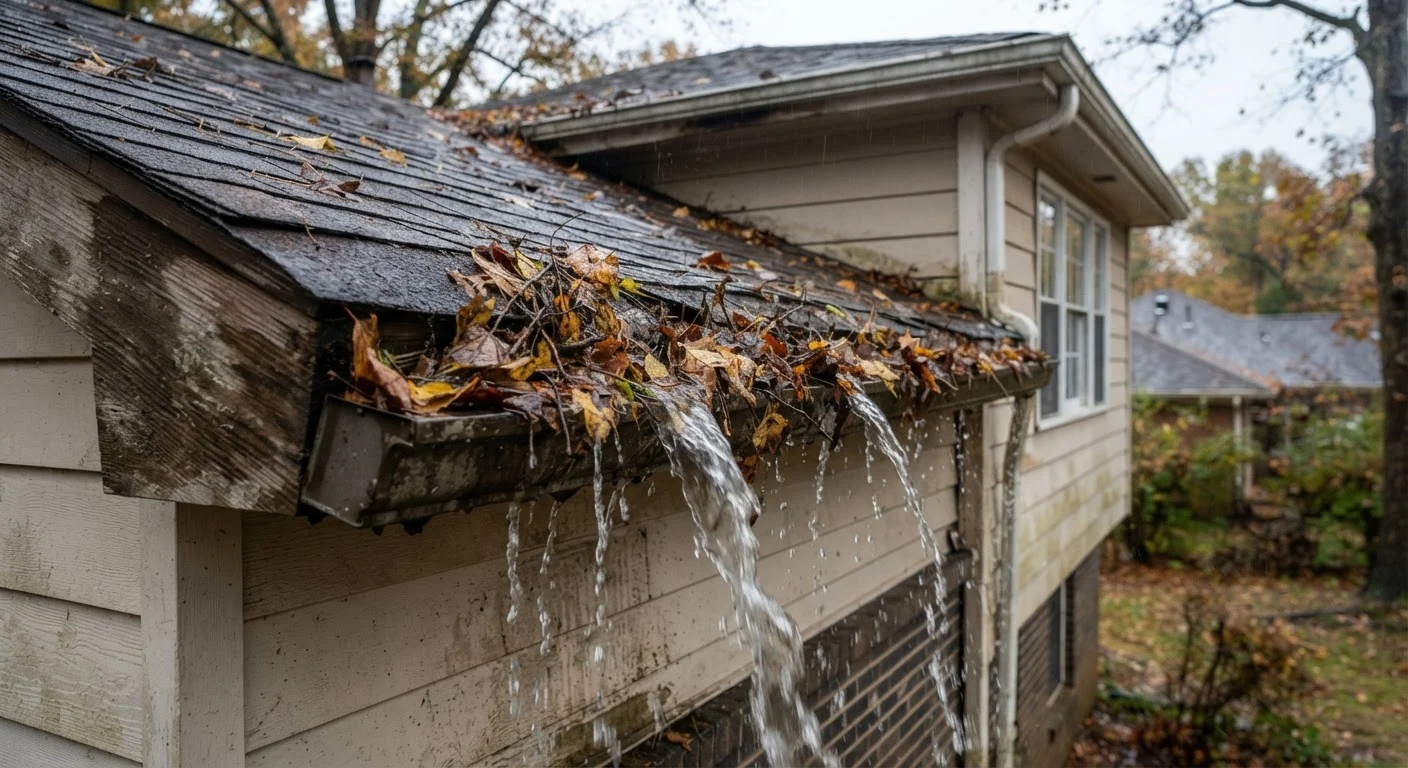
Leaves, seed pods, shingle granules, and debris accumulate in gutters and block the flow of water. Clogs force water to back up and overflow, directing it exactly where you don't want it — against your foundation and siding.
Sagging and Pulling Away
Gutters are held in place by hangers attached to the fascia board (the board running along the roofline). Over time, the weight of wet debris or ice can cause hangers to loosen, allowing gutters to sag or pull away from the fascia. A sagging gutter pools water rather than draining it.
Leaks at Joints
Sectional gutters (those made from multiple joined pieces) are prone to leaking at seams. The sealant that keeps joints watertight degrades over time. Catching this early with a fresh bead of gutter sealant is a straightforward DIY repair.
Incorrect Pitch
Gutters need a slight downward slope toward the downspout — roughly a quarter inch per ten feet. A gutter that is level or sloped the wrong way will hold standing water, accelerate corrosion, and become a breeding ground for mosquitoes.
Use the Next Rainstorm as a Free Inspection
Stand outside during or just after a moderate rainstorm and observe your gutters in action. Look for water spilling over edges, dripping from joints, or pooling at the downspout base. Real conditions reveal problems that a dry inspection easily misses, and it costs nothing but a few minutes in the rain.
How to Stay Ahead of Gutter Damage
Gutter maintenance doesn't require special tools or professional skills for most tasks. A stable ladder, work gloves, a garden hose, and a basic inspection twice a year cover the fundamentals.
- Clean in fall and spring. Remove leaves and debris after the last leaves drop in autumn, and again in spring to clear any buildup from winter. Homes under heavy tree cover may need quarterly attention.
- Flush with a hose. After clearing debris by hand, run water from a hose through the gutter toward the downspout. Watch for pooling (indicates pitch problems), leaks at seams, and blocked downspouts.
- Check downspout discharge. Confirm water exits at least three to four feet from the foundation. Add extensions or splash blocks if needed.
- Inspect hangers and fasteners. Tug gently on sections of the gutter. Any movement suggests loose hangers that should be reattached or replaced before the gutter sags further.
- Look for rust, cracks, and peeling paint. These are signs of prolonged moisture exposure and signal sections that may need sealing or replacement.
If any work involves climbing beyond a standard one-story roofline, working near electrical service lines, or replacing fascia boards, consult a licensed contractor. No maintenance task is worth a fall.
For help deciding which repairs to tackle first on a tight budget, our guide to home maintenance on a budget offers a practical framework for prioritizing what matters most.
Frequently Asked Questions
Most homes benefit from cleaning gutters at least twice a year — once in late spring and once in late fall after leaves have dropped. Homes surrounded by heavy tree cover may need cleaning three or four times annually. Skipping cleanings allows debris to accumulate, which traps moisture and accelerates rust, rot, and overflow damage.
Neglected gutters eventually clog, causing water to overflow and pool along your foundation, seep behind siding, and saturate soil near your home's base. Over time this can lead to foundation cracking, basement flooding, fascia board rot, and mold growth. The repair costs for these issues far exceed the cost of routine gutter maintenance.
Many common gutter repairs — resealing joints, replacing a short section of gutter, adjusting hangers — are manageable DIY projects for a comfortable homeowner with a stable ladder. Work involving the roofline, fascia replacement, or significant height should be left to a licensed contractor to avoid injury.
Gutter guards reduce how often cleaning is needed, but they do not eliminate it entirely. Fine debris like pine needles and seed pods can still accumulate on or inside guards over time. Guards can be a worthwhile investment for homes surrounded by trees, but they work best as a supplement to periodic inspection, not a replacement.
After a rainstorm, check whether water is pooling in any section of the gutter rather than flowing toward the downspout. Standing water indicates insufficient pitch. Gutters should slope approximately a quarter inch for every ten feet of run toward the downspout outlet — a minor adjustment that makes a significant difference in drainage performance.
Downspouts should discharge water at least three to four feet away from your home's foundation, ideally onto a slope that carries water further away from the structure. Extensions, splash blocks, or buried drainage pipes can help achieve this. Discharging directly against the foundation is one of the most common causes of basement water intrusion.
The content on this site is for informational purposes only and is not a substitute for professional advice. Always consult a qualified professional for guidance specific to your situation.