

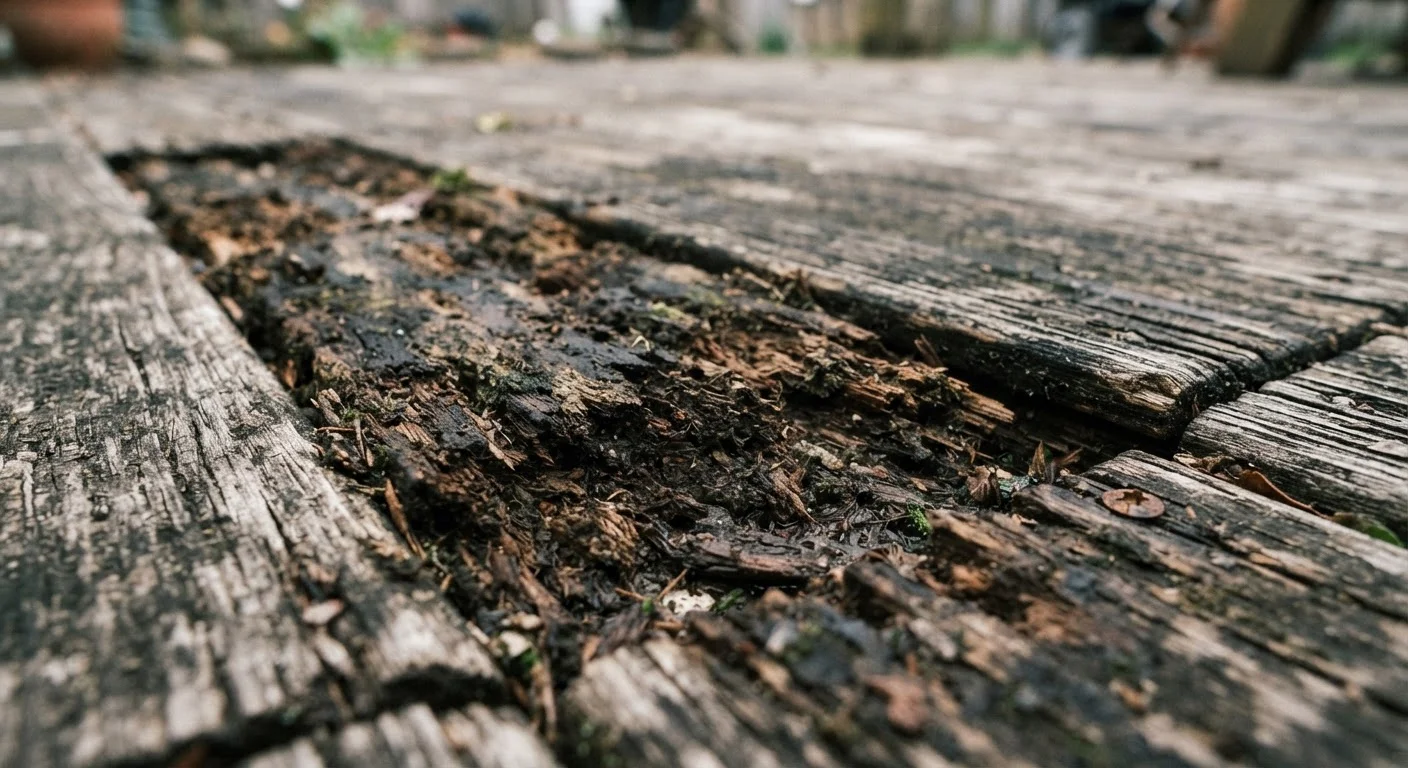
The Real Cause: Fungi, Not Just Water
It's tempting to blame wood rot on rain or humidity alone, but water is only half the equation. The actual agents of decay are wood-digesting fungi — microscopic organisms whose spores exist almost everywhere outdoors. Under dry conditions, those spores remain dormant and harmless. The moment wood stays wet long enough for its moisture content to climb above roughly 20%, those spores have everything they need to germinate and begin feeding on the wood's structural fibers.
Two broad types dominate residential wood rot. Brown rot (sometimes called dry rot, though the name is misleading) destroys the cellulose that gives wood flexibility, leaving behind dark, brittle chunks that crumble when pressed. White rot attacks the lignin — the binding compound in wood — producing a pale, stringy, spongy texture. Both types are capable of spreading to adjacent timber if the moisture source isn't eliminated.
Wood Species and Rot Resistance Vary Significantly
Naturally durable species like cedar, redwood, and black locust contain resins that slow fungal activity. Pressure-treated lumber is chemically protected against decay and is required by most building codes for ground-contact applications. However, even resistant wood can rot if conditions are persistently wet enough — no wood is immune indefinitely.
Temperature also plays a role: most wood-rot fungi are most active between 50°F and 90°F. Very cold winters can slow or pause decay, but the damage already done doesn't reverse — and activity resumes when conditions warm again.
Where to Look First: High-Risk Zones Around Your Home
Wood rot doesn't appear randomly. It concentrates where moisture accumulates, ventilation is poor, or wood sits close to soil or standing water. Knowing these zones lets you inspect strategically rather than guessing.
- Window and door frames: Failed caulk or cracked paint allows water to wick into end grain — the most absorbent part of any piece of wood.
- Fascia and soffit boards: Clogged gutters that overflow regularly soak these boards repeatedly. Even one season of neglect can initiate decay.
- Deck boards and posts: Ground-level decking traps debris and retains moisture. Posts set directly into soil or concrete without proper hardware are especially vulnerable.
- Exterior door sills: These take constant foot traffic, which cracks protective finishes, while their horizontal surface collects rainwater.
- Wood near plumbing: Slow leaks under sinks, around tubs, or behind dishwashers can rot framing and subfloor over months before being noticed.
20%
Moisture content threshold for fungal wood decay
Wood moisture content above approximately 20% creates conditions that allow wood-rotting fungi to become active, according to forestry and building science literature.
50°F–90°F
Temperature range most active for wood-rot fungi
Wood-rot fungi are most biologically active within this temperature band, meaning warm, humid seasons carry the highest risk of accelerated decay.
2x per year
Recommended exterior wood inspection frequency
Home maintenance guidance consistently recommends inspecting exterior wood elements at least twice annually — typically spring and fall — to catch moisture damage early.
How to Spot Wood Rot Before It Spreads
Visual inspection catches obvious rot, but probing reveals what your eyes cannot. Make a habit of walking the exterior of your home each spring and fall with a flashlight and a sturdy screwdriver or awl.
Look for: discoloration (dark staining, grayish patches, or an unusually pale area), paint that bubbles or peels from beneath, visible cracking in a cuboid or checkerboard pattern, and any wood that appears sunken or warped.
Then probe: Press the tip of a screwdriver firmly into any area that looks suspicious. Sound wood resists and springs back. Rotted wood feels soft, gives under light pressure, or crumbles. If you're finding soft spots only at the surface with firm wood beneath, you may be dealing with early-stage decay that is still repairable. If the probe sinks more than a quarter inch, the damage is likely deeper.
If you notice damp patches or staining on interior walls that might signal a moisture pathway, our guide on reading damp patches on walls can help you trace the source before rot takes hold.
Probe Annually, Not Just When You Suspect a Problem
Make screwdriver probing part of your regular seasonal walkthrough — even wood that looks fine on the surface can be compromised underneath. Pay extra attention to any spot where two pieces of wood meet, where caulk may have failed, or where water visibly sits after rain. Catching a soft patch early is far less expensive than discovering structural rot later.
Repair vs. Replace — and When to Call a Professional
Not all rot means full replacement. Surface rot on decorative trim, window sills, or fascia — where the structural core is still firm — can often be treated and filled. Epoxy consolidants penetrate softened wood fibers and harden them, while two-part epoxy fillers can restore shape and be sanded, primed, and painted like new wood. These repairs can last years when the underlying moisture problem is resolved first.
However, repair is not appropriate when rot affects structural timber: floor joists, roof rafters, wall studs, load-bearing posts, or any element that carries significant weight. Compromised structural wood should be assessed by a qualified contractor or structural engineer before any repair work begins. Attempting to patch structural rot without understanding the extent of damage can mask a serious safety issue.
Regardless of repair scope, the single most important step is correcting the moisture source. Replacing rotted wood without fixing a leaky gutter, improving drainage, or sealing a failed flashing means the new timber will simply begin the same cycle. Rot treatment without moisture control is only a temporary fix.
This article is for general home maintenance information only. For structural concerns or extensive rot, consult a licensed contractor or structural engineer to assess your specific situation.
Frequently Asked Questions
The primary cause is prolonged exposure to moisture combined with poor ventilation. Fungi spores are naturally present in the environment and activate when wood stays damp long enough for moisture content to exceed roughly 20%. Leaky gutters, faulty flashing, and poor drainage are common culprits.
Active rot tends to feel damp and will continue spreading if the moisture source remains. Old or dormant rot — where the source has been fixed — leaves discolored, weakened wood but won't spread further. Probing with a sharp tool helps: soft, giving wood suggests active or recent decay.
Minor surface rot on non-structural elements like window sills or trim is often a manageable DIY repair using epoxy consolidants and fillers. Structural rot — in joists, beams, or load-bearing posts — should be evaluated and repaired by a qualified professional, as improper repair can compromise your home's safety.
The rate depends on temperature, wood species, and how wet conditions remain. In warm, persistently damp conditions, rot can advance noticeably within months. In cooler or intermittently wet conditions, decay may take years to become significant, which is why regular inspection matters.
Paint and exterior finishes slow moisture absorption but do not prevent rot indefinitely, especially if the coating is cracked or peeling. Proper surface prep, quality primer, and regular repainting extend protection, but the underlying drainage and ventilation conditions matter just as much.
Areas exposed to rain, condensation, or ground moisture are highest risk. This includes window and door frames, fascia boards, exterior trim, deck boards and posts, garage door frames, and any wood in contact with soil or sitting in a poorly drained area.
The content on this site is for informational purposes only and is not a substitute for professional advice. Always consult a qualified professional for guidance specific to your situation.