

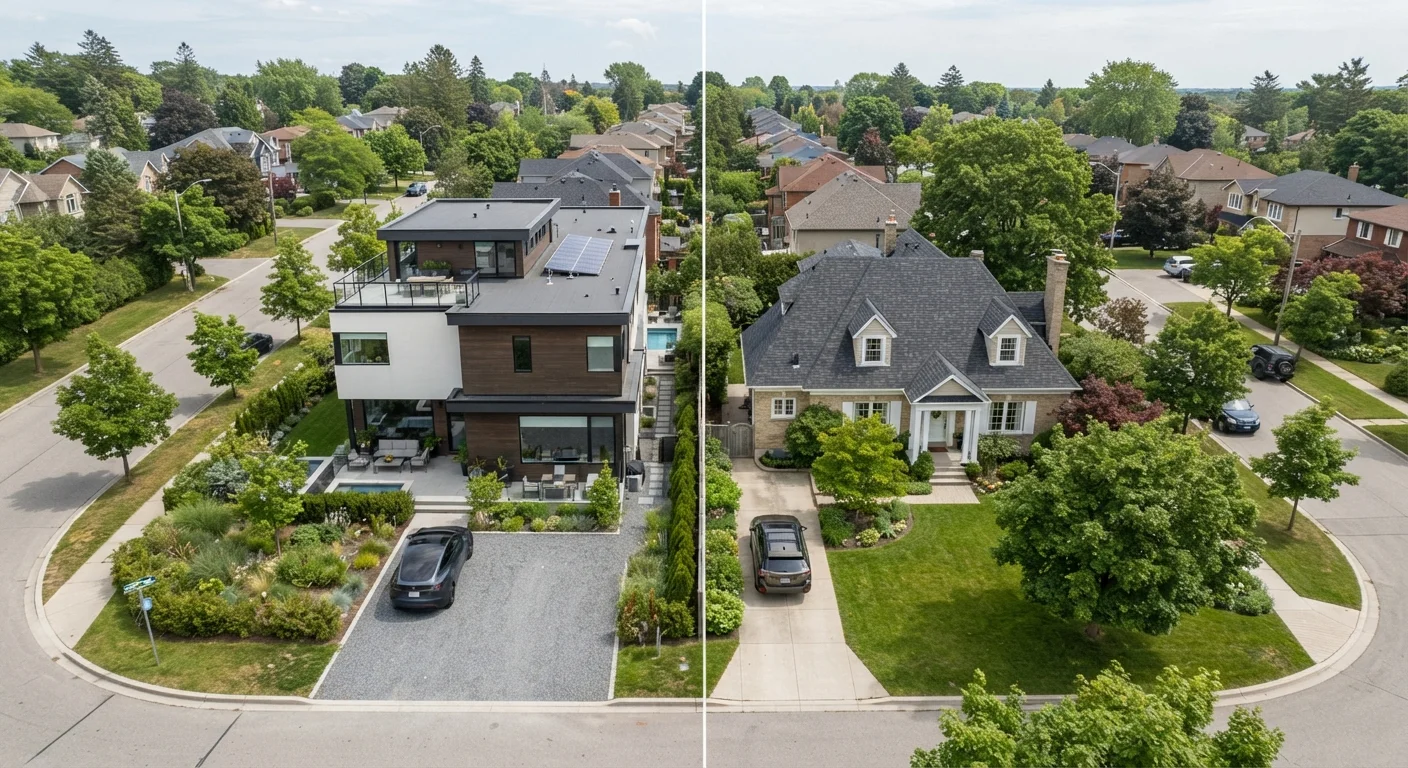
Our Verdict
Neither flat nor pitched roofs are inherently high-maintenance, but they fail in different ways and demand different habits. Flat roofs reward consistent, proactive inspection and drainage upkeep. Pitched roofs require seasonal attention to shingles, flashing, and gutters. Understanding which roof you have — and what it needs — is the foundation of smart home ownership.
| Best for | Recommended |
|---|---|
| Homeowners who prefer predictable, scheduled upkeep | Pitched Roof |
| Homeowners comfortable with close-up seasonal inspections | Flat Roof |
| Those in climates with heavy rainfall or snow | Pitched Roof |
| Those in arid or low-slope climates with limited attic needs | Flat Roof |
How Each Roof Type Handles Water — and Why It Matters
Water management is the defining challenge for any roof, and flat and pitched roofs approach it in fundamentally opposite ways.
A pitched roof uses slope — typically a rise-to-run ratio of 4:12 or steeper — to shed rain and snowmelt quickly into gutters and downspouts. This passive drainage reduces the time moisture sits on roofing material, which is why asphalt shingles, the most common pitched-roof covering in the US, can last 20–30 years with reasonable care.
A flat roof is rarely truly flat; it generally has a slight slope (around 1/4 inch per foot) designed to direct water toward drains or scuppers. When those drains clog — even briefly — water pools. Standing water, called ponding water, accelerates membrane deterioration, adds structural weight, and is the leading cause of premature flat-roof failure. This is why drainage inspection is non-negotiable for flat-roof owners.
Understanding this difference reframes every maintenance task below: pitched roofs need surface integrity maintained; flat roofs need drainage paths kept clear above all else.
Flat Roof Maintenance: What Owners Need to Do
Flat roofs — common on commercial buildings and increasingly on modern residential homes — are typically covered with EPDM rubber, TPO, modified bitumen, or built-up roofing (BUR). Each material ages differently, but the core maintenance principles are similar.
Inspection Frequency
Inspect a flat roof at least twice a year — spring and fall — plus within a week after any significant storm. Walk the surface carefully (use distributed-weight boards if the membrane feels soft) and look for:
- Ponding water still present 48 hours after rain
- Blistering, bubbling, or cracking in the membrane
- Tears or separations at seams and flashing points
- Debris around drains or scuppers
Routine DIY Tasks
Clearing debris from drains and keeping the roof surface clean are tasks most homeowners can safely handle. Applying roof sealant to minor cracks in a bitumen or EPDM surface is also within DIY range — follow product instructions precisely and work in dry, moderate temperatures.
Ponding Water Is an Emergency, Not a Nuisance
If water remains pooled on your flat roof more than 48 hours after rain stops, treat it as an urgent maintenance issue — not a cosmetic one. Prolonged ponding adds significant weight load (water weighs about 5 lbs per square foot per inch of depth) and dramatically shortens membrane life. Call a roofing professional to assess drainage and structural integrity before the next major rain event.
When to Call a Professional
Any repair involving the membrane seams, structural deck, or built-up layers should be handled by a licensed roofing contractor. Improper patching can void warranties and trap moisture beneath the surface, causing hidden damage. Permits are generally not required for routine maintenance, but replacement of a flat roof covering typically is — verify local requirements.
For a broader view of how roof checks fit into your annual routine, see our seasonal home maintenance guide.
Pitched Roof Maintenance: What Owners Need to Do
Pitched roofs are the default for most US single-family homes, and their sloped design does some of the maintenance work for you — but not all of it.
Inspection Frequency
Inspect twice yearly, ideally from the ground with binoculars or from a safely positioned ladder (never walk a steep pitch without fall-arrest equipment). Look for:
- Missing, curling, or cracked shingles
- Lifted or rusted flashing around chimneys, vents, and valleys
- Granule buildup in gutters (a sign of shingle wear)
- Moss or algae growth, which holds moisture and speeds deterioration
Routine DIY Tasks
Cleaning gutters and downspouts is the most impactful pitched-roof maintenance task most homeowners skip. Blocked gutters cause water to back up under shingles and rot fascia boards. Replacing a handful of damaged shingles is also DIY-accessible if you are comfortable working at height safely — match the shingle type and exposure before purchasing replacements.
Match Replacement Shingles Carefully
When replacing a few damaged shingles, bring an undamaged sample to the supplier rather than relying on memory. Shingle color and texture can vary by production batch, and a mismatched patch can signal poor workmanship during future home inspections. Even a close match will blend more naturally after a season of weathering.
When to Call a Professional
Flashing repair, ridge-cap replacement, and any work requiring roof access on pitches above 6:12 should involve a licensed contractor. Structural issues — sagging ridgelines, soft decking — are not DIY territory. New homeowners often discover deferred maintenance at inspection; our article on maintenance tasks new homeowners overlook covers this in more depth.
Side-by-Side Comparison: Flat vs. Pitched
The table below summarises key maintenance differences to help you understand what your roof demands over time.
| Flat Roof | Pitched Roof | |
|---|---|---|
| Inspection frequency | Twice yearly + after storms | Twice yearly standard |
| Primary failure point | Ponding water / membrane seams | Shingle and flashing damage |
| Key DIY task | Clear drains and scuppers | Clean gutters, replace shingles |
| Material lifespan (typical) | 15–25 years (EPDM/TPO) | 20–30 years (asphalt shingles) |
| Professional help threshold | Seam/membrane repairs | Flashing, steep pitches |
| Climate suitability | Better in dry/warm climates | Better in wet/cold/snowy climates |
If budget is a constraint, prioritise the tasks that prevent water intrusion first — on either roof type, water damage compounds quickly. Our guide on home maintenance on a budget can help you triage.
The content on this site is for informational purposes only and is not a substitute for professional advice. Always consult a qualified professional for guidance specific to your situation.